Europe’s Launcher Independence Push Gains Momentum as Spain’s PLD Space Secures Landmark ESA Contract
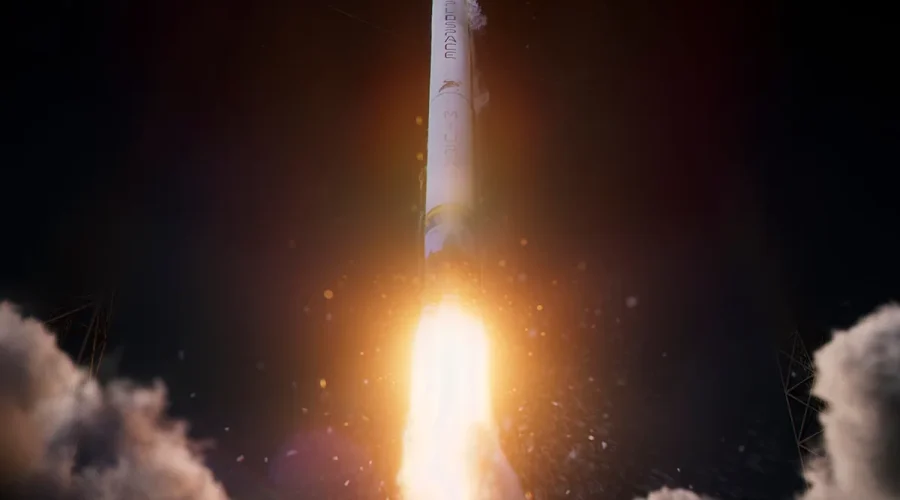
Usagevpn.com – The European Space Agency has moved from planning into execution on its European Launcher Challenge, awarding its first major development contract to a Spanish rocket company and signaling that Europe’s long-stated ambition to launch satellites without relying on foreign providers is now entering the engineering phase. PLD Space, headquartered in the southeastern Spanish city of Elche, received a 158.9-million-euro agreement that will be financed predominantly by Spain, supplemented by a German contribution. The deal positions the firm as a structural pillar of what ESA envisions as a diversified, multi-operator European launch ecosystem by the end of the decade.
For readers unfamiliar with the company’s trajectory: PLD Space first demonstrated its capability in 2023 when its MIURA 1 vehicle completed a suborbital test flight, proving the basic architecture of a solid-fuel rocket built entirely in-house. The contract now signed targets the next step — MIURA 5, the orbital-class rocket designed to succeed that demonstrator and deliver payloads into space on a commercial cadence.
Two-Track Structure of the Agreement
The contract is divided into distinct workstreams. The first track is dedicated to hardening MIURA 5 as a commercial launch service and ramping up its annual launch rate through 2030. PLD Space has indicated that international customers are already expressing growing interest in booking seats on the vehicle, suggesting the commercial pipeline is forming ahead of full operational readiness.
The second track, which the company labels “enhanced orbital capability,” funds a set of upgrades that would allow MIURA 5 to carry heavier payloads into higher orbits. Critically, this workstream also incorporates propulsive landing — the controlled descent and touchdown capability that constitutes the first engineering step toward rocket reusability, a feature that could dramatically lower per-launch costs over time.
ESA’s Hands-Off Oversight Model
Lucía Linares, who heads Strategy and Institutional Launches at ESA, explained to reporters in French Guiana ahead of an upcoming Meteosat launch how the agency’s role differs from its traditional procurement approach:
“What we do now is no longer set detailed technical requirements as we do with Ariane or Vega, but simply observe how they develop their launch service and verify that there is also private financing and that they meet certain technical objectives, of course, but without imposing anything on them.”
In other words, ESA is acting as a co-investor and milestone verifier rather than a prime contractor dictating engineering specifications. Companies selected under the agency’s Boost programme — including PLD Space, Rocket Factory, Asbury, Maya Space, and Isar Aerospace — receive public co-financing while retaining autonomy over their development paths.
A French Guiana Launchpad and Infrastructure Build-Out
Linares confirmed that the PLD Space contract had already been countersigned at the time of her interview, and she described the personal significance of watching the programme mature:
“I have to say that we have already signed that contract with PLD Space and so for me it is truly a great thrill, not only to attend the launch they will carry out. I have been following it for many years, but also to be able to see here in French Guiana how the construction of PLD Space’s infrastructure is progressing, as it will launch from French Guiana, the European Spaceport.”
French Guiana’s equatorial latitude gives launch vehicles a significant velocity advantage, reducing fuel requirements for geostationary and polar orbits. The spaceport, operated under ESA’s umbrella, already hosts Ariane and Vega campaigns; adding a second, independent launch provider there would deepen Europe’s strategic redundancy.
Technology Bridge Toward MIURA Next
According to PLD Space, a substantial share of the subsystems engineered under the orbital-upgrade track will not remain exclusive to MIURA 5. They are deliberately architected for direct transfer into MIURA Next, the company’s planned family of heavy-lift launchers. The strategic logic is straightforward: every technical improvement validated and flight-certified on the smaller vehicle compresses the development timeline and de-risks the larger one, avoiding the costly trial-and-error cycle that has plagued previous European heavy-launcher attempts.
Ezequiel Sánchez, executive chairman of PLD Space, framed the contract as validation of a multi-year engineering roadmap:
“ESA’s selection of PLD Space confirms the maturity of the roadmap we have been building for years.”
Sánchez views the agreement as one node in a trajectory that began with the 2023 MIURA 1 test and is ultimately oriented toward transferring critical propulsion and avionics technology into the heavy-launcher class.
The Wider Field: Other Contracts and the Five-Finalist Shortlist
PLD Space’s award is not the only deal closed in this contracting round. Germany’s Rocket Factory Augsburg received 186.9 million euros to develop its RFA One vehicle, which will operate from the SaxaVord spaceport in northern Scotland. Isar Aerospace, also German, secured 197.8 million euros for its Spectrum rocket. Together with PLD Space, these three formed part of a five-company finalist group — completed by MaiaSpace and Orbex — that ESA shortlisted in July 2025 after evaluating twelve proposals submitted from across the continent.
Programme Context and Funding Trajectory
The European Launcher Challenge was announced in 2023 with an explicit goal: field, by 2030, a European orbital launch capability that does not hinge on a single operator or a single national industrial base. The programme’s funding envelope was reinforced at the ministerial meeting held in Bremen in November 2025, when member states collectively doubled their committed contribution to 900 million euros.
For PLD Space specifically, the ESA contract layers on top of 42 million euros the company had already drawn from Spain’s CDTI through the Aerospace PERTE programme. That earlier tranche supported the final stages of MIURA 5 development, meaning the new ESA funding arrives at a point where the vehicle’s core architecture is substantially defined and the remaining work centers on orbital qualification, rate-of-launch scaling, and the reuse-enabling upgrades described above.
The cumulative effect of these contracts is to convert Europe’s launch sector from a single-supplier dependency into a competitive, multi-vendor market — a structural shift that, if executed on schedule, would give satellite operators genuine choice in launch provider, cadence, and price for the first time since the Ariane era.
Related Reading
Frequently Asked Questions
What is ESA signs first major European Launcher?
ESA signs first major European Launcher is the main topic of this guide. The article explains the context, practical details, and next steps readers should understand.
Why does ESA signs first major European Launcher matter?
ESA signs first major European Launcher matters because readers are looking for a useful answer, not just a short summary. Good content should match search intent and help them decide what to do next.