3D Printing to Colonise Mars With Local Biomaterials
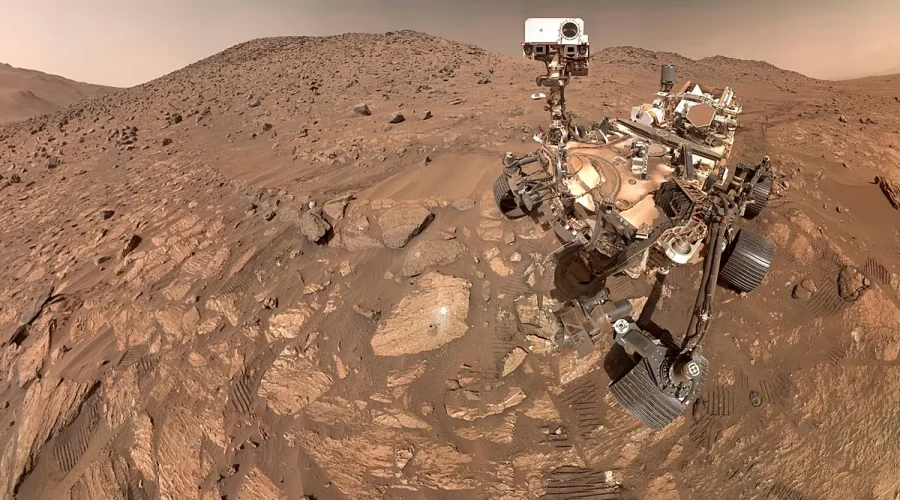
Usagevpn.com – 3D printing to colonise Mars could one day reduce the amount of construction material that must be launched from Earth. While upcoming Artemis missions are focused on returning people to the Moon, scientists are also studying how future settlers could build longer-term habitats on Mars using resources already present on the planet.
A research team at the Hong Kong University of Science and Technology has developed a proposed printable biomaterial made from Martian regolith, gelatine and modified yeast. Regolith is the loose layer of dust, sand, small stones and rock fragments that covers the Martian surface.
Turning Martian soil into a construction material
Transporting heavy building supplies across space would be costly and complicated. Using regolith as the main bulk ingredient could make 3D printing to colonise Mars more practical by limiting the need for imported materials.
The material was developed under the leadership of civil engineer Jishen Qiu. Modified yeast is designed to produce adhesive proteins inspired by the substances mussels use to cling to rocks, while gelatine helps bind the mixture and supplies nutrients for the yeast.
This biological approach differs from relying entirely on cement-like materials brought from Earth. It could allow astronauts or robotic systems to manufacture parts of a habitat after arriving on Mars, using local material wherever possible.
Mars’ cold climate may help the printing process
The researchers also explored whether Mars’ extreme environment could support the manufacturing process. Its low temperatures and thin atmosphere may enable freeze-drying without the energy-intensive heating or drying methods normally required on Earth.
In these conditions, ice can sublimate directly into vapour, leaving behind a lightweight solid foam. This process would not require the minerals in the mixture to be melted, potentially conserving valuable energy for a future settlement.
Tests in simulated Martian conditions showed that the material can withstand compression at levels comparable with lightweight concrete. The findings do not mean that a Martian city is ready to be printed, but they suggest the compound may be suitable for structures exceeding a single storey.
The proposed material is also described as fully recyclable. For a Mars mission, damaged or outdated building parts could be remade into new components instead of becoming waste, helping crews make better use of limited resources.
Challenges before Mars habitats can be printed
Significant questions remain before 3D printing to colonise Mars can move beyond laboratory research. Micro-organisms would need to remain viable despite Mars’ low pressure, harsh temperatures and radiation exposure. Biological ingredients would also have to be transported from Earth at the beginning of the process.
Any construction material intended for a human settlement would require extensive testing for safety, durability and long-term reliability. It would also need to work alongside life-support systems and perform consistently under real mission conditions.
Still, the research points to a possible future in which space habitats are not assembled solely from prefabricated modules. Local materials, biological processes and additive manufacturing could all play a role in building infrastructure beyond Earth.
FAQ: 3D Printing to Colonise Mars
What would be used to print buildings on Mars?
The proposed material combines Martian regolith with gelatine and modified yeast. Regolith would provide most of the physical material needed for printed structures.
Why is local Martian material important?
Using local resources could reduce the mass of construction supplies launched from Earth, making future long-duration missions less dependent on transported materials.
Can people build homes on Mars with this technology today?
No. The material has shown promise in simulated conditions, but researchers must still address biological survival, safety, durability and reliable operation in the Martian environment.