Tehran Extends Olive Branch Amid Renewed Hostilities: Pezeshkian Signals Willingness to Revive June Ceasefire
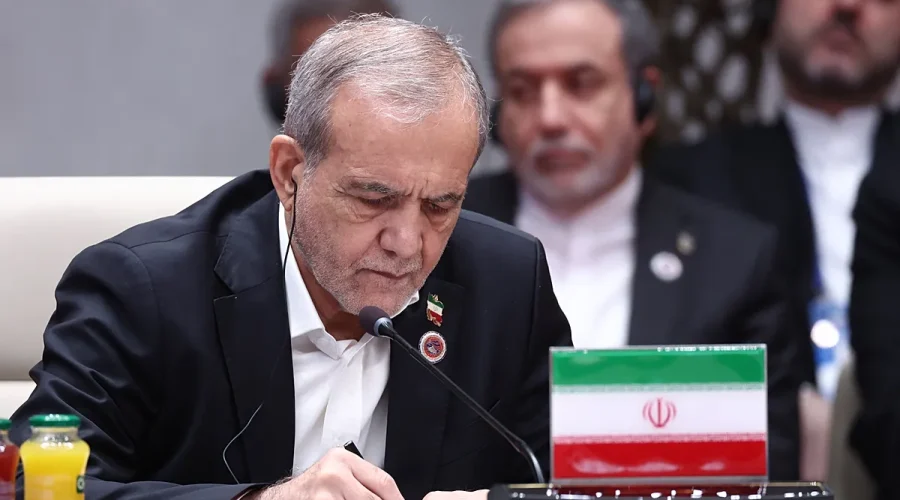
Usagevpn.com – Just hours after American forces struck two Iranian missile launchers on Larak Island — a small landmass sitting astride the narrow waterway that funnels roughly a fifth of the world’s daily oil trade — Iran’s president offered a strikingly measured message to Washington. Speaking from the Shanghai Cooperation Organisation summit in Bishkek, Kyrgyzstan, Masoud Pezeshkian declared that Tehran stands prepared to re-enter the ceasefire framework negotiated with the United States in June, provided the American side does likewise. The conciliatory tone marked a notable departure from the rhetoric that had accompanied the weekend’s brief but sharp exchange of fire, the first such episode in roughly a month.
A Framework Built on Mutual Concessions
The June arrangement, formalised through a memorandum of understanding, had set out a two-track architecture: an immediate halt to hostilities paired with a sixty-day negotiation window intended to produce a broader, durable peace settlement. Under its terms, Tehran committed to sweeping the Strait of Hormuz of naval mines and guaranteeing safe passage for commercial shipping throughout the negotiation period. In return, Washington pledged to terminate its naval blockade of Iranian ports, roll back the sanctions regime that had strangled the country’s export revenues, issue waivers permitting continued sales of Iranian crude, and open discussions on a reconstruction package to help rebuild infrastructure damaged during the fighting.
The architecture collapsed almost as quickly as it was erected. Although a fragile quiet settled over the front lines in the weeks that followed, the underlying tensions never dissipated. The weekend’s cross-border fire — and then Monday’s American strike on Larak Island in the early hours — demonstrated that the ceasefire existed on paper but not in practice.
Pezeshkian’s Conditional Invitation
Addressing delegates at the SCO summit, Pezeshkian framed his position in explicitly reciprocal language:
“If the US returns to its commitments in the memorandum of understanding, the Islamic Republic of Iran will immediately reciprocate.”
The phrasing was deliberate. By tying Iran’s re-engagement to American compliance rather than offering an unconditional gesture, the president signalled that Tehran views the breakdown as a bilateral failure rather than a unilateral American betrayal. It also positioned Iran as the party willing to move first — a diplomatic posture calculated to shape international perception ahead of any renewed negotiations.
In a separate passage of the same address, Pezeshkian stressed that the Islamic Republic does not seek war and pointed to what he described as the country’s track record of honouring international treaties and commitments. The broader message was one of restraint: Iran, in his telling, prefers the negotiating table to the battlefield and expects its counterpart to do the same.
The IRGC Factor: A Domestic Wildcard
Yet Pezeshkian’s conciliatory line sits in tension with the position of the Islamic Revolutionary Guard Corps, the paramilitary organisation that commands Iran’s most formidable conventional and asymmetric military assets. The IRGC has been pressing for substantially tougher terms from Washington, including formal Iranian authority over transit through the Strait of Hormuz and a financial compensation package for wartime losses. Those demands would almost certainly prove unacceptable to a White House already wary of appearing to capitulate after a military engagement. The gap between the president’s diplomatic track and the Guard’s maximalist posture remains the single largest variable in any renewed negotiation.
Araghchi Reinforces the Diplomatic Track
Foreign Minister Abbas Araghchi, travelling in Kyrgyzstan as part of the Iranian delegation under Pezeshkian’s leadership, echoed the president’s conditional stance on state television. Speaking on the margins of the Bishkek summit, Araghchi insisted that the United States must honour its obligations under the framework deal before any further progress becomes possible.
“Then we can get out of this situation,” Araghchi told Iran’s state-run television.
The minister’s remarks underscored that the diplomatic corps, at least publicly, is aligned with the presidency in seeking a return to the June architecture rather than a renegotiation from scratch.
Escalation on Larak Island and Its Implications
The Monday strike that triggered Pezeshkian’s remarks targeted two launchers on Larak Island, located just south of the main Hormuz corridor. Hours after the American attack, the president stated that while Iran does not seek war, it will
“never sit quietly” in the face of any aggression and will “deliver a firm response to the aggressors.”
The language stopped short of specifying what a “firm response” would entail, leaving room for calibrated retaliation — perhaps a limited missile or drone salvo — while preserving the diplomatic opening Pezeshkian had just extended. For observers tracking the conflict, the sequence of events compressed into a single forty-eight-hour window: weekend exchanges, Monday’s island strike, and Tuesday’s summit speech. The speed with which Tehran moved from battlefield reaction to diplomatic overture suggests a leadership that views the SCO stage as a useful platform to project restraint to an audience of regional and global partners while keeping military options on the table.
The Strait of Hormuz context amplifies the stakes. With global energy markets already sensitive to supply disruptions, any prolonged closure or mine-laying campaign in the waterway would send shockwaves through shipping insurance rates, tanker freight costs, and commodity prices far beyond the Middle East. Both sides therefore have a structural incentive to restore the June framework’s shipping guarantees, even as they haggle over the broader political and economic terms. Whether that incentive is sufficient to overcome the IRGC’s maximalist agenda, or whether Washington will accept a renewed deal without extracting additional concessions, remains the central question of the coming weeks.
Related Reading
Frequently Asked Questions
What is Iran says it will return to June?
Iran says it will return to June is the main topic of this guide. The article explains the context, practical details, and next steps readers should understand.
Why does Iran says it will return to June matter?
Iran says it will return to June matters because readers are looking for a useful answer, not just a short summary. Good content should match search intent and help them decide what to do next.