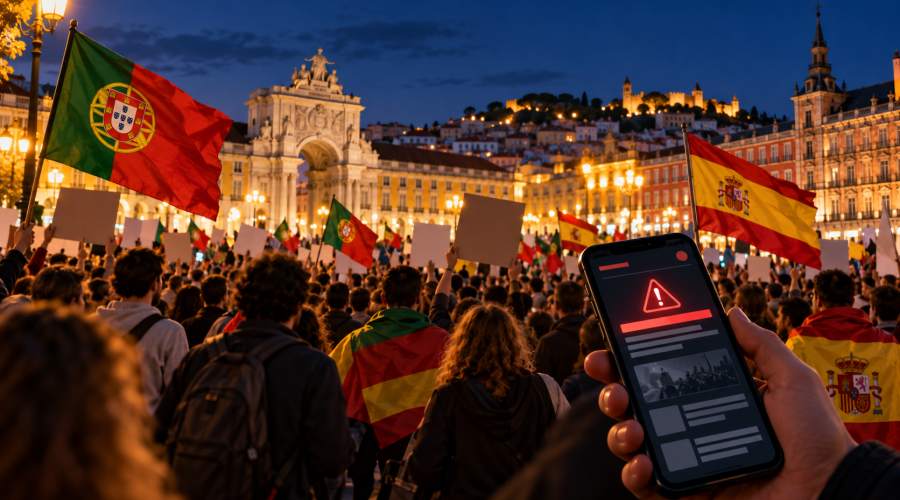
Portugal monitors security alert as jihadist messages target European protest unrest
Usagevpn.com – Portuguese security authorities are monitoring concerns over online jihadist messages that encourage attacks during major demonstrations in Europe, as protests linked to housing pressures and rising living costs continue in cities including Lisbon, Porto and Madrid.
The warning centres on alleged calls for militants to target both police officers and people attending demonstrations. Spanish authorities have identified messages on a website believed to be connected to the Islamic State group, encouraging violence amid weeks of protests across Portugal, Spain, France and Italy.
Portugal’s Internal Security System, known as SSI, said the matter was being followed closely in coordination with relevant institutions. The alert has drawn attention because large public gatherings can create difficult conditions for police, emergency services and organisers seeking to keep participants safe.
The Secretary-General of the Internal Security System is closely monitoring the situation referred to within her remit and in constant liaison with the relevant authorities.
Protests have spread across several countries
Demonstrations in Portugal and Spain have largely focused on the affordability crisis affecting households, particularly the cost of housing and everyday expenses. Daily protests and overnight encampments have been held in central squares in some of the countries’ biggest cities, including Lisbon, Porto and Madrid.
While many of these gatherings have remained centred on social and economic demands, unrest elsewhere in Europe has been more violent. Last weekend saw particularly serious incidents in France, where Limoges City Hall and the Lyon tourism office were set alight and substantially destroyed.
Italy has also experienced violent episodes, including arson attacks, with Milan among the cities affected. The scale of the French mobilisation was especially notable, with more than 800,000 people estimated to have taken part in protests there last weekend.
Large demonstrations can bring together people with very different motives and levels of organisation. For authorities, that makes it important to distinguish between peaceful participants exercising their right to protest and individuals attempting to exploit a tense environment for violent purposes.
Alleged messages encourage attacks on police and demonstrators
An internal document from Spain’s Cybersecurity Coordination Office contains messages urging militants to use mass gatherings and street confrontations as opportunities for attacks. The material frames crowded demonstrations and clashes with police as situations in which security forces and civilians may be more exposed.
The alleged jihadist communications also include practical suggestions for violence, including suicide bombings and vehicle-ramming attacks, while promoting what they describe as “martyrdom”. Such language reflects a deliberate attempt to turn public anxiety and disorder into a wider security threat.
Police officers working at demonstrations often face rapidly changing conditions, especially where crowds are large and incidents occur in several locations at once. Protesters, bystanders, journalists, local residents and emergency workers may also be placed at risk when violence erupts or when a crowd begins to disperse quickly.
The security alert does not mean that people attending protests are linked to extremist activity. Rather, it highlights the possibility that organised violent actors could seek to take advantage of demonstrations that are otherwise driven by public concerns over housing, prices and living standards.
Focus on prevention and coordination
Portugal’s response emphasises contact between the SSI and the authorities responsible for public safety. Coordination is central when an alert involves online propaganda, potential cross-border links and demonstrations taking place in multiple European countries.
Security agencies must assess the credibility of threats while maintaining vigilance around sites where large crowds are expected. Their work can include monitoring extremist communications, sharing information with partner services and adapting policing arrangements where necessary.
For people attending public demonstrations, the immediate importance is awareness. Participants should follow instructions from organisers and emergency services, avoid areas where confrontations are developing, and leave calmly if officials direct crowds to disperse. Anyone who notices a credible and immediate threat should alert police or emergency services rather than attempting to intervene.
The protests in Portugal and Spain remain rooted in domestic pressures that have prompted people to gather in public spaces. The latest alert adds a separate security dimension, reinforcing the need for authorities to protect peaceful assembly while responding to any effort to turn public demonstrations into targets for extremist violence.
Related Reading
Frequently Asked Questions
What is Jihadists reportedly urge attacks during protests?
Jihadists reportedly urge attacks during protests is the main topic of this guide. The article explains the context, practical details, and next steps readers should understand.
Why does Jihadists reportedly urge attacks during protests matter?
Jihadists reportedly urge attacks during protests matters because readers are looking for a useful answer, not just a short summary. Good content should match search intent and help them decide what to do next.