Spain’s August Sky Show Continues: A Near-Total Lunar Eclipse on 28 August
Usagevpn.com – The Iberian Peninsula has barely recovered from the spectacle of 12 August — the first total solar eclipse visible from Spanish soil in over one hundred years — when another celestial event is already drawing public attention. On the evening of 28 August, observers across the country will have the chance to watch the Moon slide deep into Earth’s shadow in a partial lunar eclipse of remarkable depth. Unlike its solar predecessor, this event demands nothing more than clear skies and an unobstructed view of the western horizon.
What the Numbers Mean
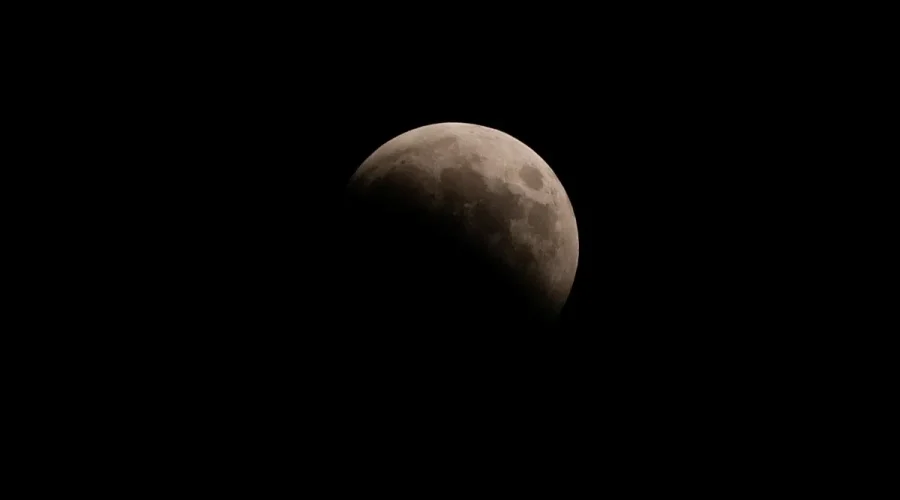
The National Geographic Institute (IGN) has confirmed that the eclipse will reach a magnitude of 0.93. In practical terms, that figure describes how far the Moon’s disc penetrates into the planet’s umbra — the innermost, darkest region of Earth’s shadow — at maximum immersion. At peak, roughly 93 percent of the Moon’s diameter will be swallowed by that shadow. It is worth stressing that this measurement refers to linear coverage of the disc, not to the fraction of the lunar surface rendered dark. The two quantities differ considerably, and conflating them is a common source of confusion in popular coverage.
Because only a portion of the Moon enters the umbra rather than the whole disc, the event is classified as a partial eclipse. A total lunar eclipse would require the satellite to pass entirely within the shadow cone, which will not occur on this occasion. Still, a magnitude approaching unity places this event among the deepest partial eclipses visible from Europe in recent decades, and the visual effect at maximum phase will be dramatic: a large, darkened bite taken from the lunar disc, with the remaining sliver retaining its normal brightness.
The Mechanics Behind the Event
A lunar eclipse unfolds when the three bodies — Sun, Earth, and Moon — align closely enough for our planet to interpose itself between the star and its satellite. As the Moon drifts through the shadow cast by Earth, it passes first through the penumbra (a region of partial shading) and then, if geometry permits, into the umbra. On 28 August the alignment is close enough for substantial umbral contact, producing the near-total darkening described above. The phenomenon is entirely natural and poses no hazard to the human eye; no filters, telescopes, or other instruments are necessary.
The IGN states the eclipse can be observed with the naked eye without any risk and that no special instruments will be required.
This stands in sharp contrast to the solar eclipse of twelve days earlier, which demanded certified solar filters to prevent retinal damage. Watching the Moon dim is as safe as watching a sunset.
Visibility Across Spain: A Question of Timing
IGN data indicate that the eclipse will be observable in various phases from Europe, Africa, the Americas, and western Asia. Within Spain itself, the partial phase will be visible from every region before the Moon dips below the horizon. However, the precise amount of the event captured will vary sharply with longitude and latitude.
In central and eastern parts of the peninsula, the Balearic Islands, and the North African enclave of Melilla, moonset will arrive before the partial phase concludes. Observers in those areas will see the Moon begin its descent while still partially eclipsed, then lose sight of it as it sinks. In the remainder of the peninsula, the Canary Islands, and Ceuta, the Moon will remain above the horizon until after the partial phase has fully ended, granting a longer window on the event.
This geographic split makes horizon access the single most important practical consideration. A location with an open western or south-western view — a hilltop, a coastal bluff, a flat plain free of tall buildings or dense tree lines — will dramatically improve what an observer can actually witness. Equally critical is the weather: even a thin veil of cloud or haze can wash out the subtle shading of the umbral edge, turning a potentially striking sight into a vague dimming.
Why This Matters to the Public
The proximity of two major eclipses within a single month is unusual and has generated considerable interest among amateur astronomers, photographers, and the general public. The solar event of mid-August captured global headlines and drew thousands to specific narrow corridors of totality. The lunar eclipse, by contrast, is far more forgiving: it is visible from an entire continent, requires no travel to a precise geographic line, and unfolds over hours rather than minutes. For many Spaniards who missed the solar totality or found it impractical to reach the narrow path, the 28 August event offers a second, accessible encounter with the sky’s grandest mechanics.
Local astronomy societies and municipal observatories are expected to organise public viewing sessions, particularly in cities where urban light pollution and building density limit casual rooftop observation. Those planning to watch independently should check local forecasts for cloud cover in the hours preceding moonset, position themselves well before the Moon reaches low altitude, and allow sufficient time for the eye to adapt to the dimming. No preparation beyond patience and a clear view is needed.
Related Reading
Frequently Asked Questions
What is Another eclipse over Spain on 28 August?
Another eclipse over Spain on 28 August is the main topic of this guide. The article explains the context, practical details, and next steps readers should understand.
Why does Another eclipse over Spain on 28 August matter?
Another eclipse over Spain on 28 August matters because readers are looking for a useful answer, not just a short summary. Good content should match search intent and help them decide what to do next.