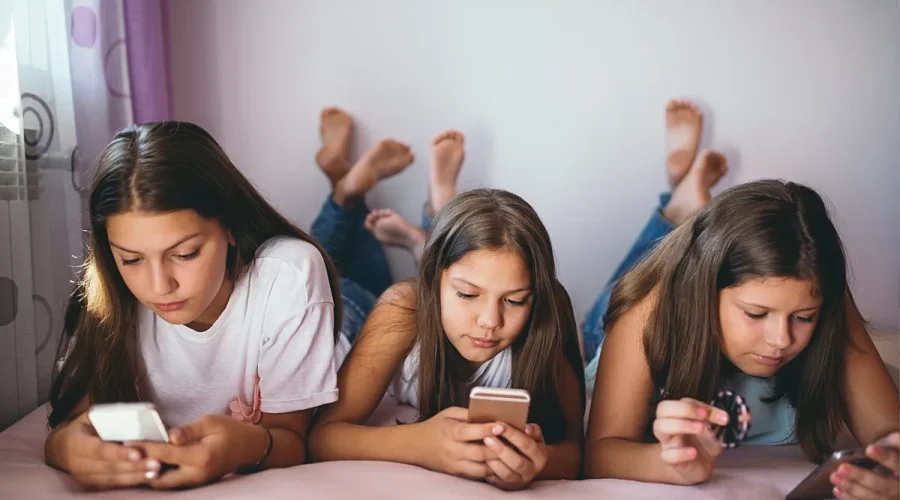
Estonia Assembles Expert Panel to Tackle Digital Risks Facing Young Minds
Usagevpn.com – Across Europe, governments are scrambling to answer a question that has moved from academic journals into parliamentary chambers: how do you shield a generation raised on screens without severing the very channels through which they learn, socialize, and create? Estonia has now entered that conversation with a concrete institutional step. On Monday, Prime Minister Kristen Michal formally charged a ten-member advisory board with identifying practical measures to curb the documented harms that social media platforms and video-game ecosystems impose on young people’s psychological well-being.
A Mandate Built on Evidence, Not Ideology
The board’s composition signals that Tallinn intends to treat the problem as multidisciplinary rather than purely legislative. Its members span fields from neuroscience to clinical psychology, and include a vice-chairman of the Estonian National Youth Council, ensuring that the voices of young Estonians themselves sit at the table. The panel operates under a deadline extending into next year, by which point it must deliver actionable recommendations directed at three audiences simultaneously: state institutions, parents, and young users.
The scope deliberately encompasses both social media and interactive gaming environments. Michal framed the mission not as a call for prohibition but as a search for design-level and policy-level interventions that acknowledge how deeply embedded digital platforms have become in daily adolescent life while simultaneously narrowing the pathways through which those platforms generate anxiety, sleep disruption, and depressive episodes.
“Anxiety and mental health problems among young people are a serious and growing concern,” the Prime Minister stated in an official press release accompanying the announcement.
Positioning Estonia Within a Wider European Trend
The Estonian initiative does not arrive in a vacuum. Belgium’s Flanders region, Bulgaria, Denmark, Spain, and several other EU member states have either enacted or are actively debating age-based restrictions on social media access for minors. The regulatory mood in Brussels and national capitals has shifted noticeably over the past two years, driven by mounting clinical data and by high-profile litigation against major platform operators.
Michal nonetheless drew a clear line between his government’s approach and the blunt instrument of an outright ban.
“More important than bans is to find solutions that would actually help our young people. That is why I have convened an advisory board consisting of Estonia’s leading experts to find effective ways to reduce the negative effects of social media in cooperation with researchers, youth work specialists and youth representatives,” he explained.
Who Leads the Effort
At the board’s inaugural session, Andra Siibak, a professor of media studies at the University of Tartu, was elected chair. Siibak emphasized that recommendations emerging from the panel must satisfy two criteria at once: they must rest on peer-reviewed evidence, and they must be judged workable by the young people who will live under them.
“We will start looking for and discussing these solutions in the Advisory Board in cooperation with young people to reach recommendations that would be not only science-based but also applicable in the opinion of the target group itself,” Siibak said.
The Data Driving the Policy Response
Estonian researchers have been documenting a measurable deterioration in young people’s online experience over the past decade. The University of Tartu’s 2025 edition of the EU Kids Online Estonia study found that students are encountering disturbing online content, sexually explicit messages, and patterns of excessive internet use at rising rates. The same body of work identified statistically significant links between children’s mental well-being, experiences of online bullying, and exposure to harmful material.
Separately, data drawn from the National Institute for Health Development’s Health Behaviour in School-aged Children (HBSC) survey paints a sharper quantitative picture. In the 2022 wave, eight percent of eleven- to fifteen-year-olds reported symptoms consistent with social media addiction, up from six percent in the 2018 wave. The gender split was notable: ten percent of girls versus seven percent of boys met the threshold, with thirteen-year-old girls singled out as a particularly vulnerable cohort.
Usage patterns reinforced the concern. Sixty-three percent of girls and forty-seven percent of boys in the surveyed age band logged at least two hours per day on social networking platforms, and daily screen time climbed with age. The HBSC analysis further showed that longer electronic-media use for communication correlated with lower self-reported life satisfaction, shorter sleep duration, weaker academic performance, and more frequent depressive episodes.
The Global Regulatory Backdrop
Estonia’s move lands against an accelerating international regulatory tide. Just days before the Estonian announcement, Meta confirmed that Instagram and Facebook would introduce a midnight lockout for under-age accounts and impose a two-hour daily scrolling cap, a concession embedded in an eighteen-billion-dollar (approximately fifteen-point-four-billion-euro) settlement with forty-eight United States states. The settlement, one of the largest consumer-protection actions in American history, signals that platform operators now face coordinated legal pressure on both sides of the Atlantic.
For Tallinn, the timing is deliberate. By convening an expert panel before a blanket legislative ban becomes the default European response, Estonia positions itself to shape the design of future rules—ensuring that any restrictions it eventually adopts are calibrated to the specific behavioral patterns documented in its own national data rather than imported wholesale from another jurisdiction’s political compromise.
What Comes Next
The advisory board’s deliverables, due by next year, will likely feed into amendments of Estonia’s existing digital-education curriculum, updates to parental-oversight toolkits, and possibly new statutory duties for platform operators serving the Estonian market. Whether the recommendations stop at guidance or cross into binding regulation will depend on how strongly the evidence base—already substantial—continues to accumulate over the coming months. What is certain is that the question of how much screen time a child should have, and who bears responsibility for enforcing that limit, has moved from the realm of parental discretion into the formal architecture of Estonian public policy.
Related Reading
Frequently Asked Questions
What is Estonia moves to protect youth s mental?
Estonia moves to protect youth s mental is the main topic of this guide. The article explains the context, practical details, and next steps readers should understand.
Why does Estonia moves to protect youth s mental matter?
Estonia moves to protect youth s mental matters because readers are looking for a useful answer, not just a short summary. Good content should match search intent and help them decide what to do next.