Germany’s Price Pressure Eases Slightly, but the ECB’s Dilemma Deepens
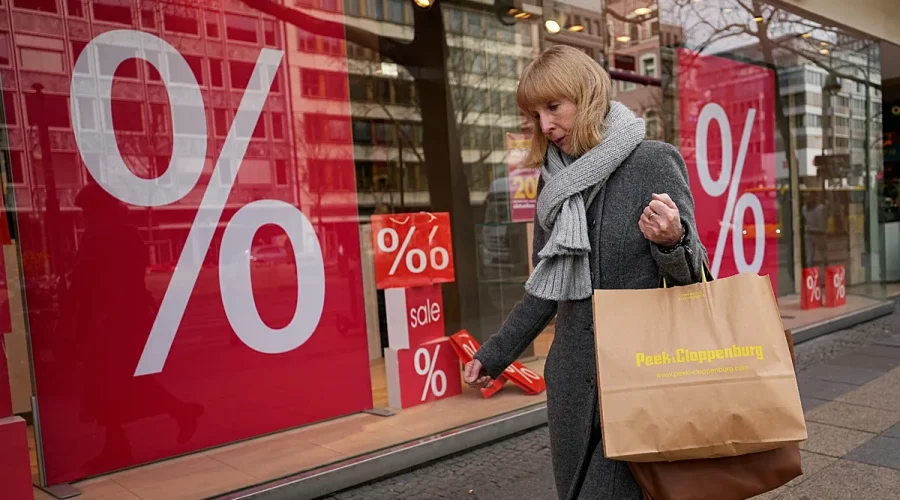
Usagevpn.com – The eurozone’s most consequential inflation print of the month arrived with a number that calmed traders only marginally. Germany’s harmonised consumer price index climbed 0.2% in August, nudging the annual rate to 2.9% from 2.8% the prior month. Analysts had pencilled in a 0.3% monthly jump, so the shortfall was real — yet the trajectory remains upward, marking a third straight monthly increase after June’s 2.4% reading. For a central bank already wrestling with divergent inflation paths across the bloc, the German data point neither validates a tightening bias nor clears the path for easing.
What Drove the Recent Upswing
The acceleration through summer was not a mystery. Two forces converged: an energy shock triggered by the ongoing war in Iran, which sent fuel costs surging across the continent, and the scheduled expiry of Germany’s temporary fuel duty discount, which had been suppressing pump prices since early in the year. Strip those two factors away and the underlying price momentum looks far more contained. Still, the harmonised index — compiled under a methodology shared by all EU member states and used by the European Central Bank as its primary gauge against the 2% target — does not allow policymakers to simply discount headline movements.
A Fractured Domestic Picture
The inflation release landed the same week as a batch of German economic data that painted a deeply uneven portrait. Second-quarter GDP was revised upward to 0.3% growth from the initial 0.2% estimate. Destatis president Ruth Brand framed the revision in measured terms:
“The German economy is maintaining the momentum seen at the start of the year.”
Exports carried the revision. Goods shipments rose 2.6% over the quarter, underscoring the continued strength of German manufacturing’s external demand. Domestically, however, the picture soured. Investment in machinery and equipment contracted by 1.4%, signalling that firms are pulling back on capital spending. Household consumption and government consumption each managed a mere 0.1% gain — barely above stagnation.
Labour-market data compounded the concern. Roughly 45.7 million people were employed in the quarter, a decline of 212,000 positions compared with a year earlier. German growth also trailed the broader EU, which expanded 0.5% in the same period, widening the gap between the bloc’s largest economy and its neighbours.
Public Finances Under Strain
Fiscal indicators deteriorated sharply. The German government’s deficit reached €71.3 billion in the first half of the year, running €36.6 billion wider than the same period a year earlier and equivalent to 3.1% of GDP. The federal tier accounted for €48.1 billion of that gap, with outlays growing faster than revenues. For a country whose fiscal rules have historically constrained deficit sizes, the pace of deterioration raises questions about the sustainability of current spending levels, particularly if growth continues to lag the eurozone average.
Frankfurt’s Narrowing Window
For the ECB, the German undershoot matters more than the direction of travel. The bank raised its deposit rate to 2.25% in June — its first hike in nearly three years — then held steady in July. Whether it moves again at next week’s meeting has dominated eurozone market pricing since the June decision. A German print above 3% would have handed the hawkish faction a clear mandate to tighten further. Instead, the largest eurozone economy delivered inflation that is still rising, still well above the 2% target, but decelerating against consensus, alongside an economy expanding only modestly and shedding jobs.
The Divergence Problem Across the Bloc
Last Friday’s releases from Spain and France illustrated just how uneven the inflation landscape remains. Spain’s harmonised rate leapt to 4.5% in August from 3.9%, the highest reading in more than a year, after fuel prices rose in a month when they had fallen a year earlier. Yet Spain’s core inflation eased to 2.9%, suggesting the spike is driven by energy and statistical base effects rather than broad-based demand pressure. The headline gap between Madrid and Berlin now exceeds 1.5 percentage points.
France recorded the mildest acceleration of the three major economies. Its harmonised rate rose to 2.7% from 2.4%, though the energy component there jumped to 16.7% from 12.6% in July, indicating that fuel costs are still a significant drag on the headline figure.
Ultimately, this divergence is the ECB’s central challenge: setting a single interest rate for economies whose inflation rates are pulling apart in different directions and at different speeds. A hike calibrated to Spain’s 4.5% headline could stifle a German economy already losing jobs and shrinking investment. A hold calibrated to Germany’s decelerating print risks letting Spanish price pressures embed into wage expectations. Eurozone-wide inflation figures follow on Tuesday, and the ECB announces its interest rate decision next Thursday. The data will offer little comfort to either faction.
Related Reading
Frequently Asked Questions
What is German inflation rises to 2 9?
German inflation rises to 2 9 is the main topic of this guide. The article explains the context, practical details, and next steps readers should understand.
Why does German inflation rises to 2 9 matter?
German inflation rises to 2 9 matters because readers are looking for a useful answer, not just a short summary. Good content should match search intent and help them decide what to do next.