Warsh Faces a Bond-Market Fire at His First Jackson Hole
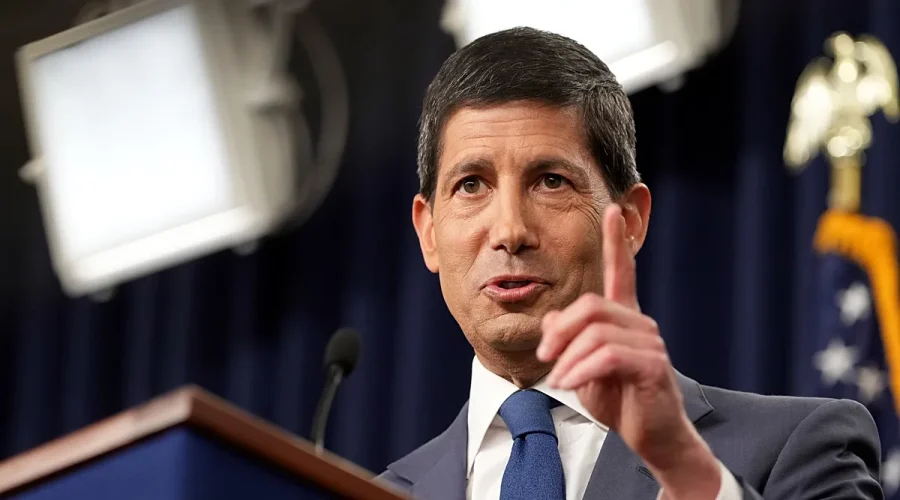
Usagevpn.com – The Federal Reserve chair walks into the most scrutinised podium in global central banking while his own government scrambles to keep long-term borrowing costs from spiralling out of control. Kevin Warsh takes the stage at Jackson Lake Lodge in Grand Teton National Park on Friday morning, and the backdrop is anything but serene: US Treasury yields on the long end have surged, inflation remains locked well above the 2% goal, and Treasury Secretary Scott Bessent has already moved to buy back government bonds in an effort to cap the damage. The collision between those two forces — a Fed chair who appears willing to let markets tighten, and a Treasury that is actively trying to loosen them — frames every sentence Warsh is likely to deliver.
The Symposium and Why Timing Matters
Since 1978 the Federal Reserve Bank of Kansas City has convened the Jackson Hole symposium, and since 1982 the gathering has taken place at the lodge overlooking Jackson Lake. Roughly 120 central bankers, academics, and policymakers from more than 70 nations descend on the mountain resort for three days of papers, panels, and hallway conversations. This year’s theme is “Financial Innovation: Implications for Payments and Policy,” a subject that sounds academic until you realise the event always lands in the gap between scheduled Fed meetings. That structural quirk makes the chair’s keynote one of the rare windows through which policy direction can leak outside a formal FOMC decision. For Warsh, whose predecessor used forward guidance as a routine communication tool, the absence of such guidance means every word on Friday carries outsized weight.
Inflation That Will Not Cooperate
The numbers arriving ahead of the speech are stubborn. The personal consumption expenditures index — the Fed’s preferred inflation gauge — climbed 0.2% in July, double the 0.1% that consensus forecasters had pencilled in. The annualised rate therefore sat at 3.7% rather than the expected 3.6% dip. Core prices, stripped of volatile food and energy, also rose 0.2% on the month and 3.3% over the trailing year, figures that matched forecasts but kept core inflation above the 2% threshold for a 65th straight month. Broader consumer prices advanced 3.4% in the year to July.
Warsh has been blunt about where the destination lies:
“There is no soft inflation target. There’s only a target, and it’s 2%.”
What he has not supplied is a credible route. Five internal task forces are currently auditing how the Fed operates — one of them focused squarely on communications — and Warsh has deliberately eschewed the forward-guidance playbook his predecessors deployed freely. The result is a policy vacuum that markets fill with speculation.
The Dissent and the September Question
In July the FOMC held the federal funds range at 3.50% to 3.75%, but three regional Fed presidents broke ranks to vote for a quarter-point increase — the largest one-directional dissent since September 2016. CME’s FedWatch tool now prices the probability of a September hike at roughly 40%, down from about 55% a month earlier. Investors are pricing less restriction than the committee’s hawks are demanding, and that widening gap is precisely the fault line Friday’s speech must address.
Bessent’s Bond-Market Rescue
The pressure point sits at the long end of the yield curve. US national debt has now passed $40 trillion, and yields on 10- and 30-year Treasuries have climbed sharply, feeding through to mortgage rates, corporate borrowing, and municipal finance. In response, Bessent announced a plan to at least double the size of Treasury buyback operations on 10- to 30-year bonds, lifting each operation from $2 billion to $4 billion. The stated aim: shrink the supply of long-dated paper, support prices, and pull yields lower.
The market was unconvinced. Yields ticked back above their pre-announcement levels within hours, prompting Bessent to declare publicly that the Treasury stands ready to intervene with “much higher amounts” — a figure he deliberately left undefined. The move creates an unusual constitutional tension: the Treasury is suppressing long-term yields at the very moment the Fed chair appears content to let market forces perform the tightening work. Two branches of government, pulling in opposite directions on the same instrument, is a scenario most economists would have dismissed as theoretical a decade ago.
The Debasement Trade Goes Vertical
When investors suspect a government cannot manage its debt without allowing inflation to erode its real value, they rotate into assets that cannot be created at will. Traders call it the debasement trade, and this month it has been running at exceptional velocity. Gold has gained roughly 15% so far in August and, with only a handful of trading sessions remaining, is on track for its strongest monthly performance since 1999. The metal traded near $4,713 an ounce on Tuesday, a three-month high. Bitcoin is up over 25% this month — its best stretch in around two years — pushing above $80,000. Meanwhile the dollar has moved the other way, with the index measuring it against six major peers heading for a third consecutive monthly loss.
Hard assets rising, the currency falling, and long-term borrowing costs stubbornly elevated all point in the same direction. If Warsh reads market prices as information — as he has suggested he does — the message arriving from the trading floor is that policy is too loose.
The Transatlantic Dimension
The European Central Bank will also be represented on the ground. Executive board member Isabel Schnabel takes part in a Friday panel at 17:55 CET, addressing the payments-and-financial-innovation theme rather than the immediate policy outlook. Yet the transatlantic timing matters more than the panel itself. The ECB publishes the account of its 22-to-23 July meeting on Thursday, and its next rate decision falls on 10 September — days before the Fed’s own September meeting. A hawkish signal from Warsh would strengthen the dollar, compress the ECB’s room to cut, and force Frankfurt to recalibrate its own communication strategy within a matter of weeks. The symposium, in other words, is not merely a three-day academic retreat; it is a pressure chamber in which the next quarter of global monetary policy is quietly negotiated.
Related Reading
Frequently Asked Questions
What is Warsh s first Jackson Hole?
Warsh s first Jackson Hole is the main topic of this guide. The article explains the context, practical details, and next steps readers should understand.
Why does Warsh s first Jackson Hole matter?
Warsh s first Jackson Hole matters because readers are looking for a useful answer, not just a short summary. Good content should match search intent and help them decide what to do next.