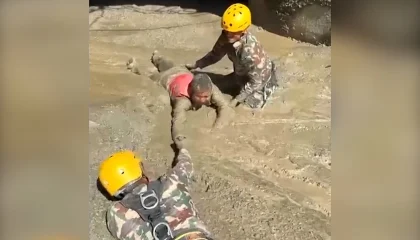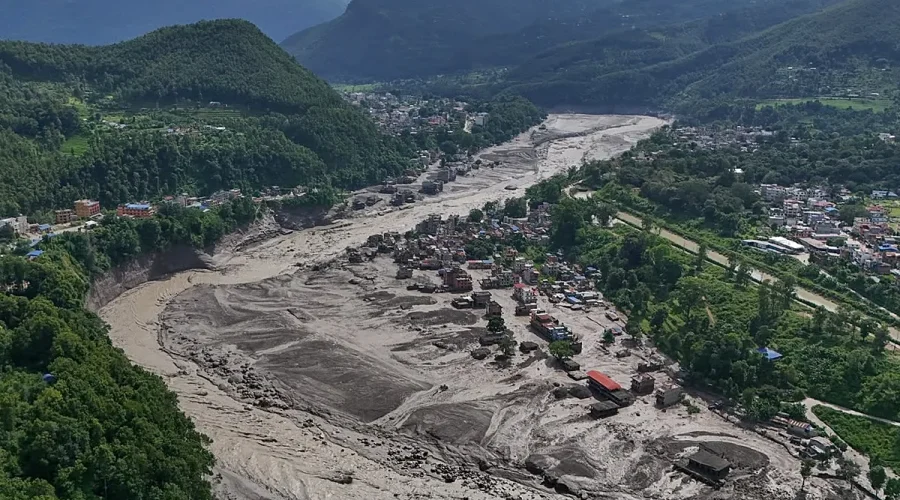
Usagevpn.com – Hundreds missing as flash floods tore through Nepal’s river valleys on August 26, 2026, after a massive surge of water originating on the Tibetan plateau poured into the Bhote Koshi and cascaded downstream into the Trishuli and Narayani rivers. Footage from Nuwakot and Dhading districts captured muddy torrents rushing through residential streets, submerging roads and leaving thick debris in their wake. Police in the affected areas urged residents to remain alert, avoid all riverbanks, and follow official evacuation guidance as rescue teams moved to assess the full scale of the disaster.
Flash Floods Devastate Nepal’s River Valleys
The Bhote Koshi, which originates on the Tibetan side of the Himalayas, received an unusually large volume of water that triggered a major surge in northern Rasuwa district. Villages along its course sustained severe damage to homes, roads, bridges, and critical infrastructure. Downstream, the Trishuli River carried a heavy flow of muddy water through Galchhi in Dhading district, while Nuwakot district saw entire streets buried under mud and debris within minutes. The speed and force of the floodwaters left residents little time to evacuate, and many families lost possessions, livestock, and access to basic services overnight.
At least eight deaths were confirmed in the initial hours after the surge, and hundreds of people were reported missing as families searched for relatives swept away by the currents. Rescue teams worked through the night to locate survivors and recover bodies, though the sheer volume of debris and continued high water levels slowed every operation. Local authorities described the situation as still evolving and cautioned that the final toll could rise substantially as more previously inaccessible areas became reachable for search-and-rescue crews.
Rescue Operations and Safety Warnings
Authorities issued explicit warnings for residents to stay well away from the banks of the Bhote Koshi, Trishuli, and Narayani rivers until water levels returned to normal. Police checkpoints were established along major roads in Rasuwa, Nuwakot, and Dhading to prevent people from crossing swollen waterways or entering flood-affected zones. Residents were advised to move to higher ground immediately, keep mobile phones charged, and monitor official channels for updates on road closures, evacuation orders, and relief-distribution points.
“Stay away from the riverbanks. Do not attempt to cross any waterway until authorities confirm it is safe. Move to higher ground now.” — Local police advisory, August 26, 2026
Monsoon-season flooding is a recurring hazard in Nepal’s riverine districts, but the scale of this event—hundreds missing as flash floods struck multiple valleys simultaneously—prompted a coordinated multi-agency response. Relief supplies, including blankets, clean drinking water, and medical kits, were dispatched to temporary shelters set up in schools and community halls across the affected districts. Engineers began preliminary assessments of damaged roads and bridges to determine which routes could be reopened safely in the coming days.
Frequently Asked Questions
Where can I find real-time updates on the Nepal flash floods? Monitor official announcements from Nepal’s Department of Disaster Management and district police social-media pages. Local radio stations in Rasuwa, Nuwakot, and Dhading broadcast hourly bulletins during active flood events. Check before travelling to any affected district.
What should residents do if they are near a riverbank during a surge? Move immediately to higher ground. Do not attempt to wade, swim, or drive through floodwater, even if it appears shallow. Keep your phone charged, call local emergency services if you are trapped, and wait for official clearance before returning home.
How long will roads and infrastructure remain closed in the affected districts? Closures depend on water levels, debris clearance, and structural assessments of bridges. Authorities have not set a fixed reopening date; residents should check district-level advisories before planning any travel through Rasuwa, Nuwakot, or Dhading.
How can I help families affected by the floods? Donate through verified local relief channels or Nepal’s official disaster-management fund. If you are in the affected districts, volunteer at temporary shelters only after confirming with local police that your assistance is needed and safe.