Discount Fuel Cap Puts TotalEnergies at Centre of French Pricing Dispute
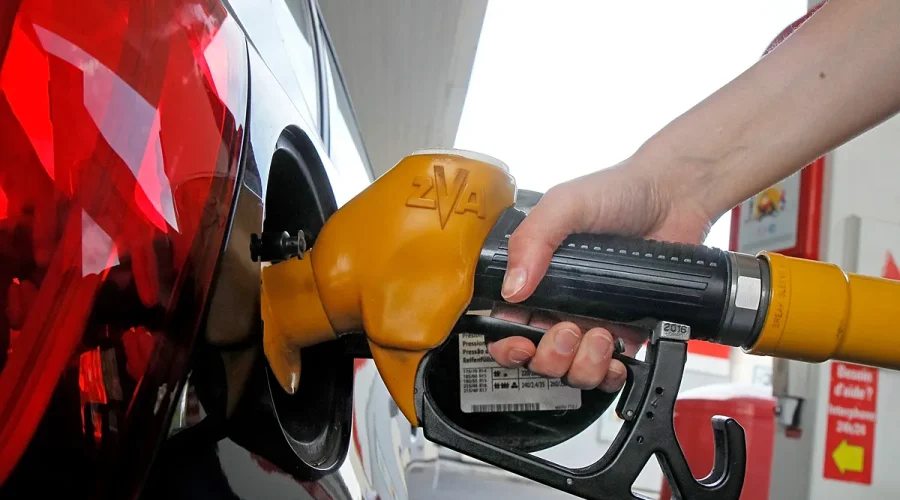
Usagevpn.com – France – Long queues at TotalEnergies forecourts are becoming a visible sign of pressure on French household budgets, as motorists seek fuel priced below much of the national market. The company’s decision to limit the price of E10 petrol to €1.99 per litre, while diesel is capped at €2.25, has drawn support from drivers but strong objections from competitors.
Fuel costs rose sharply during the spring amid the US-Iran war, pushing average prices in France to roughly €2.15 per litre. In some locations, including Paris, prices have approached €2.50 per litre. Against that backdrop, TotalEnergies has periodically kept its ceiling in force over the past five months, offering a meaningful saving for drivers able to find available fuel at its stations.
The policy has also intensified an argument over whether a vertically integrated energy company should be able to use profits earned upstream to support lower retail prices. TotalEnergies produces crude oil, refines it into fuel and operates a large French service-station network. Independent filling stations and supermarket groups say that structure leaves them unable to match the company’s prices without selling at an unsustainable loss.
A costly cap backed by strong profits
TotalEnergies estimates that the price ceiling has cost between €250 million and €300 million so far. Yet the financial impact has come during a period of exceptional profitability: higher oil prices helped the group double first-half profit to €11.2 billion.
The cap was introduced as calls grew for a windfall tax on energy companies benefiting from elevated commodity prices. In May, Prime Minister Sébastien Lecornu urged the group to adopt what he described as a generous price limit. The arrangement has given the government a way to demonstrate action on living costs without immediately imposing a new levy.
Chief executive Patrick Pouyanné has made clear that the company sees the fuel measure as an alternative to a special tax, rather than a permanent obligation.
“There’s nothing forcing us” to keep the cap in place, Pouyanné said recently.
“If a tax is introduced, we’ll draw our conclusions and TotalEnergies won’t have any more price caps,” he added.
The stance leaves policymakers with a difficult balance to strike. A new tax could raise public revenue and respond to criticism of energy-sector profits, but it could also end the retail-price intervention that is currently easing costs for some motorists. Keeping the cap, meanwhile, risks deepening complaints from businesses that cannot access the same financial cushion.
Independent stations take competition complaint
The FF3C, an association representing around 1,000 independent service stations, filed a complaint with France’s competition authority in mid-July. Its members argue that TotalEnergies is using its position in the upstream fuel market to offer unusually aggressive prices at the pump.
“There is an upstream player with a dominant position that takes advantage of it to set very aggressive prices that are below market levels,” said Jacques Goisque, who heads the FF3C.
For smaller operators, the issue is not merely theoretical. Their wholesale purchase costs may exceed the price charged at a nearby TotalEnergies station, leaving little room to compete while covering staffing, transport, maintenance and other operating expenses. The dispute highlights the different economics facing companies that only sell fuel at retail level and a group able to earn money at several stages of the supply chain.
Supermarket chains, which have often used cheap petrol as a way to attract shoppers into stores, are also challenging the pricing strategy. These retailers commonly sell fuel with little or no margin, but E.Leclerc president Michel-Edouard Leclerc said they cannot continue lowering prices in response.
“Refiners are lining their pockets” while retail distributors cannot compete, Leclerc said.
“We can’t go any lower than what our prices are today,” he said. “We don’t have a cent of margin in our filling stations.”
Supply concerns add to political pressure
Price competition is unfolding alongside concerns about availability. Government spokeswoman Maud Bregeon said that roughly one in 10 French filling stations was missing at least one type of fuel, with TotalEnergies sites accounting for the overwhelming majority of those affected. The government plans to focus on maintaining supplies and securing greater regulatory flexibility for refineries.
The aim is “to push prices down as much as possible, or at the very least to keep their increase under control”, Bregeon said.
President Emmanuel Macron asked the government on Wednesday to address questions surrounding fuel supply and fuel prices. The issue is especially sensitive with a presidential election seven months away and an increasingly difficult economic environment. Petrol and diesel prices are highly visible costs for commuters, tradespeople and households outside areas well served by public transport, making any sudden increase politically potent.
Recent calls for demonstrations have revived memories of the yellow vest movement that began in 2018. That wave of unrest was initially triggered by plans to raise fuel taxes, which particularly affected lower- and middle-income workers. It rapidly developed into a wider challenge to Macron’s economic programme, leaving the government alert to the social and political risks associated with pump prices.
Corsican closures underline strain on retailers
The pressure was particularly evident in Corsica, where more than a dozen filling stations closed during the previous weekend. The operators said that even after efforts by their supplier, their purchase price remained several dozen cents higher than TotalEnergies’ retail price.
They denounced “the state failing to regulate prices”, which “allows an integrated group that benefits from considerable upstream margins to dictate, to blackmail, leading to this distortion of competition.”
TotalEnergies faces a contrasting calculation. The cap carries a substantial direct cost, but it has reinforced the company’s public standing at a time when it has repeatedly faced scrutiny over the relatively low taxes it pays in France compared with profits generated worldwide. Pouyanné has openly recognised the reputational benefit.
The cap has “above all earned the company a large amount of goodwill among the French,” he said recently.
For motorists, the immediate appeal is straightforward: lower prices can ease the burden of filling a tank during a period of volatile energy costs. For the wider fuel market, however, the intervention is exposing a deeper disagreement over competition, corporate profit and the government’s role in shielding consumers. Whether the cap remains in place may depend less on the queues outside stations than on the political choices France makes in the months ahead.
Related Reading
Frequently Asked Questions
What is France?
France is the main topic of this guide. The article explains the context, practical details, and next steps readers should understand.
Why does France matter?
France matters because readers are looking for a useful answer, not just a short summary. Good content should match search intent and help them decide what to do next.