Uzbekistan’s Manufacturing Renaissance: How Homegrown Brands Are Redefining a Nation’s Export Identity
Usagevpn.com – Industrial output in Uzbekistan climbed 6.8 percent during 2025, and the country’s export bill swelled by roughly a quarter to approximately €29 billion, figures released by the National Statistics Committee. Behind those macro numbers sits a quieter transformation: a growing cohort of domestic producers is converting raw manufacturing capacity into branded goods that carry the “Made in Uzbekistan” mark onto shelves far beyond Tashkent’s borders. Textiles, household electronics, food products, home appliances, and traditional craftwork all feature in this widening catalogue, signalling a structural shift from commodity-style output toward differentiated, brand-recognisable merchandise.
From Street Stalls to Design Platforms
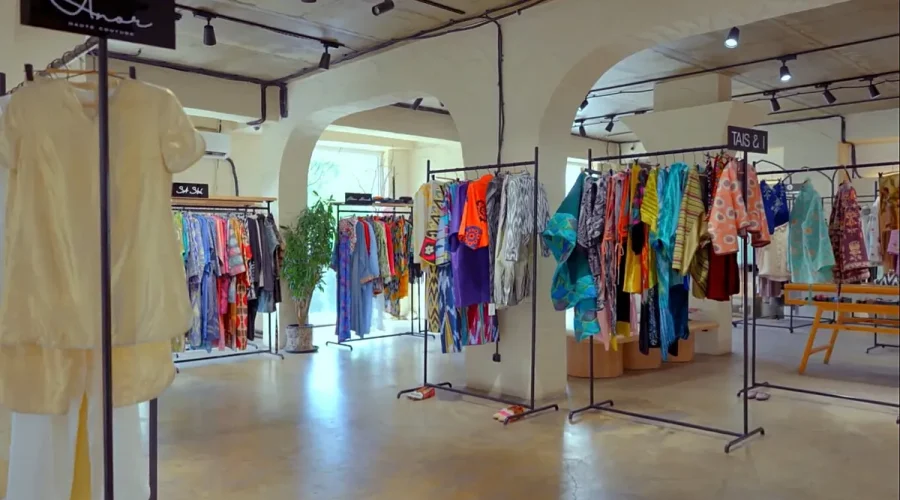
No single venture illustrates the pivot more clearly than Teplo, a platform that began in 2018 as a loosely organised marketplace where independent Uzbek designers could sell their work to local buyers. What started as periodic pop-up events has since hardened into a permanent retail space, a calendar of design festivals, and — most recently — a dedicated e-commerce portal. The current footprint is substantial: the brick-and-mortar location stocks work from roughly 100 designers, festival editions draw as many as 150 participating creators, and more than 200 designers have transacted through the platform since its inception.
Charos Kamalova, co-founder of the venture, traces a sharp cultural turnover over that seven-year arc. In the early days, she explains, consumers tended to file Uzbek-made items into one of two mental boxes: either ornamental folk craft or cheap mass-market wares. Independent designers, working with distinctive concepts and elevated presentation standards, have since carved out a third category that neither label captures.
“Today it became kind of cool to support local brands,” Kamalova said. “People are coming here, buying this stuff and showing others that, look, I’m supporting local brands.”
Heritage as Competitive Edge — If Reinterpreted
Traditional Uzbek textile traditions remain woven into the identity of many domestic labels, yet the application is evolving. Gulnoza Jo’rayeva, a designer who has spent more than twelve years working with adras — a patterned silk-and-cotton fabric rooted in centuries-old Central Asian weaving — and natural silk, exemplifies this hybrid approach. Her operation launched in a home workshop and has since scaled to seven retail points across the country. Young seamstresses, artists, and designers now staff the production line, though much of the finishing work still relies on hand techniques passed down through generations.
Jo’rayeva’s customer base has outgrown national borders. The company ships internationally and has fielded repeated inquiries from buyers in other cities asking when a local presence will open. For Timur Kamolov, Teplo’s other co-founder, that heritage depth constitutes a genuine competitive moat — provided designers translate ancestral skill into products that satisfy contemporary functional expectations.
“The key competitive advantage for our brands would be the craftsmanship that we have,” he said.
Kamolov stresses that the advantage is conditional. Traditional techniques must be re-engineered into practical, modern objects if Uzbek creators intend to hold their own on global design stages. Equally important, he argues, is the business infrastructure surrounding the creative act: supply-chain management, quality assurance, and scalable operations that convert a one-off artisan project into a repeatable commercial enterprise.
Testing Waters Abroad
Several domestic labels are already probing foreign demand. Teplo ran a six-month pop-up in London’s Soho district and exhibited at the London Design Biennale, placing work by Uzbek independent designers directly before international buyers and press. Kamalova reported that foot traffic included visitors from numerous countries, not merely London residents, and that the response validated the designers’ international potential.
“We saw people from around the world, not only locals in London, that showed huge interest,” she said. “We think that our designers have great potential there.”
Parallel to physical retail, digital channels are opening. Teplo’s online platform now lets buyers outside the country purchase directly from local designers, while broader e-commerce marketplaces are giving producers across sectors — from food to small electronics — additional routes to overseas consumers without requiring a physical storefront in each destination market.
The Logistics and Compliance Gap
Scaling from a domestic workshop to cross-border commerce, however, exposes practical frictions. For the London initiative, Teplo absorbed the burden of freight logistics, customs clearance, and documentation on behalf of participating designers. Kamolov notes that such administrative complexity falls disproportionately on independent creators whose core competencies lie in design and fabrication rather than international trade law.
The problem is not confined to creative industries. Data presented by President Shavkat Mirziyoyev following a recent survey of Uzbek exporters paints a wider picture of structural weakness: 40 percent of surveyed firms reported difficulty identifying foreign buyers; 36 percent struggled to align products with international standards and certification regimes; 37 percent cited inadequate financial instruments tailored to export transactions; and 33 percent flagged gaps in market intelligence, marketing capability, and brand-building skills.
In response, new policy measures were announced in August during a presidential address, aimed at strengthening the institutional scaffolding — from trade-finance tools to export-promotion services — that domestic producers need to convert creative and manufacturing capacity into sustained international revenue. The underlying premise is straightforward: the talent and craft already exist within Uzbekistan’s borders; what remains is the connective tissue of logistics, finance, and market access that turns local production into global commerce.
Related Reading
Frequently Asked Questions
What is Made in Uzbekistan?
Made in Uzbekistan is the main topic of this guide. The article explains the context, practical details, and next steps readers should understand.
Why does Made in Uzbekistan matter?
Made in Uzbekistan matters because readers are looking for a useful answer, not just a short summary. Good content should match search intent and help them decide what to do next.