European Gas Prices Breach €70 as Gulf Conflict Tightens Supply Grip
Usagevpn.com – The Dutch TTF benchmark contract for October 2026 delivery touched an intraday peak of €70.85 per megawatt-hour on Monday, ICE exchange data showed, as traders priced in fresh uncertainty over liquefied natural gas flows from the Persian Gulf. The jump came within hours of a renewed military confrontation between the United States and Iran, sending shockwaves through an already fragile European energy market that is racing to fill winter storage before the cold months arrive.
A Closed Chokepoint and Escalating Hostilities
The immediate trigger was a Sunday strike by US military forces targeting Iranian rocket launcher positions in the vicinity of the Strait of Hormuz. Tehran responded by launching missiles toward American forces stationed in Jordan. The exchange has left the strait — the artery through which roughly one-fifth of the world’s LNG trade ordinarily transits — effectively shut to commercial shipping. With the corridor closed, cargoes that would normally reach European terminals face indefinite delays, and the prospect of further disruption looms over every major importer in the region.
The timing is particularly acute. European utilities are in the middle of their autumn storage-fill cycle, a period when LNG deliveries become the single most critical input for topping up underground caverns and salt-dome facilities ahead of winter demand. Any interruption during this window compresses the already narrow margin between available supply and projected consumption.
Storage Levels Below Historical Norms
Gas Infrastructure Europe data placed EU-wide storage fill at 64.7% as of the latest reporting period, a figure that sits meaningfully below the historical average for this time of year. Elevated spot prices have dampened the economic incentive to store gas in several member states. The arbitrage spread between current summer prices and expected winter prices has repeatedly narrowed — and at times turned negative — making the cost and risk of locking in gas unattractive for traders.
Under normal market conditions, suppliers purchase gas at comparatively low summer prices, inject it into storage, and release it at premium winter prices. When that spread collapses, the fill cycle stalls. The Netherlands and Germany face particular pressure: their respective national storage targets of 80% and 70% must be met by the 1 November deadline, and current trajectories suggest both countries could fall short.
Germany’s Industrial Vulnerability
Low storage does not automatically translate into a winter shortage, but it does strip away the buffer that absorbs price shocks and supply interruptions. For Europe’s largest economy, the exposure is concentrated in industry, where gas feeds process heat and power generation at scale.
“If insufficiently filled gas storage facilities coincide with a very cold winter, Germany may no longer be able to cover normal gas demand in full,” Sebastian Heinermann, managing director of the German gas-storage association INES, warned. “If gas prices then rise above the level that industrial consumers can afford, companies will be forced to reduce production,” he added, cautioning that such a scenario could inflict substantial economic damage.
The remark underscores a structural reality: German industry remains one of the continent’s most gas-intensive sectors, and a simultaneous cold snap combined with depleted reserves would create a pincer effect — higher prices colliding with lower availability.
Italy’s Qatar Supply Under Force Majeure
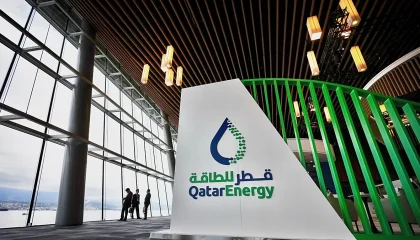
Italy, despite maintaining one of the highest storage fill rates in Europe, faces its own supply shock. Last Thursday, QatarEnergy informed Italian utility Edison — one of the Qatari state firm’s largest European customers — that it was extending a force majeure suspension on LNG deliveries until early November, citing the ongoing US-Iran conflict. The long-term Edison–Qatar contract typically delivers the equivalent of roughly 10% of Italy’s annual gas consumption, making the suspension a material gap in the Italian supply stack.
Edison stated it was arranging replacement volumes and remained confident it could honour existing customer commitments. Still, the episode illustrates how quickly a single geopolitical event can rewire bilateral supply relationships that have operated for years without interruption.
EU Import Exposure and the Bidding-War Risk
The European bloc imports relatively little gas directly from the Middle East; Qatar accounted for just 3.7% of the EU’s total gas imports in 2025. Yet Gulf disruption still transmits into European prices through the global LNG market, where cargoes are allocated by price rather than geography. Analysts caution that a prolonged halt to Gulf exports would compel European buyers to compete more aggressively with Asian importers for the remaining available tonnage, intensifying upward pressure on spot prices.
Goldman Sachs has quantified the tail risk. In a research note last week, analysts Samantha Dart and Laura Cyr outlined a scenario in which Middle East energy exports normalise only gradually through 2027. Under that assumption, they estimated that December 2026 TTF prices would likely need to move above €100 per megawatt-hour to clear the market. A wholesale price approaching that level would represent a near-doubling from pre-conflict baselines and would carry severe consequences for industrial competitiveness across the continent.
What It Means for Household Bills
If the current price spike proves short-lived — contained within days or a few weeks — the pass-through to consumer energy bills will be modest. However, with no visible trajectory toward de-escalation in the Gulf, a sustained elevation in wholesale prices would gradually migrate into retail tariffs across Europe.
Oxford Economics estimates that wholesale price changes take approximately six months on average to be fully reflected in consumer prices, though the transmission speed varies sharply by country. In France, Italy, and Spain, retail prices can adjust within a matter of months, and in the Netherlands the response is nearly immediate. By contrast, Germany and Austria may require close to a full year before the peak of the pass-through materialises. Oxford Economics identifies Italy as the most exposed of Europe’s large economies on this dimension: gas prices feed through to Italian retail tariffs relatively quickly, and the country’s energy mix relies heavily on natural gas, even though its storage facilities currently sit among the fullest in the bloc.
For European households and businesses alike, the coming weeks will determine whether the present spike remains a transient market wobble or the opening chapter of a prolonged energy-price episode with lasting macroeconomic consequences.
Related Reading
Frequently Asked Questions
What is European gas prices spike above 70 amid?
European gas prices spike above 70 amid is the main topic of this guide. The article explains the context, practical details, and next steps readers should understand.
Why does European gas prices spike above 70 amid matter?
European gas prices spike above 70 amid matters because readers are looking for a useful answer, not just a short summary. Good content should match search intent and help them decide what to do next.