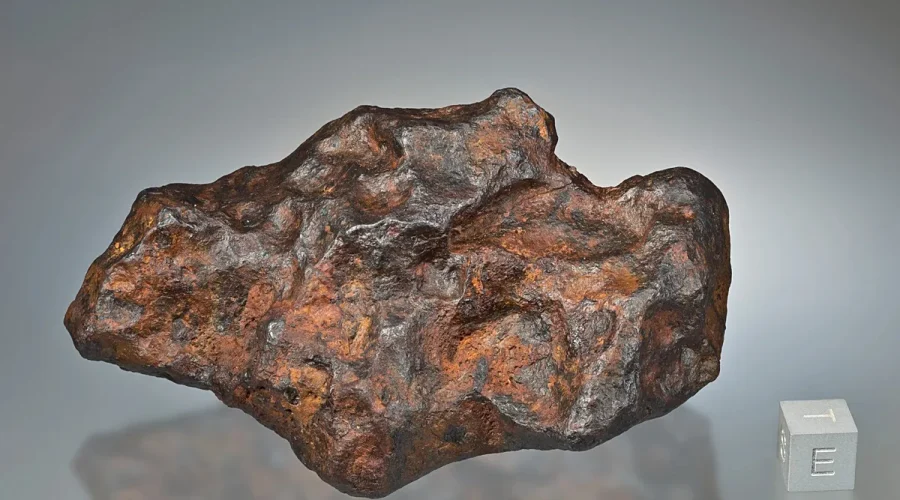
A 175,000-Year-Old Space Rock Is Rewriting What We Know About Swiss Glaciers
Usagevpn.com – Deep in the folded limestone ridges of the Bernese Jura, just above the shoreline of Lake Biel in the canton of Bern, a scatter of iron fragments tells two stories at once. One is cosmic: a tumbling body of metal, tens of metres across, tore apart in Earth’s atmosphere roughly 175,000 years ago and rained debris across a stretch of terrain about six kilometres wide. The other is terrestrial: during the penultimate glacial period, vast sheets of ice — in places exceeding one kilometre in thickness — swept across the Swiss Plateau, dragging some of those very fragments upslope and embedding them in soils at altitudes that had never before been associated with the fall.
The site, spanning the Twannberg and Mont Sujet hills, now holds more than 2,200 catalogued pieces, making it one of the most significant meteorite strewn fields on the European continent. That figure dwarfs early estimates of the event’s scale and confirms that the impactor did not arrive as a single intact mass. Instead, it disintegrated during atmospheric entry, showering the landscape with metallic shrapnel.
From a Farmer’s Field to a Scientific Goldmine
The modern chapter of this story opened on 9 May 1984, when a Swiss farmer working a field near the ridge pulled from the soil an irregular block weighing roughly 15 kilograms. Its origin was immediately opaque. Laboratory analysis soon confirmed the material was iron of extraterrestrial provenance, and the find was formally recognised as a meteorite.
What followed was decades of incremental discovery. Early recoveries were sporadic, dependent on chance sightings. The turning point came with the introduction of systematic ground surveys using metal detectors, which multiplied the yield of identifiable fragments by orders of magnitude.
“Ten years ago we had 400 fragments, now there are more than 2,200,” explained geologist Beda Hofmann of the Natural History Museum in Bern to Swiss public broadcaster SRF.
Hofmann’s remark underscores how rapidly the picture has expanded. Each newly located piece refines the shape of the strewn field, tightens constraints on the parent body’s trajectory, and adds data points to models of its internal structure.
An Extremely Rare Class of Iron Meteorite
Taxonomically, the Twannberg specimen is an iron meteorite assigned to the IIG group — a classification so uncommon that only a handful of specimens worldwide have been placed within it. The group is distinguished by an anomalously low nickel concentration coupled with an elevated phosphorus fraction, a chemical signature that sets it apart from the far more abundant IIA and IIIA iron meteorites.
To date, the Twannberg find is the sole confirmed IIG iron meteorite recovered in Europe. That rarity elevates its scientific value considerably. Researchers studying the fragments can probe questions about the differentiation history of the parent asteroid, the thermal processing it underwent in its parent body, and the broader evolutionary pathways of small solar-system objects in the first few hundred million years after planetary formation.
Ice as an Archive: Reading the Penultimate Glaciation
The meteorite’s secondary role as a palaeo-glacial marker is perhaps its most unexpected contribution. Experts note that several of the most recently located fragments sit at elevations well above those of earlier finds. Because the original impact scatter would have deposited material across a relatively uniform topographic profile, the upward displacement of newer pieces points to post-impact transport by moving ice.
Approximately 175,000 years ago, during the penultimate glacial maximum, the Swiss Plateau lay beneath ice sheets of extraordinary thickness. In certain sectors, the ice column exceeded one kilometre. The fact that meteorite fragments now appear at higher altitudes than the original fall zone implies that glaciers carried them upslope before melting and depositing them in situ. Each such displaced fragment therefore acts as a discrete marker of ice extent, thickness, and flow direction during that ancient glaciation — information that is otherwise exceedingly difficult to obtain for the Swiss interior.
In effect, the fragments are double witnesses: born in the outer solar system, delivered to Earth by gravity, and subsequently reshaped by terrestrial cryospheric processes over the intervening millennia.
The Search Continues — With Permits and Patience
Fieldwork on the Twannberg and Mont Sujet is far from concluded. Amateur meteorite hunters and professional researchers alike still sweep the slopes with metal detectors, hoping to locate additional pieces. The task is more demanding than it appears. The local soils are littered with anthropogenic metal — aluminium foil, iron nails, wire fragments — that produce detector signals indistinguishable from genuine meteorite iron at a distance. Every candidate must be excavated, weighed, and subjected to petrographic and chemical analysis before it can be confirmed.
Prospective searchers must also obtain a permit from the competent archaeological authority before conducting systematic surveys, a requirement that reflects the site’s dual status as both a geological and a cultural-heritage resource.
With each additional fragment recovered, the composite picture sharpens: the parent body’s original dimensions are constrained to a range of roughly four to twenty metres in diameter and a minimum mass of 250 tonnes; the strewn field’s geometry narrows; and the glacial transport record gains another data point. The Twannberg meteorite, discovered by accident in a Bernese field over four decades ago, continues to yield insights that span planetary science, atmospheric physics, and Quaternary palaeoclimatology — a reminder that a single impact event, preserved in scattered metal, can illuminate an astonishing breadth of Earth’s and the solar system’s history.
Related Reading
Frequently Asked Questions
What is Ice up to 1 kilometre thick?
Ice up to 1 kilometre thick is the main topic of this guide. The article explains the context, practical details, and next steps readers should understand.
Why does Ice up to 1 kilometre thick matter?
Ice up to 1 kilometre thick matters because readers are looking for a useful answer, not just a short summary. Good content should match search intent and help them decide what to do next.