Meta Pays $17 Billion to End US Trial Over Teen Addiction to Social Media
Usagevpn.com – In what amounts to the largest consumer-protection settlement ever reached between a single technology company and American state governments, Meta Platforms has committed $17 billion (€14.6 billion) to resolve decades of accumulated claims alleging that its social networks were engineered to keep young users scrolling long past the point of healthy engagement. The agreement, announced Wednesday by state attorneys general, simultaneously halts a federal trial that had opened just days earlier in Oakland, California, and extinguishes parallel litigation across 47 states.
The deal does more than write a check. Meta has agreed to embed a suite of structural changes into Facebook and Instagram aimed at reducing compulsive use among minors. These include a mandatory daily time cap with enforced pauses, the elimination of push notifications during weekday school hours, strengthened age-verification protocols, and content filters calibrated to shield younger users from material linked to eating disorders and self-harm. Parental dashboards will receive a significant upgrade in usability, and the platform will dial back social-comparison mechanics such as publicly displayed “like” counts.
A Trial Cut Short
The federal case, overseen by US District Judge Yvonne Gonzalez Rogers, had been expected to draw chief executive Mark Zuckerberg to the witness stand before a jury. Child-safety advocates had lobbied for months to see that testimony. Instead, the settlement arrived before the trial could develop its evidentiary record. Nine additional attorneys general had filed separate state-level suits that were slated for later trial dates; those proceedings are now folded into the global resolution as well.
The original coalition of 29 states — including California, Colorado, Kentucky, and New Jersey — filed its complaint in 2023. The core allegation was straightforward: Meta deliberately architected addictive design patterns, then concealed internal research confirming their psychological toll on teenagers. A secondary count alleged routine collection of personal data from children under 13 without obtaining parental consent, in violation of federal privacy statutes.
Virginia’s Share and the Broader Financial Picture
In Virginia alone, the settlement allocates $353 million (€302 million) to the state’s consumer-protection fund. Attorney General Jay Jones called the figure among the largest in the history of American state-level consumer enforcement.
“For years, Meta intentionally deceived the public about the addictive and harmful design features that have wreaked havoc on youth mental health,” Jones said in a statement. The settlement “will put an end to these dangerous practices and deliver meaningful relief that will protect children from online harm.”
Contextualizing the sum: Meta reported 2025 revenue of $201 billion (€172 billion). The $17 billion payout therefore represents roughly eight percent of a single year’s top line — a substantial but survivable figure for a company that also owns WhatsApp and Threads.
Testimony and Internal Contradictions
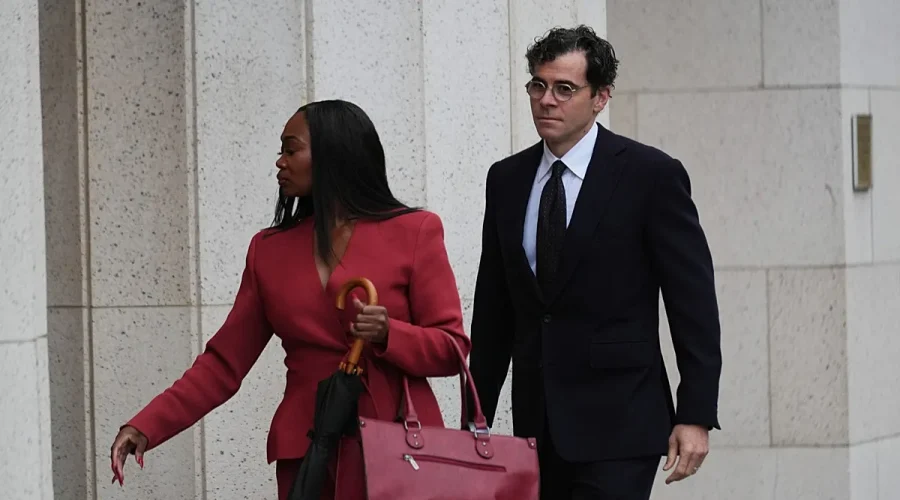
Adam Mosseri, head of Instagram, took the stand late on Tuesday and spent the remainder of the day defending the company’s safety record. Prosecutors pressed him on the low adoption rate of existing opt-in tools among young users. Mosseri conceded that most teenagers had not wanted the “Take a Break” prompt but insisted the company proceeded regardless.
“Most teens didn’t want it,” Mosseri told the court, “but we [Instagram] decided to push forward with it anyway.”
An internal memo introduced into evidence that same morning undercut the defense. The document indicated that Meta and Instagram leadership understood, well before trial, that opt-in safety features of the Take-a-Break variety were largely ineffective at changing behavior. Mosseri appeared visibly irritated by the prosecution’s fixation on that single tool and acknowledged that some safety measures perform well while others do not, adding that there are “no silver bullets” in platform safety design.
He pointed to a broader portfolio of features the company launches incrementally — including “Quiet Mode” and the break prompts — arguing that continuous iteration is the appropriate model rather than a single definitive fix.
What the Accused Features Actually Do
“Take a Break,” introduced in 2021, nudges users to step away after 10, 20, or 30 minutes of uninterrupted scrolling. It began as an optional toggle and became the default setting for teenage accounts in September 2024. “Quiet Mode,” launched in January 2023 and occasionally called “Sleep Mode,” silences all notifications and dispatches automatic replies to incoming messages while active, functioning much like a do-not-disturb switch.
Plaintiffs’ attorneys argued that these tools, offered as opt-in afterthoughts, were cosmetic gestures layered atop a product whose core architecture — infinite scroll, algorithmic feed ranking, variable-ratio reinforcement through likes and comments — was built to maximize session length regardless of user age.
Implications Going Forward
The settlement’s structural mandates go beyond what any single state could have extracted through litigation alone. A federally enforced daily time cap, combined with the removal of school-hour notifications, represents a categorical change in how two of the world’s most-used social platforms operate for under-18 accounts. Age-assurance requirements will push Meta toward biometric or document-based verification at account creation, a step the company has resisted since regulators first proposed it.
For parents, the upgraded parental controls and the suppression of visible like counts remove two of the most frequently cited vectors of social comparison anxiety in adolescent users. For the broader tech industry, the ruling sets a precedent: if a platform’s internal research documents its own addictive design choices, those documents become discoverable evidence in consumer-protection actions across every state that files suit.
The trial court in Oakland will now enter judgment consistent with the settlement terms. No further jury deliberation is anticipated. For the 47 states whose claims are extinguished, the question shifts from courtroom strategy to enforcement: monitoring whether Meta’s promised features actually ship, actually work, and actually change behavior at scale.
Related Reading
Frequently Asked Questions
What is Meta agrees to pay 17bn in landmark?
Meta agrees to pay 17bn in landmark is the main topic of this guide. The article explains the context, practical details, and next steps readers should understand.
Why does Meta agrees to pay 17bn in landmark matter?
Meta agrees to pay 17bn in landmark matters because readers are looking for a useful answer, not just a short summary. Good content should match search intent and help them decide what to do next.