White House Ballroom Will Cost $400M
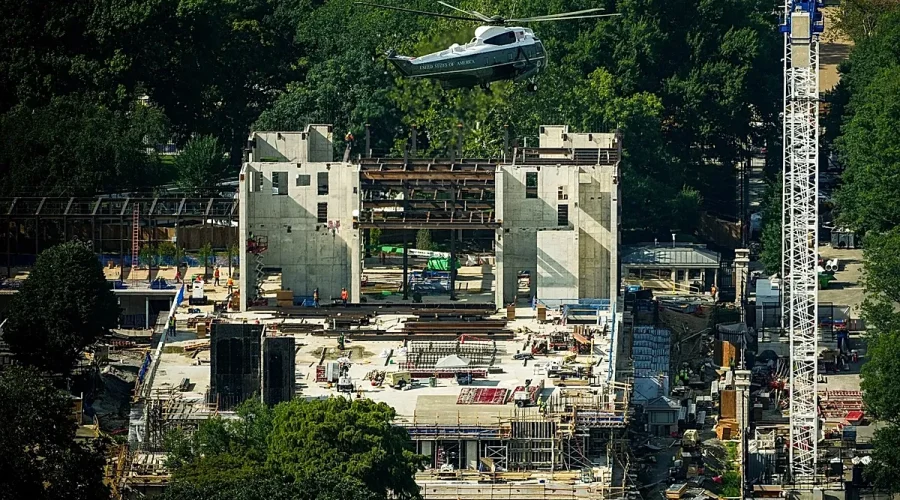
Usagevpn.com – The White House ballroom will cost nearly $400 million once construction is complete, according to remarks the president delivered Friday during a political appearance in South Carolina. The project received a temporary green light from the Supreme Court, which issued an order permitting above-ground work to continue before lower federal courts were set to issue injunctions that would have frozen the build entirely.
The ruling does not settle the underlying legal dispute. It buys the administration time while the full bench prepares to decide whether the construction campaign may proceed at all, given that no congressional authorization exists for the undertaking.
Private Funding Claims vs. National-Security Justifications
When the project was first outlined, the framing was straightforward: private donors and corporate sponsors would cover every dollar. On Friday, Trump reiterated that position publicly, thanking the Court and its chief justice for the temporary order. The question of how much the White House ballroom will cost has become entangled with questions of executive authority, because the administration’s litigation filings introduce a justification absent from every public statement made at announcement.
“We’re spending hundreds of millions of dollars on the ballroom, and it’s all from people like me and we’re going to be close to $400 million, and it’s all paid for by patriots and patriotic companies, big companies. No, no taxpayer money for the ballroom at all.”
Executive-branch counsel argues the president holds plenary authority to reshape federal property at his sole discretion and that the ballroom must proceed on national-security grounds. That framing stands in direct tension with the president’s own public statements, which made no reference to security imperatives when the project was originally described.
The East Wing Demolition and Preservation Pushback
Construction has already required demolishing the East Wing, a structure added to the White House complex in the early 1940s and long used for staff offices and support functions. The National Trust for Historic Preservation contends the president lacks unilateral authority to carry out work of this magnitude on a federal building without legislative approval.
Counsel for the Trust accused the White House of attempting to “outrun the courts” by accelerating timelines ahead of expected adverse rulings. The Supreme Court’s temporary order, issued hours before those lower-court injunctions were slated to take effect, appeared to confirm that concern: the project’s pace had outstripped the judicial process meant to check it.
Separation-of-Powers Implications
The dispute sits within a broader pattern of expansive executive assertions across multiple governance domains. Whether a sitting president may, without congressional consent, raze portions of a federal building and replace them with new structures of his choosing touches separation-of-powers principles rarely tested at this scale. A ruling for the administration could extend the precedent to other federal buildings, monuments, and sites under executive stewardship. A ruling against the president would reinforce that major alterations to federal property require legislative authorization, regardless of whether private donors cover the cost.
FAQ
How much will the White House ballroom cost? The president has stated the project will cost close to $400 million, funded entirely by private donors and corporate sponsors with no taxpayer appropriation.
What did the Supreme Court decide on Friday? The Court issued a temporary order allowing above-ground construction to continue, pausing lower-court injunctions that would have frozen the project pending a full merits decision.
Why is the East Wing demolition controversial? Preservation groups argue the president cannot unilaterally demolish or alter a federal building without congressional approval, regardless of who pays for the replacement structure.
When will the full merits decision come? The full Supreme Court bench is expected to take up the question as the broader litigation unfolds; no specific hearing date has been announced.