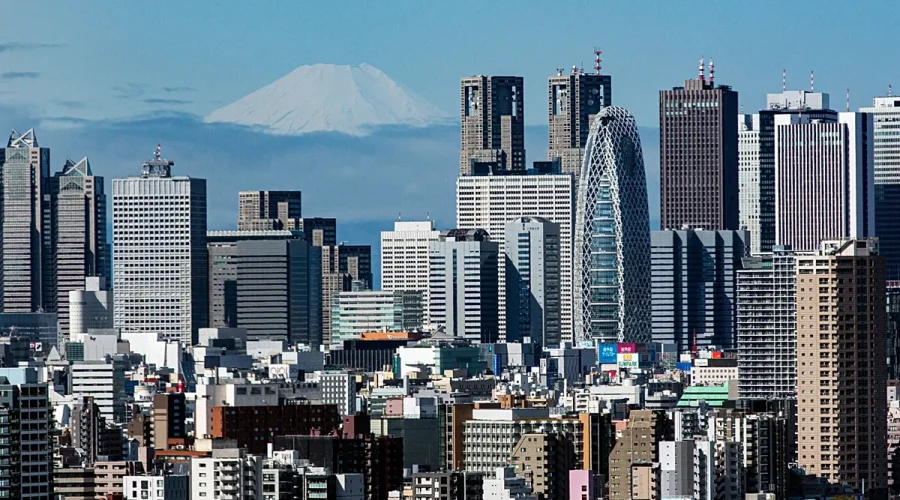
5.9-Magnitude Earthquake Strikes Japan, Injuring Dozens Near Tokyo
Usagevpn.com – A 5.9-magnitude earthquake strikes the eastern Japanese archipelago early on Sunday, sending powerful tremors through the densely populated corridor surrounding Tokyo and injuring at least 37 people. The Japan Meteorological Agency (JMA) located the epicenter in the southern portion of Ibaraki Prefecture, roughly 68 kilometres below the surface. Although the quake was felt across several prefectures, authorities confirmed there was no tsunami threat. The shaking was nonetheless strong enough to damage structures, disrupt rail services, and trigger an immediate governmental response from the Prime Minister’s office.
What Happened: Key Details of the Quake
The tremor registered a magnitude of 5.9 on the moment magnitude scale and struck at a depth of approximately 68 km, placing it in the intermediate-depth range typical of subduction-zone activity along Japan’s Pacific margin. The JMA issued its preliminary report within minutes of the event, noting that the focal mechanism was consistent with the regional tectonic regime and that no tsunami advisory was warranted. In Saitama Prefecture, one building sustained structural damage, and Japan’s Fire and Disaster Management Agency confirmed at least 37 injuries, including one person seriously hurt. No fatalities were reported in the initial assessments.
Residents in Tokyo, Ibaraki, Saitama, and Chiba prefectures all reported feeling the shaking. In the capital, several regional train lines experienced temporary service interruptions as operators conducted safety inspections of tracks, signals, and station infrastructure. Commuters were advised to allow extra travel time until normal operations resumed.
Government Response and Public Safety Measures
Prime Minister Sanae Takaichi addressed the nation shortly after the event, confirming that the quake was felt across the capital and the surrounding prefectures of Ibaraki, Saitama, and Chiba. She stated that authorities were “taking appropriate measures” and directed officials to assess the full extent of structural damage while ensuring the public received “timely and accurate information.”
“I would ask residents in the areas where the shaking was particularly strong to remain vigilant for the possibility of another earthquake of a similar magnitude,” Takaichi said.
Local emergency services conducted building inspections in the hardest-hit zones of southern Ibaraki and adjacent Saitama. Utility companies reported no major gas or power outages, though isolated disruptions were under investigation. The JMA continued monitoring for aftershocks, advising residents to stay away from coastal areas and to check for structural cracks in homes and workplaces during the following hours.
Frequently Asked Questions
Was there a tsunami following the 5.9-magnitude earthquake? No. The Japan Meteorological Agency explicitly stated there was no concern about tsunamis. The quake’s depth of roughly 68 km and its inland-adjacent epicenter made a significant sea-level displacement unlikely.
What should residents do if they feel an aftershock? Follow standard Japanese earthquake-safety guidance: drop, cover, and hold on; stay away from windows and exterior walls; do not use elevators; and check for gas leaks before re-entering a damaged structure. Keep a phone charged and monitor official channels for updated advisories.
Were public transport services affected? Yes. Several regional train lines in Tokyo experienced temporary disruptions while operators performed safety checks. Services were expected to resume once inspections confirmed track and signal integrity. Commuters were urged to consult real-time transit apps for the latest status updates.