Young Voices from Chios and Berlin Bring a European Message to the Cathedral
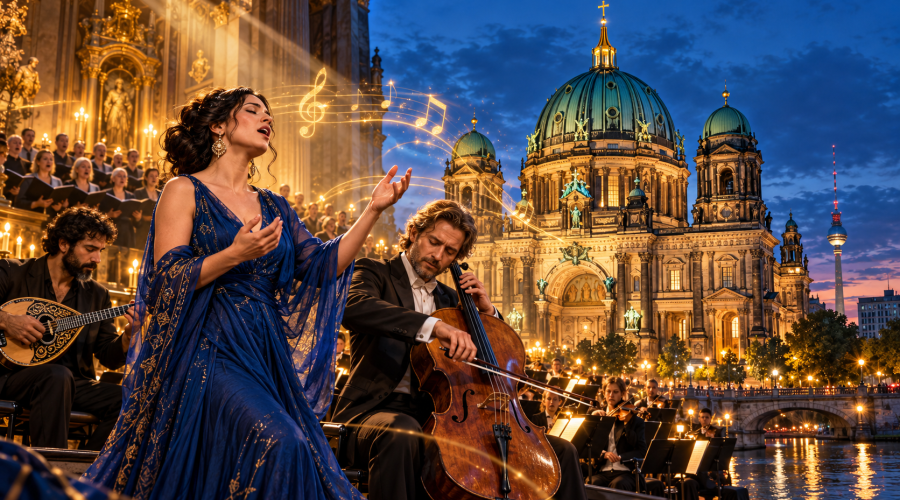
Usagevpn.com – Music from Greece and Germany filled Berlin Cathedral on 3 October, as 240 performers came together for a service marking German Unity Day. Among them were 38 students from the Chios Music School, who travelled to the German capital to sing alongside choirs and ensembles from the Sing-Akademie zu Berlin.
The occasion became more than a ceremonial concert. With young singers standing side by side in one of Berlin’s best-known churches, the programme offered a visible expression of cultural exchange and shared European identity.
The performers presented music by Felix Mendelssohn, Francis Poulenc, Benjamin Britten, Louis Lewandowski and Gustav Holst. The repertoire also included Greek works: Michalis Adamis’s Ora kali and Yannis Christou’s Messa Latina. The blend of musical traditions gave the event an especially emotional character.
A celebration extending beyond Germany
Kai-Uwe Jirka, artistic director of the Sing-Akademie zu Berlin, conducted the concert at the Berliner Dom. He explained that the cathedral has hosted a Unity Day ceremony for the past three years, followed by communal singing outside on the church steps.
“Today we celebrate the reunification of the two parts of Germany. For the past three years we have held a ceremony in the cathedral. After the service inside, we go outside with the congregation and we all sing together on the church steps for Europe.”
Jirka said the outdoor gathering began as a response to an event held in the nearby Lustgarten three years earlier by a far-right party. The musicians and congregation wanted to claim public space for a different kind of message: one rejecting hatred and racism.
“And we all said that this could not be allowed to happen. We had just come out of the service and we wanted to be together without hatred, without racism.”
That commitment has shaped the annual event ever since. In Jirka’s view, German unity cannot be separated from the country’s place in Europe, while Greece holds a central position in the continent’s cultural and historical life.
“All right, we cannot celebrate only Germany. Because what is Germany without Europe? And what is Europe without Greece?”
For the conductor, the presence of the Chios students made this year’s programme particularly meaningful.
“This year, for me, everything that happened was perfect. We have young people from all over Europe coming together, singing side by side and sending a very strong message for Europe.”
An exchange built through music
The Berlin appearance followed an earlier meeting on Chios. During the 10th Chios Music Festival in August, more than 50 young choristers from the Sing-Akademie zu Berlin spent a week on the Greek island. They gave concerts in several locations and worked with local students before the Greek group’s journey to Germany.
Friederike Stahmer, who founded the Berlin Sing-Akademie Girls’ Choir 20 years ago, took part in the Chios visit. She described the exchange as a process in which artistic work creates a deeper connection than a conventional visit alone might achieve.
“What really makes this exchange programme special is that we come together and create music. A short while ago my choir travelled to Chios for the island’s Music Festival. There we learnt some Greek songs, mainly from Chios but also from the wider region. The pupils of the Chios Music School learnt German songs.”
Learning music across languages and traditions demands patience. Different vocal styles, unfamiliar pronunciation and contrasting musical habits can all present challenges. Yet those difficulties are part of the value of the project, Stahmer said, because the singers gain direct experience of another culture through rehearsal and performance.
“Of course, at the beginning such musical collaborations are always challenging: the musical style is different, the language is different and you really have to work hard. At the same time you realise that you are learning so much about another musical culture.”
Returning to material first performed on Chios gave the participants a chance to hear how their shared work had developed. For the young musicians, the exchange connected travel, education and performance in a setting that brought their earlier collaboration to a larger audience.
“You can see how it develops and blossoms. And I think it is not only about getting to know one another; creating art together, making music together has an even deeper impact on them. I am sure it will be an unforgettable experience in their lives.”
Opportunities for a new generation
The partnership was established by the Chios Music Festival and the Sing-Akademie zu Berlin, with support from the Greek-German Youth Foundation, known as ΕΓΙΝ/DGJW. The visiting Greek group spent eight days in Berlin and participated in three concerts during its stay.
Olga Holdorff Myriagou and Lefteris Veniadis, who share artistic direction of the Chios Music Festival, stressed the importance of opening international opportunities to young people from the island. Chios sits at Europe’s eastern edge, and they see exchanges of this kind as a way to widen cultural horizons for its students.
“For the Chios Music Festival it is very important to offer opportunities to young people, to the new generation, because the choir that is here in Berlin taking part in the exchange programme has many more opportunities than the children on Chios, which lies on the edge of Europe.”
The organisers also want the partnership to work in both directions. When singers from Berlin visit Chios, the festival aims to provide high-quality artistic experiences on the island as well. Bringing young people together on stage, whether in Greece or Germany, turns cultural exchange into a practical experience of cooperation.
With around 100 children appearing together on stage at one point in the project, the collaboration showed how choral music can connect communities across distance. The voices heard in Berlin carried not only a programme of sacred and concert music, but also an enduring idea: Europe’s cultural ties are strengthened when young people are given room to create something together.
Related Reading
Frequently Asked Questions
What is Songs of praise?
Songs of praise is the main topic of this guide. The article explains the context, practical details, and next steps readers should understand.
Why does Songs of praise matter?
Songs of praise matters because readers are looking for a useful answer, not just a short summary. Good content should match search intent and help them decide what to do next.