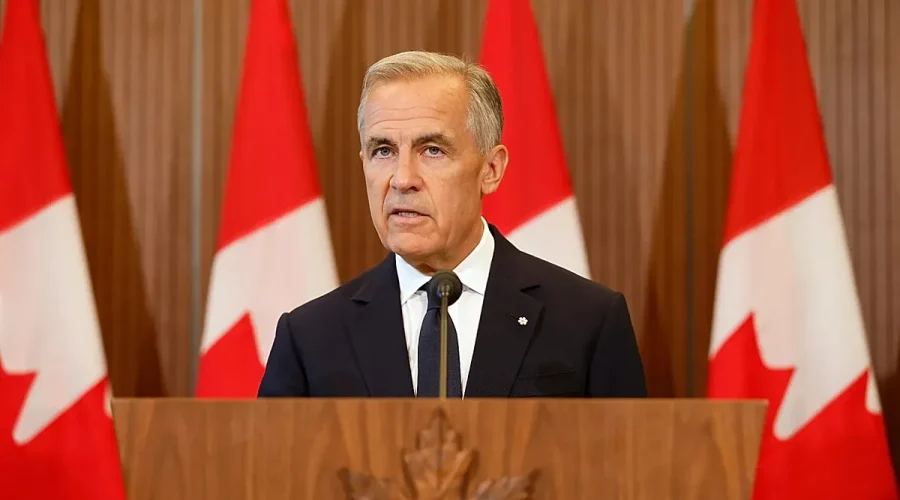
Canadian PM Carney Says New US Tariffs Aim to Divide
Usagevpn.com – Canadian PM Carney says new US tariffs were engineered with a single purpose: to inflict economic damage on Canada and fracture its political cohesion. The declaration came after marathon bilateral talks collapsed on Friday, mere hours before a sweeping 50 percent duty package — covering roughly $20 billion in annual Canadian exports — officially took effect on Saturday, dragging both capitals into another round of tit-for-tat escalation.
Ottawa Frames the Collapse as a Unilateral American Move
In remarks delivered Saturday, Prime Minister Mark Carney dismissed the final package Washington placed on the table as a “bad deal,” signaling that Ottawa had effectively concluded the negotiation was finished before the last session adjourned. He added that he would not accept what was offered nor concede what was demanded.
“We cannot accept what they’ve offered, and we will not give what they’ve asked.”
A separate Friday statement went further. Carney labeled alleged last-minute revisions to previously negotiated terms as both “unfair” and “uneconomic,” arguing that such maneuvers “called into question the reliability of any deal.” The message to the American negotiating team was unambiguous: Ottawa would not sign an agreement whose foundations could be rewritten at the eleventh hour.
The prime minister also outlined Canada’s retaliatory posture with unusual specificity. Countermeasures, he said, would mirror American duties “dollar for dollar to protect our workers and businesses,” and would be surgically targeted rather than blanket in scope.
“Our response will be concentrated in sectors such as steel, dairy, appliances, agricultural equipment, pulp and paper, and electronics.”
That sectoral precision is telling. By naming steel and dairy — two industries that have long been flashpoints in bilateral friction — Carney signaled an intent to strike at politically sensitive American constituencies, particularly swing-state manufacturing belts and rural agricultural regions where tariff pain translates directly into votes.
Washington Tells a Sharply Different Story
The Office of the United States Trade Representative characterized the impasse as a “missed opportunity” for Canada, accusing Ottawa of maintaining a “prolonged retaliation” against American exporters while simultaneously demanding preferential market access.
“Despite the U.S. offer to Canada to receive the best treatment of any major exporter to our market, new demands and walk backs of other commitments by Canada have upended the careful balance reached in the past days.”
The USTR framing casts the United States as the party that extended a generous concession package and was then ambushed by Canadian reversals. Whether that characterization withstands scrutiny of the actual negotiating record remains contested, but it sets the tone for how Washington will brief its domestic audience over the coming weeks.
Trump’s “51st State” Gambit and Broader Tariff Context
President Donald Trump, who had initially postponed the tariffs’ scheduled Wednesday start date as a deal appeared within reach, turned to social media early Sunday to cast the breakdown in terms of sovereignty rather than economics. He reiterated his long-running suggestion that Canada ought to become the United States’ “51st state,” then added that Ottawa had sought “the benefits of being a State, without being one.”
“They have also charged our great farmers, for many years, massive amounts of Tariffs. No more!!!”
The rhetorical escalation is deliberate. By coupling tariff policy with a quasi-annexation narrative, Trump converts a trade dispute into a question of national identity, making compromise politically costly for Carney, who must defend Canadian autonomy while simultaneously shielding domestic industries from a 50 percent price shock.
This latest rupture is the most recent episode in a tariff campaign that has defined the Trump administration since its return to power in January 2025. The White House has steadily raised levies on partners across every continent, arguing that higher import duties will redirect production toward American factories, generate domestic employment, and correct what it views as structurally unfair trade imbalances. Independent economists and consumer-advocacy groups push back on that calculus, contending that the cumulative effect of successive tariff rounds is to raise input costs for American manufacturers, inflate consumer prices, and invite retaliatory measures that shrink export markets for U.S. agriculture and technology firms.
Frequently Asked Questions
What exactly did the 50 percent tariff package cover? It targeted roughly $20 billion in annual Canadian exports to the United States, spanning steel, dairy, appliances, agricultural equipment, pulp and paper, and electronics. The duties took effect on Saturday following the Friday collapse of negotiations.
How will Canada retaliate? Ottawa announced it would mirror American duties “dollar for dollar” and concentrate countermeasures in the same sectors named above, aiming at politically sensitive U.S. constituencies rather than applying blanket tariffs across all imports.
What is the USTR’s position? The agency called the breakdown a “missed opportunity,” asserting that Washington had extended the best available treatment to any major exporter and that Canadian walk-backs of prior commitments upended the balance reached during the negotiation window.
Why did Trump invoke the “51st state” remark? By framing the dispute as a sovereignty question rather than a purely economic one, the president raises the political cost of compromise for Carney and positions continued tariffs as a matter of national identity rather than negotiable trade policy.