Trump Declares American Dominance Over Critical Maritime Chokepoint
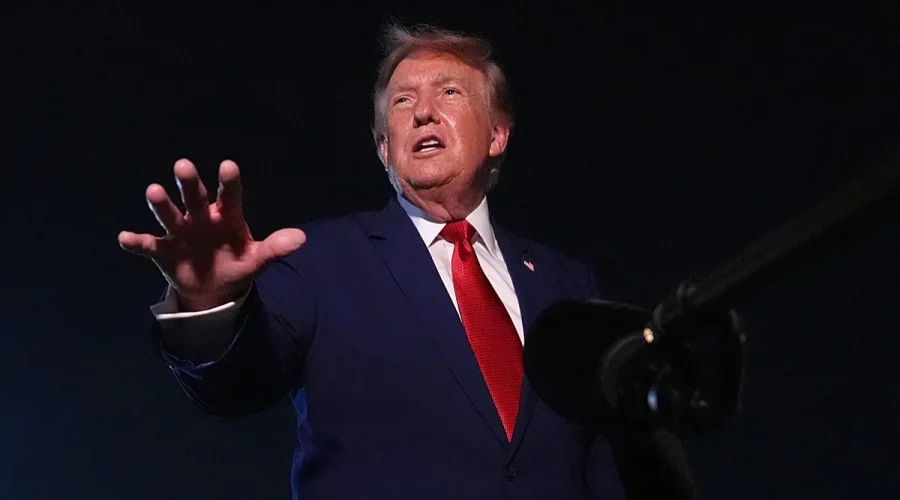
Usagevpn.com – President Donald Trump issued a forceful declaration on Wednesday asserting that the United States maintains complete authority over the Strait of Hormuz, one of the world’s most vital maritime passages. Writing on his Truth Social platform, the president emphasized that this control would not be temporary. “The U.S.A. has total control over the Strait of Hormuz. I THINK WE WILL KEEP IT!” he proclaimed in capital letters, signaling his confidence in sustaining American dominance over the strategic waterway.
The president’s comments came as part of a broader narrative about American military superiority in the region. Trump highlighted the effectiveness of the naval blockade currently in place, noting that international observers have characterized it as “A WALL OF STEEL.” This description captures the comprehensive nature of the blockade, which has effectively restricted maritime traffic through the narrow passage connecting the Persian Gulf to the open ocean. Trump insisted that Iran possesses no viable means to challenge this American control.
The Strategic Importance of the Strait
The Strait of Hormuz represents a critical artery for global energy markets, with approximately twenty percent of the world’s petroleum consumption passing through its waters daily. This narrow channel, measuring only about twenty-one miles at its widest point, serves as the primary export route for oil and natural gas from Gulf states including Saudi Arabia, the United Arab Emirates, Kuwait, and Qatar. Any disruption to traffic through this passage sends immediate ripples through international commodity markets.
Trump’s assertion of total control carries significant weight given the ongoing military conflict between the United States and Iran. The president told reporters late on Tuesday that the situation had shifted decisively in America’s favor. “We have total control over the Hormuz Strait right now. They don’t have control. We have total control. We own it,” he stated with characteristic certainty, emphasizing the permanence of American dominance.
Iran’s Counter-Narrative and Response
Despite American claims, Tehran maintains that it exercises substantial control over much of the waterway. Iranian officials have announced plans to implement a toll system for vessels navigating through the strait, positioning this as a direct response to what they characterize as the war initiated by Trump on February 28. This toll proposal represents Iran’s attempt to assert sovereignty over waters it considers within its sphere of influence.
The Iranian strategy has focused heavily on disrupting maritime commerce as a form of asymmetric warfare. Rather than engaging in conventional military confrontation, Iran has targeted commercial shipping in the Hormuz region, creating congestion and uncertainty that has rattled global markets. These attacks on commercial vessels have proven particularly effective in demonstrating Iran’s ability to influence the flow of energy through the strait, even as American forces maintain their military presence.
War Objectives and Military Campaign
The nearly six-month conflict that began on February 28 has seen unprecedented levels of military activity in the region. US and Israeli forces have conducted extensive bombing campaigns against Iranian military installations and infrastructure. These operations have resulted in the elimination of a significant portion of Iran’s political and military leadership, fundamentally altering the country’s power structure.
The original objectives of the American-led campaign included compelling Tehran to abandon its nuclear power program and potentially facilitating regime change. While these goals remain part of the broader strategic picture, the conflict has evolved to encompass multiple dimensions, including economic pressure, military strikes, and diplomatic maneuvering.
Political Calculations and Future Strategy
Trump’s approach to the conflict has been shaped by domestic political considerations. With his political popularity declining ahead of the November midterm congressional elections, the president has tempered some of his earlier threats to escalate the war. Instead, he has emphasized a more measured approach that focuses on economic pressure through maritime blockades.
In an interview with Axios on Sunday, Trump described the current strategy as “low-keying,” suggesting a deliberate shift toward sustained pressure rather than dramatic military escalation. “We are only semi-negotiating with them. We are just watching Iran with its huge inflation and the fact they have no money,” he explained, highlighting the economic dimension of American strategy.
The “wall of steel” blockade represents a key component of this approach, targeting Iranian ports and restricting the flow of goods in and out of the country. This strategy aims to exacerbate Iran’s economic difficulties while avoiding the political costs associated with broader military escalation. By focusing on maritime control, the United States seeks to achieve its objectives through sustained pressure rather than decisive military victory.
As the conflict continues, the question of who truly controls the Strait of Hormuz remains central to the broader struggle between the United States and Iran. Trump’s confident assertions of American dominance reflect his belief that the current military and economic position will prove sufficient to achieve American objectives, even as Iran continues to resist through asymmetric tactics and diplomatic maneuvering.
Related Reading
Frequently Asked Questions
What is Trump hails wall of steel blockade?
Trump hails wall of steel blockade is the main topic of this guide. The article explains the context, practical details, and next steps readers should understand.
Why does Trump hails wall of steel blockade matter?
Trump hails wall of steel blockade matters because readers are looking for a useful answer, not just a short summary. Good content should match search intent and help them decide what to do next.