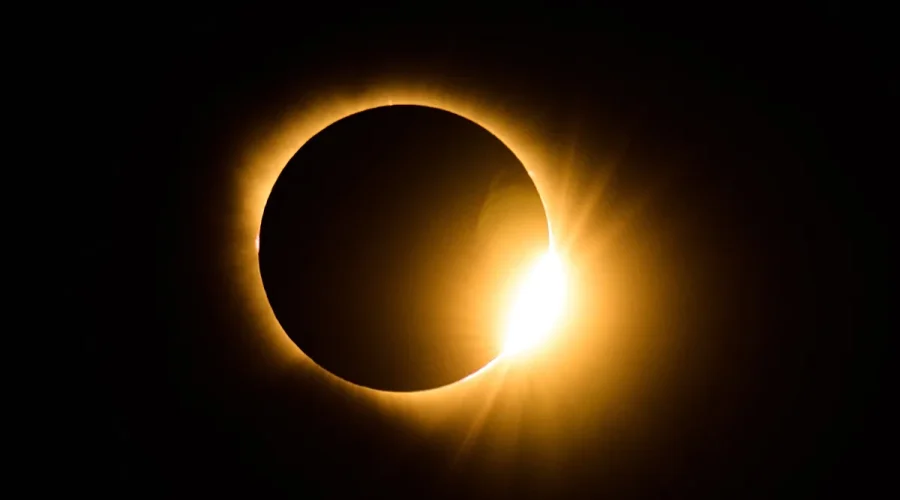
A Century of Waiting: Europe Witnesses Rare Total Solar Eclipse
Usagevpn.com – Wednesday brought an extraordinary celestial event across the European continent as millions of spectators experienced one of nature’s most dramatic displays. The sky darkened unexpectedly over parts of Spain, marking the nation’s first total solar eclipse in more than a hundred years. This remarkable astronomical phenomenon began its journey in the remote Arctic regions of northern Russia before sweeping southward through Greenland and Iceland, ultimately casting its shadow across the Atlantic toward the Iberian Peninsula.
The Eclipse’s Journey Across the Continent
The lunar shadow traveled a remarkable path, beginning its appearance in northern Russia before racing southward to envelop Keflavík, located approximately fifty kilometres from Iceland’s capital city of Reykjavik. From there, the eclipse arced across the Atlantic Ocean, eventually reaching northern Spain and continuing toward the Balearic Islands. In Spain, the shadow moved diagonally along a narrow corridor stretching from the northern coastline to the Mediterranean islands, where both visitors and residents gathered on beaches to witness the spectacle. Many spectators arrived in swimwear, complemented by protective viewing glasses essential for safe observation.
The partial phase of the eclipse commenced in northern Spain shortly after 19:30 Central European Time, eliciting gasps from eager crowds and enthusiastic applause from South Korean tourists gathered in a field at Lodoso, near the northern Spanish city of Burgos. Throughout the continent, from London to Paris and beyond, millions turned their eyes skyward to observe this celestial alignment.
Iceland’s Historic Moment
Earlier in the day, western Iceland experienced complete darkness as the total eclipse passed overhead. Despite heavy cloud cover and rainfall that partially obscured visibility, the phenomenon was unmistakable. Total darkness enveloped Keflavík at 5:47 pm local time, according to on-site reporters. This marked the first occasion since 1433 that such a rare celestial event had been visible in Reykjavik, drawing thousands of both tourists and local residents across the island nation.
Saevar Helgi Bragason, an astronomer and well-known science communicator, stood among the most enthusiastic observers. Having waited over a decade for this moment following a partial solar eclipse that crossed Iceland on March 20, 2015, he expressed both excitement and concern about potentially unfavorable weather conditions. Speaking to the AFP news agency before the event, Bragason noted his apprehension that clouds might obscure the moon’s passage across the sun’s face.
The duration of totality varied across Iceland’s landscape. The cliffs of Latrabjarg in the westernmost region experienced the longest phase at two minutes and thirteen seconds, while observers in central Reykjavik witnessed just over one minute of complete darkness. Accommodation across the island proved scarce, with hotels in Reykjavik and surrounding areas fully reserved. Notably, one establishment in the western village of Breidavik received its initial booking for this event fourteen years prior, according to the national broadcaster RUV.
Spain’s Century-Long Anticipation
For Spanish spectators, the eclipse represented a once-in-a-lifetime opportunity. Rosa Maria Zamora, seventy-two years old, traveled to Colmenar Viejo, situated approximately thirty kilometres north of Madrid, to observe the phenomenon. “Spectacular, very beautiful, truly a unique moment,” she remarked after witnessing the celestial display. Another observer in Tarragona, on Spain’s Mediterranean coastline, exclaimed “This is crazy!” as fellow spectators applauded enthusiastically beside her.
The eclipse marked the first occurrence in mainland Europe since 2006, adding to its significance. Spectacular visibility of the sun’s outer corona—shimmering beyond the edges of the darkened moon—drew collective gasps and cheers from enormous crowds. This ethereal glow, visible just ninety minutes after the eclipse first appeared in northern Russia, created an otherworldly atmosphere that captivated observers of all ages.
Scientific Significance and Historical Context
Throughout human history, eclipses have evoked a complex mixture of amazement, fear, and reverence, appearing to temporarily suspend the ordinary progression of natural phenomena. The shadow, or umbra, generated by the precise alignment of the sun and moon creates an unusual twilight characterized by dropping temperatures, shadows appearing at unexpected angles, and certain animals seeking rest. While the total eclipse phase proved brief—lasting under two and a half minutes in parts of Russia and Greenland—the partial eclipse, occurring as the moon began and concluded its crossing of the sun’s path, extended approximately one hour and forty-five minutes.
The event received extensive coverage through live streaming by both NASA and the European Space Agency, providing scientists with valuable opportunities to examine the sun’s atmosphere and outermost layer. Researchers utilized this rare occasion to investigate solar winds and explore mysteries surrounding our star’s magnetic field. Supplies of specialized viewing glasses experienced unprecedented demand as crowds across Europe, Canada, the northern United States, and northwest Africa gathered to observe the partial eclipse. Even in the French Pyrenees, where heavy clouds temporarily obscured the view, visitors on the summit of the Pic du Midi witnessed the spectacle as conditions improved minutes before totality.
“How wonderful!” said one woman in the crowd in Colmenar Viejo, capturing the collective sentiment of millions who experienced this extraordinary celestial event.
The eclipse demonstrated once again how astronomical phenomena continue to unite humanity across borders and cultures, creating shared moments of wonder that transcend language and geography. As the moon gradually moved away from the sun’s face, restoring daylight to the affected regions, spectators carried with them memories of a day when the sky itself seemed to hold its breath.
Related Reading
Frequently Asked Questions
What is Solar eclipse plunges parts of Spain?
Solar eclipse plunges parts of Spain is the main topic of this guide. The article explains the context, practical details, and next steps readers should understand.
Why does Solar eclipse plunges parts of Spain matter?
Solar eclipse plunges parts of Spain matters because readers are looking for a useful answer, not just a short summary. Good content should match search intent and help them decide what to do next.