Wildfire Catastrophe in Eastern Algeria Sparks Push to End Four-Decade-Old Death Penalty Moratorium
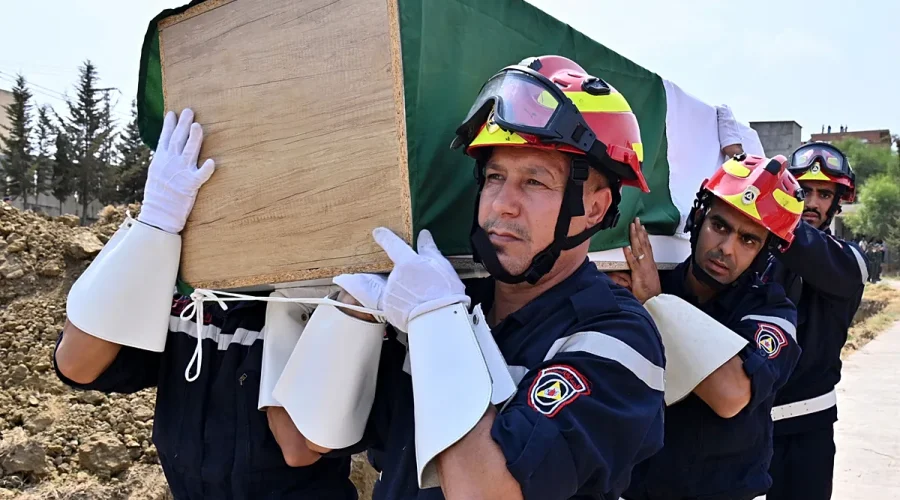
Usagevpn.com – At least twelve people have been killed and dozens more injured by a wave of devastating wildfires sweeping through northeastern Algeria, prompting President Abdelmadjid Tebboune to declare three days of national mourning and announce a sweeping legal overhaul that would restore capital punishment for those convicted of setting fires. The move, if carried through, would dismantle a moratorium on executions that has held in place since 1993 — a quiet but significant shift in the country’s penal landscape triggered by public grief and anger over the latest blaze.
A Legal Landmark in the Making
Tebboune has directed that an amendment to the Criminal Code be finalized by 15 September, a deadline that signals urgency rather than deliberation. Algeria has not carried out an execution since the early 1990s, and the moratorium has been widely regarded as a de facto abolition of the death penalty. Reintroducing it — even in a narrow category limited to arson — would represent the first major expansion of capital-punishment provisions in over three decades. Legal scholars and human-rights observers have noted that singling out one crime for the ultimate sanction, while leaving other offenses untouched, raises questions about proportionality and consistency in sentencing.
The president’s statement framed the toll as
“a great tragedy”
— language that underscored the emotional weight behind what is, at its core, a legislative instruction. Officials maintained the official death count as of Wednesday, though Interior Minister Saïd Sayoud later provided a provincial breakdown: five fatalities in Jijel, four in Béjaïa, and three in Tizi Ouzou. Fifty-four additional victims were receiving hospital treatment for burn injuries, six of them in critical condition as of the latest update.
Fires Still Burning Across the East
The situation on the ground remained volatile into Thursday. Algeria’s civil protection agency reported that 46 fires were still active out of 193 recorded over the preceding 24 hours. Unverified video clips circulating overnight showed residents trapped inside homes as flames engulfed surrounding vegetation, underscoring how quickly the blazes can outpace evacuation efforts in densely wooded areas. The national gendarmerie confirmed that three major highways connecting eastern regions were shut down because of fires raging near Béjaïa, Jijel, and Sétif, disrupting transport and complicating firefighting logistics.
A Pattern Worsening Under Climate Pressure
Summer forest fires are not new to northern Algeria. The country’s Mediterranean coastline and mountainous interior create conditions where dry vegetation ignites readily during hot months. What has changed, however, is frequency and severity. More frequent droughts and record-breaking heat waves have intensified fire seasons across North Africa, shortening the window between ignition and uncontrollable spread. In July 2023, a particularly vicious episode near Béjaïa consumed thousands of hectares of forest and agricultural land, destroyed hundreds of homes, and killed more than thirty people. Authorities recorded nearly two thousand fires nationwide in July of this year alone, a figure that dwarfs earlier annual totals and points to a structural escalation rather than an isolated anomaly.
Why Arson, and Why Now?
The decision to target arsonists specifically — rather than, say, all causes of fatal fires — suggests that authorities believe at least some of the recent blazes were deliberately set, whether for land acquisition, insurance fraud, or local disputes over forested property. In a country where informal land use and contested boundaries around state-owned forests remain common flashpoints, the political calculus appears to be that a visible, severe penalty will deter intentional ignition. Critics, however, will point out that most wildfires in Algeria are attributed to natural causes or negligence, and that a death-penalty provision aimed at a subset of cases may do little to address the broader infrastructure gaps — inadequate firebreaks, limited aerial firefighting capacity, and aging rural roads — that allow small ignitions to become regional catastrophes.
The three-day mourning period declared on Thursday gives families and communities a formal space to grieve while the political machinery moves toward the September deadline. Whether the amended Criminal Code will survive parliamentary scrutiny, judicial challenge, or international scrutiny remains to be seen. What is certain is that the fires of this summer have converted a long-dormant legal question into an urgent one, and that the answer Algeria chooses will shape its penal code for years to come.
Related Reading
Frequently Asked Questions
What is Algerian president seeks to impose death?
Algerian president seeks to impose death is the main topic of this guide. The article explains the context, practical details, and next steps readers should understand.
Why does Algerian president seeks to impose death matter?
Algerian president seeks to impose death matters because readers are looking for a useful answer, not just a short summary. Good content should match search intent and help them decide what to do next.