Thousands of Protesters March Across France to Demand Comprehensive Law Against Sexual Violence
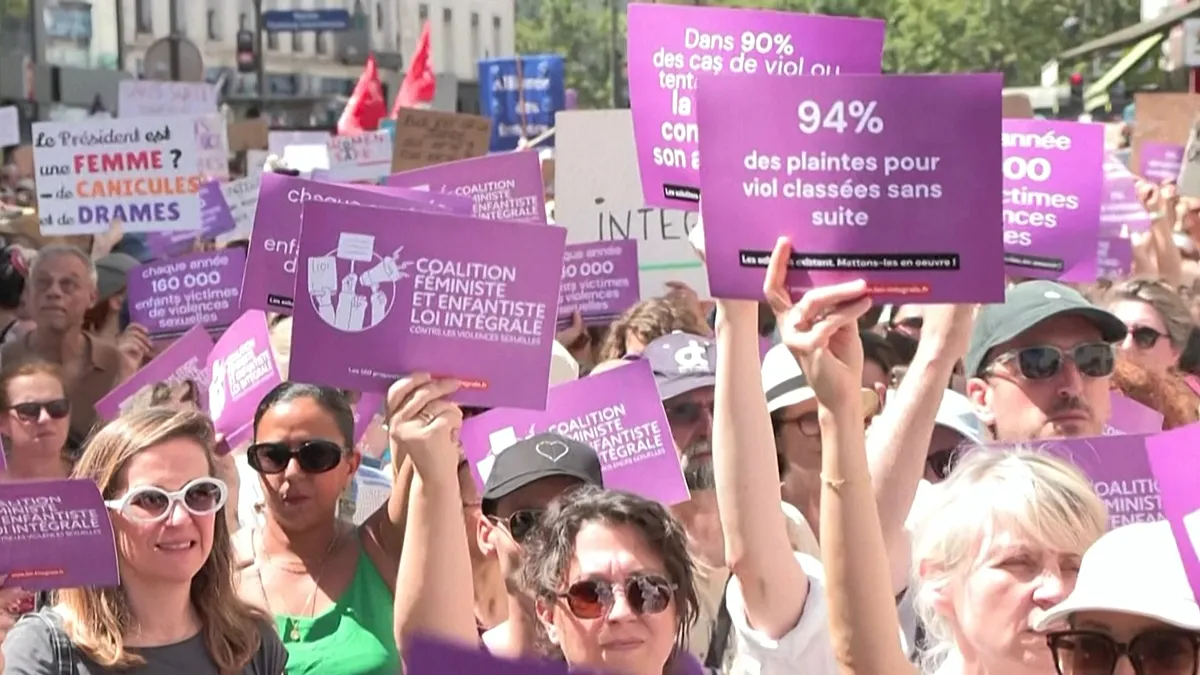
Thousands of protesters march throughout France – France witnessed a wave of public demonstrations on Saturday as tens of thousands of citizens took to the streets, rallying for urgent legislative reforms to address sexual violence. The protests, which spanned multiple cities, were triggered by the tragic case of Lyhanna, an 11-year-old girl whose disappearance and subsequent murder ignited widespread outrage. Her body was discovered in an abandoned silo nearly a week after she went missing from the southwestern town of Fleurance on May 29. This event has become a symbol of systemic failures in the country’s justice system, prompting calls for a sweeping legal overhaul.
The Tragic Incident
Lyhanna’s case has taken center stage in the national conversation, revealing a pattern of neglect. The primary suspect, a 41-year-old man identified as the father of one of her school friends, had been previously accused of child rape twice. Both investigations were halted or delayed, leaving the girl vulnerable to harm. The tragedy has been described as a “clear malfunction” in public services, underscoring the inadequacy of current measures to safeguard children from abuse.
“The system failed to act decisively, and Lyhanna paid the price,” stated Anne-Cécile Mailfert, president of the Women’s Foundation, during a speech at the Paris demonstration. “We cannot accept a justice system that prioritizes expediency over justice, especially when 94% of rape complaints are dismissed without further investigation.” Her words resonated with protesters, who carried signs demanding accountability and change.
Calls for Systemic Reform
Feminist and child protection organizations have long argued that France’s approach to sexual violence is fragmented. They advocate for a “360-degree” law that addresses prevention, prosecution, and victim support simultaneously. “The current measures are reactive, dictated by the urgency of individual cases rather than the broader, systemic nature of the problem,” said one representative from the French Association for Child Safety. “We need a unified framework to ensure every victim receives the protection they deserve.”
The protests reflect a growing demand for this comprehensive approach. Activists emphasize that piecemeal reforms—such as targeted laws for specific incidents—have not prevented recurring cases of abuse. Instead, they call for institutional changes to address root causes, including cultural attitudes toward gender-based violence and judicial inefficiencies. “This is not just about Lyhanna,” added Mailfert. “It’s about the countless victims who have been overlooked by a system designed to protect them.”
Government Response and Challenges
French President Emmanuel Macron acknowledged the crisis, expressing concern over public trust in institutions. “We must now distinguish between personal responsibility and systemic lapses across all public services,” he said last month, highlighting the need for a deeper analysis of how failures in one sector can compound others. However, the president’s statements have been met with mixed reactions, as critics argue that systemic change requires more than rhetoric.
Justice Minister Gerald Darmanin, who has faced mounting pressure, apologized for the “huge failure” in Lyhanna’s case. He announced a plan to review 70,000 outstanding child sexual abuse cases by July 14, a deadline that has drawn skepticism. Darmanin pledged that no senior judge would take a holiday until they had met with each chief prosecutor to assess the current state of affairs. “We need to ensure every case is given the attention it deserves,” he said.
Yet, the feasibility of this initiative remains questionable. France’s justice system is known for its slowness, with fewer professional judges than any other European country, according to Council of Europe data. This shortage has contributed to delays in processing cases, often leaving victims without timely support. “The system is overwhelmed, and victims are left waiting for justice that may never come,” noted a legal expert from the National Institute of Judicial Studies.
Protest Coordination and National Impact
Organizers coordinated protests in over 80 cities, including Agen, Dijon, and Toulouse, to amplify their message. The movement, which gained momentum since the end of 2024, has united various groups under a common goal: to push for a law that addresses the multifaceted nature of sexual violence. “This is a moment to unite our voices and demand that the government act decisively,” said a spokeswoman for the protest coalition.
The emotional weight of Lyhanna’s story has galvanized public opinion, with many citizens expressing frustration over the slow pace of reforms. Social media platforms have been flooded with posts linking her case to broader issues of gender inequality and institutional complacency. “We’ve seen the same pattern before—cases dismissed, perpetrators unpunished, and victims unheard,” wrote one user, echoing the sentiments of protesters across the country.
As the demonstrations unfolded, the focus remained on the need for a law that combines prevention, rapid prosecution, and long-term support for survivors. This includes measures such as mandatory reporting for suspected abusers, improved resources for victim advocacy, and stricter penalties for repeat offenders. “A comprehensive law is our only hope to create lasting change,” emphasized Mailfert, whose group has been at the forefront of the campaign for over two years.
The protests also highlighted the role of grassroots activism in shaping policy. Local leaders, legal professionals, and community members joined the march, underscoring the widespread support for the cause. “This is not just about one child,” said a participant in Toulouse. “It’s about the future of our children and the integrity of our justice system.”
Broader Implications and Future Steps
Lyhanna’s case has reignited debates about the effectiveness of France’s legal framework in addressing sexual violence. With 94% of rape complaints dismissed without action, critics argue that the current system fails to hold perpetrators accountable. This statistic has become a rallying cry for reformers, who see it as evidence of a deeper institutional problem.
As the protests continue, the pressure on the government to act is intensifying. The push for a “360-degree” law has gained traction among lawmakers, with some suggesting it could be a key component of the next legislative agenda. However, challenges remain, including political resistance and the need for widespread public support. “We must ensure this law is not just symbolic but transformative,” said Mailfert, who called for collaboration between activists and legal experts to draft a robust bill.
France’s response to the crisis will be closely watched, both domestically and internationally. The country’s justice system has long been criticized for its inefficiency, and the Lyhanna case has exposed its vulnerabilities. If successful, the proposed law could set a precedent for other nations grappling with similar issues. For now, the streets of France echo with the demand for change, a testament to the power of collective action in shaping justice.