EU Environmental Policy Must Shape Defence Strategy, Says Commissioner Roswall
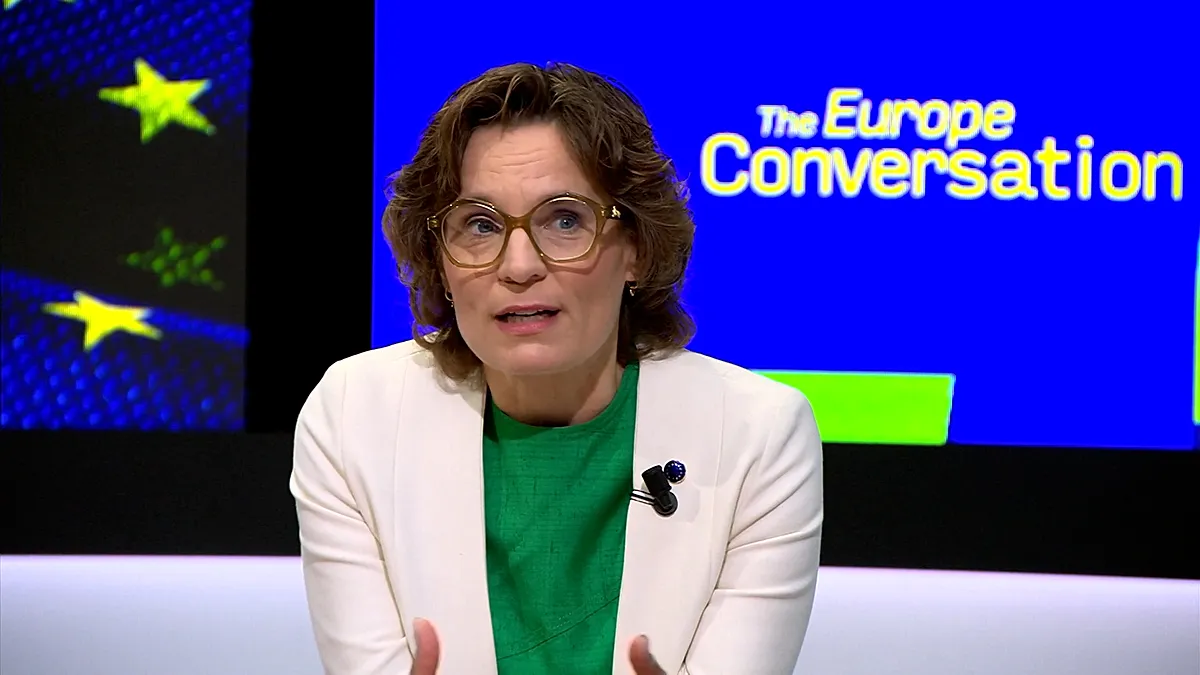
EU s environmental policy must be part – Jessika Roswall, the European Union’s Commissioner for Environment, Water Resilience, and a Competitive Circular Economy, has called for the EU’s environmental policy to be embedded in its defence strategy. In a recent Euronews interview, she highlighted how climate challenges are increasingly intertwined with security threats, urging a unified approach to address their overlapping impacts. “The EU’s environmental policy must be central to our defence plans,” she stated, emphasizing the role of ecological resilience in safeguarding the bloc’s strategic interests.
Climate Change as a Security Risk
Roswall pointed to climate change as a major driver of instability, noting that water scarcity, for instance, has far-reaching implications beyond the environment. She explained that when water resources become limited, they can trigger conflicts over energy, agriculture, and trade. “Environmental degradation isn’t just an ecological issue—it’s a security risk,” she argued, citing historical examples where resource shortages led to geopolitical tensions and border disputes.
“We see how wetlands can transform into critical border defenses,” Roswall said. This idea reflects the strategic value of natural ecosystems in mitigating threats, such as slowing the advance of military forces or protecting vulnerable regions from extreme weather events.
Peatland Restoration as a Dual-Use Strategy
Poland, Finland, and Lithuania are demonstrating how peatland restoration can serve both environmental and defence goals. By re-flooding drained wetlands along their eastern frontiers, these countries are creating natural barriers that hinder the movement of heavy machinery like tanks. “This isn’t just about saving the environment—it’s about strengthening our security posture,” Roswall clarified, underscoring the synergy between ecological and military planning.
Resource Vulnerability and Strategic Autonomy
Roswall also warned about Europe’s reliance on global markets for essential resources, which she linked to rising costs and supply chain risks. The recent US-Iran conflict and the Iranian blockade of the Strait of Hormuz, a key route for agricultural goods, have exposed how vulnerable the EU is to external disruptions. “The EU’s environmental policy must support efforts to reduce this dependency,” she said, stressing that strategic autonomy is vital for long-term security.
DEFRA Report Highlights Environmental Degradation’s Security Risks
A report from the UK’s Department for Environment, Food and Rural Affairs (DEFRA) aligns with Roswall’s warnings, highlighting that natural degradation poses a direct threat to national security. The findings, reportedly involving MI5 and MI6 intelligence, reveal how declining ecosystems contribute to resource competition and economic instability. “The EU’s environmental policy must address these global trends,” she added, noting that the UK’s experience is a warning for the entire bloc.
“Natural degeneration is the main threat to the UK’s security,” Roswall quoted the report. She argued that without urgent action, biodiversity loss and resource depletion could destabilize Europe’s geopolitical position, making it more susceptible to external pressures and conflicts.
Integrating Policy for a Resilient Future
Roswall stressed that integrating environmental and defence policies is not just a theoretical necessity but a practical one. She called for closer collaboration between environment and defence ministries, as seen in Lithuania’s initiatives, to create a resilient framework for resource management. “The EU’s environmental policy must guide our defence strategies,” she reiterated, urging a shift toward sustainable practices that protect both people and infrastructure.
As the EU prepares for the Circular Economy Act, Roswall believes this legislation could play a pivotal role in reducing reliance on finite resources. By prioritizing secondary materials, the act aims to strengthen the bloc’s economic and strategic independence. “This is about redefining how we use resources in Europe,” she concluded, advocating for a future where environmental protection and defence planning are inseparable.