Spain Approves €309M Ceuta Crisis Package
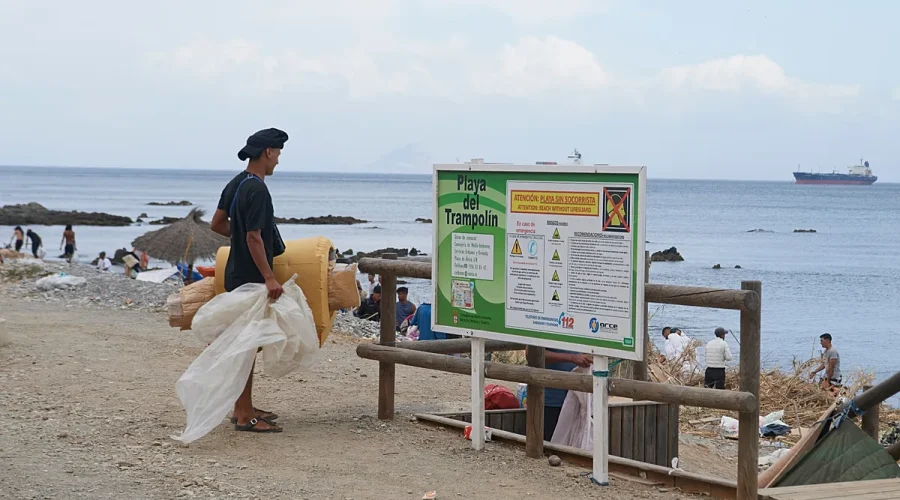
Usagevpn.com – The Spanish government approves 309 million in emergency funding for the North African enclave of Ceuta after an extraordinary decree passed through the Council of Ministers on Tuesday. The measure, spanning four priority sectors, represents roughly 16% of the territory’s annual GDP compressed into the final four months of 2026. First Vice-President and Economy Minister Carlos Cuerpo presented the decree alongside Government spokesperson Elma Saiz and Territorial Policy Minister Ángel Víctor Torres, framing it as a calibrated response to what officials call the most severe humanitarian and economic shock the city has endured in decades.
The timing sharpened existing political fault lines. A large public demonstration was already planned in Ceuta for the following days, and Podemos announced a separate anti-racism march in solidarity with affected communities. Within the ruling PSOE, internal tensions over migration policy had been building since the August surge, making the decree both a policy intervention and a political pressure valve.
Allocation Across Four Priority Streams
The decree carves the total envelope into distinct buckets. The single largest line item — €118 million — funds humanitarian care for unaccompanied migrant minors who arrived during the August crossing surge. More than €90 million is directed at defence and national-security forces operating along the city’s perimeter. A further €21 million covers healthcare, education, justice, and water-treatment infrastructure. The remaining €80 million targets the local economy through direct business support, trade incentives, and temporary tax relief.
Cuerpo described the intervention as a “shock response” calibrated to demands already tabled by social organisations and the local administration. His stated objective was blunt:
“The main aim of the decree was to give confidence to both companies and workers.”
He noted that, before the migration emergency, Ceuta had been enjoying a period of economic dynamism gradually correcting long-standing structural deficits accumulated over decades. The crisis, in his assessment, threatened to reverse that fragile progress within weeks.
Direct Grants, Vouchers, and Export Support
Within the €80 million economic tranche, €36.6 million is designated for direct financial support. Self-employed workers may claim €5,000 each; companies receive between €10,000 and €150,000 depending on annual turnover. Applications open on Monday 14 September through the Tax Agency’s online portal, with first disbursements targeted for early October. Officials estimate the measure will reach approximately 2,600 self-employed individuals and 1,400 firms.
Complementing the direct grants, the package includes €14 million in consumer and tourism vouchers designed to stimulate local spending, €1 million for the Plan Ceuta Exporta programme assisting small exporters, and a further €1 million dedicated to marketing Ceuta as an international tourist destination.
Permanent Fiscal and Labour Adjustments
Beyond the emergency grants, the decree introduces structural changes intended to lower the cost of doing business in Ceuta and Melilla. Corporation Tax relief for companies maintaining operations and employment in both enclaves rises from 50% to 60%, while parallel adjustments to personal income tax (IRPF) for the self-employed bring the combined fiscal benefit to €12 million.
On the labour side, employers’ Social Security contributions for permanent contracts linked to vocational training will be subsidised from 50% to 75%, at an estimated cost of €12.2 million over four months. The government will also establish an ICO-backed loan-guarantee scheme worth up to €50 million, introduce tax exemptions for firms activating the job-retention mechanism (ERTE), and extend an extraordinary income benefit to self-employed workers compelled to halt activity temporarily.
Political Fallout and the Ceuta Day Message
Ceuta’s president, Juan Jesús Vivas, had warned a month earlier of the gravity of the situation when Madrid approved an initial €168 million package for the territory. In a statement subsequently published by PP leader Alberto Núñez Feijóo, Vivas denounced what he called an “attack on its territorial integrity” and depicted a city “overwhelmed and on the brink of collapse.”
On 2 September — Ceuta Day, the anniversary of the city’s founding — Vivas addressed Spaniards nationwide in a written message. He called for national unity and solidarity, thanked citizens for the outpouring of support in recent weeks, and described the preceding month in stark terms:
“Ceuta has lived through its most difficult month in recent memory, and it needs the whole of Spain at its side.”
FAQ
When can Ceuta residents apply for direct economic support? Applications open on Monday 14 September through the Tax Agency’s online portal. First disbursements are targeted for early October 2026.
How much can self-employed workers and companies claim? Self-employed individuals may claim €5,000 each. Companies receive between €10,000 and €150,000, scaled to annual turnover. Officials estimate roughly 2,600 self-employed workers and 1,400 firms will be reached.
What permanent fiscal changes does the decree introduce? Corporation Tax relief for firms operating in both Ceuta and Melilla rises from 50% to 60%. Social Security contribution subsidies for permanent contracts tied to vocational training increase from 50% to 75%. An ICO-backed loan-guarantee scheme of up to €50 million and ERTE-linked tax exemptions are also established.
How does this package relate to the earlier €168 million allocation? The €168 million package was approved roughly one month before the current decree as an initial response. The €309 million measure supersedes and expands that earlier intervention, adding permanent fiscal and labour provisions alongside the emergency grants.