Europe Assembles Top-Brain Defence Panel as Russian Pressure Intensifies
Usagevpn.com – European capitals are preparing to convene an elite gathering of senior political and military decision-makers drawn from EU member states, Britain, and Ukraine. The purpose is straightforward: identify where Europe’s conventional defence posture falls short and chart a faster route to closing those gaps before the security environment deteriorates further. The move arrives at a moment when Washington is scaling back its forward military footprint on the continent and Moscow’s sustained escalation in Ukraine has sharpened fears that the conflict could spill beyond Ukrainian borders.
Who Announced It and Where
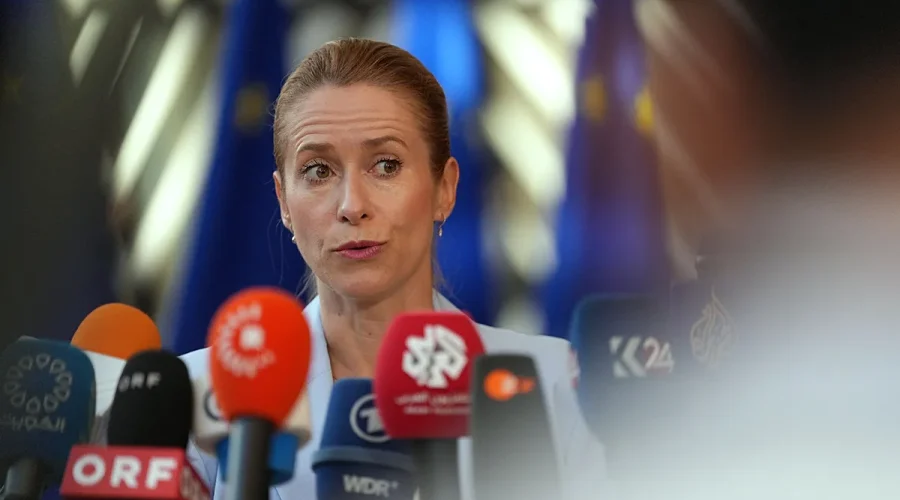
Kaja Kallas, who serves as the EU High Representative for Foreign Affairs and Security Policy, unveiled the initiative during an informal gathering of defence ministers held in Ireland on Tuesday. Framing the effort as a design exercise for a fundamentally new approach to European defence, she told journalists that the group would pull together leading thinkers to generate unconventional answers to very concrete problems.
“The aim is to have some of the brightest minds on security and defence come together and really provide out-of-the-box solutions on how we can be faster in fulfilling these gaps and how we can be more effective, especially now that the security situation in Europe is so much more real.”
Why Now: A Shifting Strategic Landscape
The timing is not accidental. Over the past several years, European governments have poured record sums into defence budgets, yet Kallas was candid that money flowing into procurement pipelines does not, by itself, translate into operational readiness. She pointed to specific conventional-capability shortfalls within the NATO framework that Europe has already mapped but has not yet remedied at the speed the threat demands.
“Europe is investing more in defence than ever, but spending alone is not automatically a guarantee of success. We have not been fast enough to cover the gaps in Europe’s conventional power within NATO that we have identified.”
Two external pressures make the urgency tangible. First, the current US administration has signalled a desire to reduce its permanent military presence in Europe, shifting the burden of day-to-day deterrence onto allied shoulders. Second, Russia’s continued escalation in Ukraine — including strikes that have reached deep into Ukrainian territory and periodic incursions near NATO borders — has moved the question from “if” to “when” for European planners. The combination has produced what defence analysts describe as an anxiety cycle: budgets rise, but delivery timelines lag behind the pace of threat evolution.
NATO Remains the Anchor
Kallas was careful to stress that the new working group does not seek to duplicate or rival the Alliance. NATO, she reiterated, remains the cornerstone of European security architecture. What the initiative adds is a European-voice layer: a mechanism through which member states and EU institutions can make strategic choices about which capabilities to prioritise, which redundancies to eliminate, and where indigenous innovation can substitute for imported systems. In effect, it is an attempt to give Europe a faster decision loop inside the existing Alliance structure rather than outside it.
Ukraine’s Battlefield as a Laboratory
A distinctive feature of the panel is the explicit inclusion of Ukrainian participants. Four years of full-scale war have produced an extraordinary volume of frontline data — on drone warfare, electronic countermeasures, logistics under fire, and rapid prototyping of low-cost systems. European defence planners view that experience as a compressed learning curve that would otherwise take a decade of peacetime exercises to replicate. Drawing on Ukrainian battlefield innovation is therefore not symbolic; it is treated as a direct input into the group’s analytical work.
What the Group Will Deliver
The output is defined: a report containing concrete, actionable recommendations for European defence policy. Kallas described the intent as supplying member states and EU institutions with a clear menu of what should be done better and faster, with the explicit goal of producing tangible capability gains rather than another shelf-bound study.
“The idea is to give ideas to member states but also EU institutions of what we should do better and faster — to really have tangible results so that we cover the capability gaps we have identified, considering the geopolitical situation.”
Formal Launch and Next Steps
The initiative will be formally inaugurated at a conference organised by the European External Action Service (EEAS), titled “European Defence: Moving Further, Faster,” scheduled for 7 September. On that date the full roster of participants and additional operational details of the working group are expected to be made public. Until then, the composition of the panel — which senior ministers, generals, and Ukrainian officials will sit at the table — remains undisclosed.
For European citizens watching from outside the capitals, the stakes are easy to state: the continent is being asked to defend itself more quickly, more coherently, and with fewer dependencies than it has managed in decades. Whether a single high-level working group can compress years of bureaucratic inertia into months of operational change remains the central question the September conference will begin to answer.
Related Reading
Frequently Asked Questions
What is EU to gather brightest minds to boost?
EU to gather brightest minds to boost is the main topic of this guide. The article explains the context, practical details, and next steps readers should understand.
Why does EU to gather brightest minds to boost matter?
EU to gather brightest minds to boost matters because readers are looking for a useful answer, not just a short summary. Good content should match search intent and help them decide what to do next.