Global Fashion Emissions Climb 6.3% as EU Sustainability Mandates Hit a Wall
Usagevpn.com – The world’s clothing sector just posted a six-point-three percent jump in greenhouse gas output in 2024, a figure that lands like a cold splash on Brussels’s ambitious climate agenda for textiles. The Apparel Impact Institute’s newest annual assessment confirms what regulators have feared: even as more brands pledge renewable power, cleaner fibres, and coal retirements, the sheer volume of material flowing through global supply chains is outstripping every efficiency gain. For the European Union, which has set a target of slashing fashion-sector emissions by 45 percent below 2019 levels by 2030, the gap between policy ambition and physical reality is widening.
Where the Carbon Actually Lives
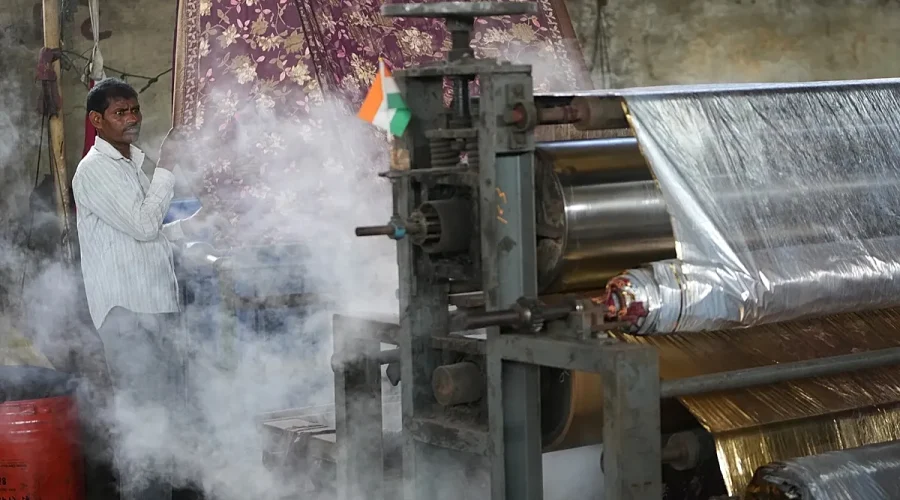
The arithmetic of apparel emissions is dominated by two stages. Textile processing — spinning, weaving, dyeing, finishing — generates roughly 51 percent of the sector’s total carbon output. Raw-material production, meaning the manufacture of synthetic and natural fibres, accounts for another 26 percent. Together those two steps place the heaviest climate burden squarely on factories that, in most cases, sit thousands of kilometres from the European consumer who will ultimately wear the garment.
The European Environment Agency estimates that between 80 and 90 percent of the EU’s fashion-related environmental footprint is generated outside the continent. That structural reality shapes every piece of legislation Brussels has drafted: the bloc’s rules are engineered to reach beyond its borders by attaching conditions to products entering the single market, effectively taxing “outsourced” pollution at the point of sale.
Trade Flows That Define the Problem
Data from the World Integrated Trade Solution shows China exporting more than €26.5 billion worth of apparel into the EU, representing approximately one-third of every textile and clothing item sold on European shelves. Bangladesh occupies the second position, followed by Turkey, India, Pakistan, Vietnam, and Morocco. The geographic spread of suppliers means that no single bilateral negotiation can address the emissions embedded in European wardrobes; the challenge is systemic and multi-jurisdictional.
Even as production moves abroad, the end-of-life problem stays home. Around 12.6 million tonnes of textile waste are generated within the EU each year, a volume that shows no sign of shrinking under current consumption patterns.
Brussels’s Regulatory Toolkit
In response, the European Commission has rolled out a package of measures intended to reshape how garments are designed, marketed, and ultimately discarded. Extended producer-responsibility rules now push fashion companies to bear the financial cost of the waste their products create. Circularity requirements aim to keep materials in use longer and reduce virgin-fibre demand.
Yet the latest data undercuts the assumption that waste policy alone can bend the emissions curve. New figures from the Apparel Impact Institute indicate that clothing production volumes will continue climbing even if the bloc’s regulations succeed in trimming per-unit carbon intensity. The report is blunt about the dual-track requirement:
“Decarbonising apparel requires action on both sides of the equation: reducing the carbon intensity of material production and manufacturing, while also addressing the growth in material volumes that can outpace those gains.”
The Financing Gap at Factory Level
For manufacturers in key production countries, the transition is not merely a technical exercise. Many lack the capital to retrofit boilers, install heat-recovery systems, or switch to renewable grids. In several major textile-producing nations, clean electricity remains either unavailable or priced beyond what a mid-tier mill can absorb. Sustainable fibre alternatives, meanwhile, often carry a premium over conventional polyester or cotton, squeezing margins further.
The report argues that brands must share the financial and operational burden with their suppliers through longer-term purchasing commitments, dedicated project financing, and deeper operational partnerships. Climate targets, it insists, must be translated into concrete factory-level investment, especially in energy- and heat-intensive processing steps.
“This includes improving access to appropriate finance, sharing project costs and risks, providing stable and longer-term purchasing commitments and aligning commercial relationships with decarbonisation objectives.”
Signals of Change on the Ground
Not every signal is negative. Swedish retailer H&M, one of the largest international fashion chains, cut the number of supplier factories still running on-site coal boilers from 118 in 2022 to just ten by the close of 2025, a reduction the report highlights as evidence that brand-level pressure can accelerate supplier decarbonisation.
Industrial electrification is also gaining traction. Heat pumps are being deployed for laundry, dyeing, and drying operations where steam boilers once dominated. In Austria, wood-based cellulosic-fibre producer Lenzing and power-generation firm VERBUND have commissioned a 14-megawatt power-to-heat facility that converts renewable electricity into the high-temperature process heat textile mills require — a model that could scale across Central Europe’s smaller processing plants.
The Stakes by 2030
Under business-as-usual assumptions, the report projects that global apparel emissions could reach 1.277 gigatonnes by 2030. That trajectory would render the EU’s 45-percent reduction target unattainable unless both the volume of material produced and the carbon intensity of its processing are curtailed simultaneously. For European policymakers, the tension is acute: they must decarbonise supply chains that largely operate outside their regulatory reach while answering industry complaints about compliance costs, competitiveness, and the pace of change. The next legislative cycle will be judged not by the elegance of its circularity language, but by whether it moves the needle on the factories where the carbon is actually emitted.
Related Reading
Frequently Asked Questions
What is EU s green fashion rules face?
EU s green fashion rules face is the main topic of this guide. The article explains the context, practical details, and next steps readers should understand.
Why does EU s green fashion rules face matter?
EU s green fashion rules face matters because readers are looking for a useful answer, not just a short summary. Good content should match search intent and help them decide what to do next.