Maersk Brings Back Another Shipping Service Through Suez
Usagevpn.com – Maersk brings back another shipping service as part of a measured effort to restore maritime traffic through the Suez Canal. The global carrier, alongside Hapag-Lloyd, has announced the return of its AE19 container route to the historic waterway. This development signals cautious optimism about Red Sea security conditions, though experts warn that a full-scale return remains distant.
The AE19 service operates under the Gemini Cooperation partnership, connecting Asian ports with Mediterranean, Saudi Arabian, and European destinations. For months, this route followed the longer Cape of Good Hope path around southern Africa, extending transit times considerably. The carriers confirmed that the shift back to Suez begins immediately, starting with the westbound sailing of the Berlin Maersk vessel.
Security and Strategic Timing
Hapag-Lloyd stated that the AE19 adjustment cuts transit time by roughly four weeks compared to the African detour. Both companies conducted detailed security evaluations before making the decision, emphasizing that this is a selective move rather than a comprehensive strategy.
“This is a targeted adjustment for one selected service, not a general network-wide return,” Hapag-Lloyd explained to industry observers.
Additional routing decisions will depend on three key factors: ongoing security assessments, operational feasibility, and the broader impact on customer operations. Maersk similarly noted that Red Sea security conditions were the primary catalyst for restoring AE19.
Since early July, Maersk has redirected four services from the Cape route to Suez, including AE15, MECL, WAF6, and AE19. However, nine other Maersk services continue around Africa, and the company has not provided specific timelines for further changes.
Market Outlook and Economic Impact
Industry analysts caution that restoring a limited number of services does not signal a complete recovery of Suez Canal traffic. Simon Heaney, senior container research manager at maritime consultancy Drewry, stressed that the recovery pace remains tied to developments in the Strait of Hormuz and the wider Middle East conflict.
“While the latter remains unresolved, we do not expect to see a meaningful return of Asia-to-Europe loops via Suez,” Heaney stated.
Even with improved security, shipping companies are likely to pursue a phased return rather than an abrupt shift. Heaney noted that recovery would probably start with European-bound journeys carrying lower-value cargo, with carriers exercising caution before committing more valuable shipments.
Commercial considerations also influence the gradual approach. The Cape of Good Hope route requires additional vessels due to longer transit times, meaning a sudden mass return to Suez would free up ships just as carriers receive substantial deliveries of new vessels. This timing mismatch could create capacity imbalances and downward pressure on freight rates.
“Carriers have to manage capacity wisely due to the large number of new ships being delivered,” Heaney explained. “Shortening rotations en masse will see rates slide dramatically.”
For European importers, the benefits of the Suez return will materialize incrementally. While a handful of restored services may provide faster transit on specific routes, overall network transit times will not immediately return to pre-diversion levels.
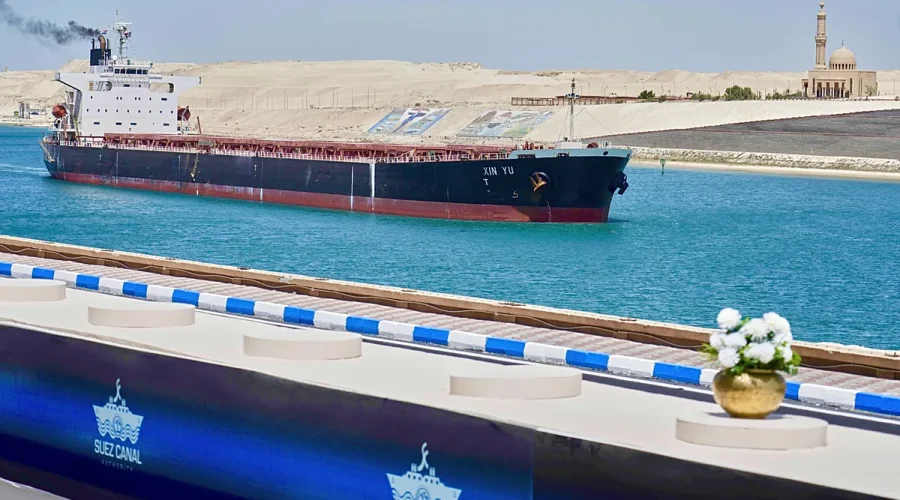
The Suez Canal offers the most direct maritime connection between Asia and Europe, eliminating the approximately 10,000-nautical-mile detour around Africa. The extended Cape route has increased both fuel consumption and voyage durations, while simultaneously reducing toll revenues for Egypt, which relies heavily on canal fees as a source of foreign currency.
The Suez Canal Authority has actively encouraged shipping companies to resume normal operations. In June, Chairman Admiral Osama Rabiee highlighted that shorter transit times and operational savings were attracting some of the world’s largest container vessels back to the canal.
At that time, the CMA CGM Vendôme—a vessel with capacity for 24,000 twenty-foot equivalent containers—transited the canal on a service connecting Asia with northwestern Europe. This marked the first southbound movement of a mega-container ship through the waterway since the Red Sea disruptions began.
Frequently Asked Questions
Which Maersk services have returned to the Suez Canal? Maersk has shifted four services from the Cape route to Suez: AE15, MECL, WAF6, and AE19. The AE19 is the latest addition, operating under the Gemini Cooperation partnership with Hapag-Lloyd.
How much time does the Suez route save compared to the Cape of Good Hope? The Suez Canal eliminates approximately 10,000 nautical miles compared to the African detour. For the AE19 service, this translates to a reduction of about four weeks in transit time.
Why hasn’t Maersk returned all services to the Suez Canal yet? Security conditions in the Red Sea remain a key factor, but commercial considerations also play a role. Carriers are managing capacity carefully, as a sudden mass return to Suez would free up ships just as new vessels are being delivered.
What is the outlook for a full return to the Suez Canal? Industry experts suggest that a meaningful return of Asia-to-Europe loops via Suez is unlikely until the broader Middle East conflict is resolved. Recovery is expected to be phased, starting with lower-value cargo and European-bound journeys.