A New Lens on Afghanistan: Daniel Malikyar’s Visual Journey Through His Ancestral Homeland
Usagevpn.com – For generations, international media has presented Afghanistan through a narrow window dominated by war zones, political upheaval, and humanitarian crises. This limited perspective is what photographer Daniel Malikyar seeks to transform through his comprehensive new publication. The work offers readers a chance to witness a nation defined not only by its struggles but by its enduring cultural richness and natural splendor.
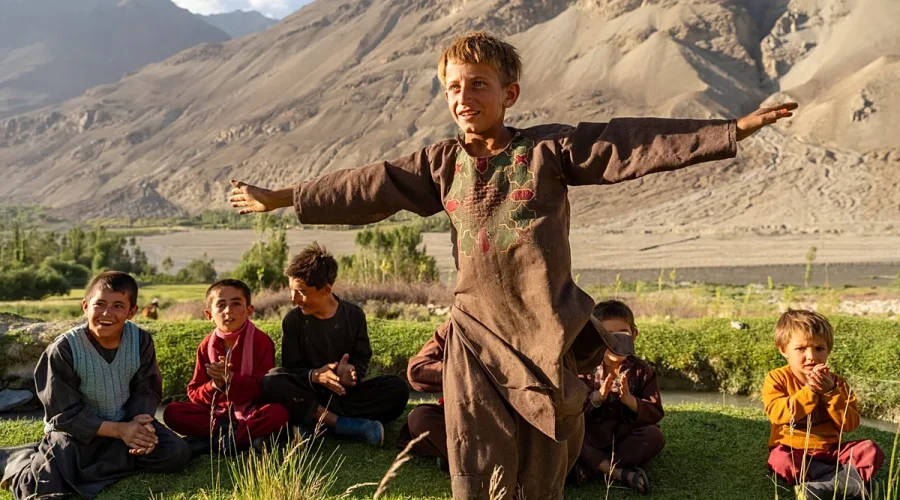
Malikyar, whose parents fled Afghanistan in 1979 just prior to the Soviet military intervention, spent years traveling throughout the country before the Taliban regained control on August 15, 2021. His photographs capture scenes that most Western audiences have never encountered: balloon vendors navigating Kabul’s morning traffic, young people launching kites above ancient city walls, and Kyrgyz nomadic families guiding their yak herds through the towering Pamir Mountains.
Bridging Two Worlds
Growing up in Los Angeles as the child of Afghan immigrants, Malikyar experienced a cultural duality that would later define his artistic mission. At home, he absorbed stories of his family’s homeland through traditional cuisine, music, and oral histories passed down through generations. Outside those walls, however, his understanding of Afghanistan came primarily through television news broadcasts and newspaper headlines.
When people think of Afghanistan, they just think of the headlines. But there’s so much beyond that.
This disconnect between his personal heritage and public perception created what Malikyar describes as an internal void—a sense that something essential was missing from his understanding of both his identity and his country of origin. The photographs he eventually produced represent an attempt to fill that gap, to document the everyday moments and landscapes that his parents had described but that had never been visually recorded.
A Personal Homecoming
The project evolved into something far greater than a simple photographic collection. For Malikyar’s family, particularly his grandmother and parents, viewing these images became a form of virtual return to places they had either never visited or had not seen since their youth. Regions like Nuristan, often described as almost mythical with its dense forests and winding rivers, came alive through his lens.
Seeing those moments unfold in front of me felt like a full-circle, homecoming experience. I think this project gave my family a chance to reconnect with our homeland and with places they themselves had never been able to visit as children.
Malikyar credits his grandfather Omar, whom he saw only once annually while the elder lived in Virginia, with inspiring his photographic career. Through old film reels and cassette tapes, his grandfather had documented their brief meetings, creating a visual archive that Malikyar would later experience through a different perspective. This early exposure to visual storytelling planted the seeds for his own documentation work.
Building Trust Through Patience
One of the most significant aspects of Malikyar’s approach is his emphasis on relationship-building before photography begins. Rather than arriving with equipment ready to capture, he often spends hours sitting with subjects, sharing tea, and allowing connections to develop naturally. This method proves essential in regions where outsiders remain uncommon and where trust must be earned rather than assumed.
The resulting images carry an intimacy that comes from genuine human connection. Portraits of women and elders in Afghanistan’s most isolated communities reveal faces that tell stories of resilience, tradition, and quiet dignity. These are not staged representations but authentic glimpses into daily life.
More Than a Book
While the photographic collection forms the centerpiece of Malikyar’s project, it extends into a documentary series and personal narrative that together create a multidimensional portrait of Afghanistan. The work addresses not only what Afghanistan looks like but what it feels like to reconnect with a homeland through the eyes of someone who grew up far from its borders.
Personally, that sense of something missing has disappeared. The gap has been bridged. I feel more whole, and the way I see both Afghanistan and myself has shifted in a really positive way.
For readers encountering Afghanistan through Malikyar’s work, the experience offers something increasingly rare in contemporary journalism: a chance to see a nation in its entirety, beyond the breaking news cycle and geopolitical headlines. The photographs serve as both documentation and invitation, encouraging audiences to look beyond familiar narratives and discover the beauty that exists within Afghanistan’s complex history and vibrant present.
Related Reading
Frequently Asked Questions
What is Beyond the headlines?
Beyond the headlines is the main topic of this guide. The article explains the context, practical details, and next steps readers should understand.
Why does Beyond the headlines matter?
Beyond the headlines matters because readers are looking for a useful answer, not just a short summary. Good content should match search intent and help them decide what to do next.