12 August Eclipse Brings Thousands to Soria’s Gormaz
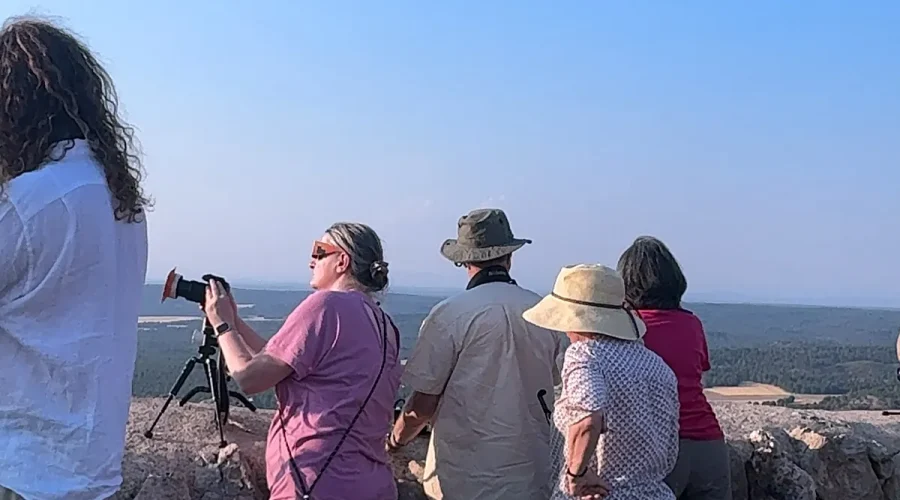
Usagevpn.com – Visitors from across Europe and beyond are converging on the ancient stone walls of Gormaz fortress, anticipating one of the most significant astronomical events of the decade. The 12 August solar eclipse brings thousands of enthusiasts to this medieval monument, which has stood over the Castilian plateau for more than a millennium. This gathering marks a turning point for the region, transforming a remote inland destination into a global focal point for celestial observation.
A Monument Built for the Ages
The caliphate fortress of Gormaz represents one of the most impressive architectural achievements of Islamic Spain. Construction began in the tenth century, and the structure has endured through centuries of political upheaval, warfare, and natural weathering. Its defensive perimeter encompasses twenty-eight towers and stretches for twelve hundred metres of fortified walls, creating an imposing silhouette against the horizon. The fortress sits atop a natural promontory, offering panoramic views across the flat expanse of the Castilian plateau below.
Throughout its long history, the fortress has witnessed numerous significant events. However, the astronomical occurrences that have passed overhead remain largely unrecorded in local chronicles. Since its completion, Gormaz has observed six total solar eclipses from its elevated position. Each of these celestial events would have cast dramatic shadows across the stone ramparts, though few visitors at the time could have understood the cosmic significance of what they were witnessing.
The Seventh Eclipse: A Modern Phenomenon
The upcoming eclipse on August 12, 2026, will be the seventh total solar eclipse visible from Gormaz since the fortress was built. What distinguishes this particular event is the unprecedented scale of human response. For the first time in the monument’s history, large numbers of both domestic and international tourists have made the journey specifically to observe this astronomical phenomenon. The path of totality, the narrow corridor where the moon completely obscures the sun, runs remarkably close to the thousand-year-old structure, providing optimal viewing conditions.
This eclipse holds additional significance for astronomy enthusiasts. It represents the first total solar eclipse visible over the entire Iberian Peninsula since 1912, making it a rare opportunity for observers in Spain and Portugal. The long interval between these events has built considerable anticipation among both amateur and professional astronomers throughout the region.
Tourism and Transportation Impact
The astronomical event is expected to generate substantial movement across the Spanish transportation network. Estimates suggest that the eclipse could trigger between four hundred thousand and one point five million additional car journeys to areas within the path of totality. This surge in domestic travel will affect roads, parking facilities, and local infrastructure throughout central Spain.
International visitors are also expected in significant numbers. Projections indicate that up to one hundred sixty-four thousand tourists will arrive from abroad, while two hundred eighty-two thousand seven hundred domestic visitors will travel from within Spain. This influx represents a substantial economic opportunity for regions that typically receive fewer international tourists than coastal destinations.
Beyond the Beaches: Inland Tourism Renaissance
Gormaz exemplifies a broader trend in Spanish tourism. The fortress town, located in the province of Soria, sits far from the traditional sun-and-beach resorts that have historically attracted foreign visitors to Spain’s coastline. This eclipse presents an opportunity to showcase the cultural and natural heritage of inland Spain to a global audience.
The province of Soria, known for its sparse population and dramatic landscapes, stands to benefit from increased visibility. Local businesses, accommodation providers, and cultural institutions are preparing for what could be a transformative period for the region’s tourism economy. The eclipse serves as a catalyst for promoting Soria’s medieval heritage, natural parks, and culinary traditions to international visitors who might otherwise never consider this part of Spain.
Preparing for the Darkening Sky
As the date approaches, local authorities and organizers are implementing measures to accommodate the expected crowds. Safety protocols, viewing areas, and transportation routes are being established to ensure that visitors can experience the eclipse comfortably and safely. The fortress grounds will likely host special programming, including guided tours, astronomical presentations, and cultural events that celebrate this rare convergence of history and astronomy.
For more information on eclipse viewing locations across Spain, visit our Europe travel section.
Frequently Asked Questions
When does the 12 August solar eclipse occur?
The total solar eclipse will take place on August 12, 2026, with the path of totality passing near Gormaz fortress in Soria, Spain.
How many tourists are expected at Gormaz?
Projections suggest up to 164,000 international tourists and 282,700 domestic visitors will travel to the region for the eclipse.
What makes this eclipse special for Spain?
This is the first total solar eclipse visible over the entire Iberian Peninsula since 1912, making it a rare opportunity for Spanish and Portuguese observers.
Is Gormaz fortress accessible during the eclipse?
Yes, local authorities are preparing special viewing areas and programming within the fortress grounds to accommodate visitors safely.
What transportation options are available?
With an estimated 400,000 to 1.5 million additional car journeys expected, visitors should plan for increased traffic and consider booking accommodation and transport in advance.