Spain’s Pioneering Pride March: A Milestone in 49 Years of Struggle
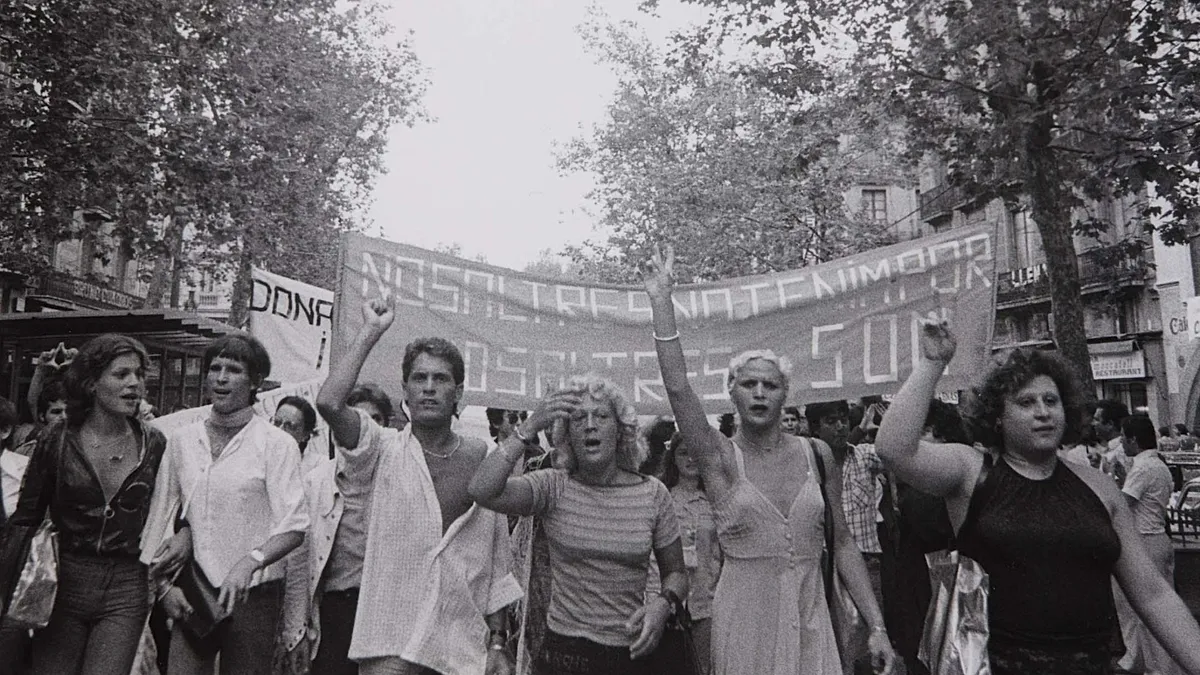
After 49 years of struggle Spain – In 1977, a group of over 4,000 individuals gathered on Las Ramblas, Barcelona’s bustling main thoroughfare, to take their first collective step toward visibility. This slow, deliberate march was not just a celebration—it was a defiant act against a history of repression. For decades, Spanish society had enforced strict norms on sexuality and gender, criminalizing identities that deviated from traditional roles. The participants, many of whom had lived in silence under Franco’s regime, now boldly claimed the streets as their own. It was a moment that would forever alter the trajectory of LGBTQ+ rights in Spain.
The Weight of Invisibility
Under the authoritarian rule of General Francisco Franco, homosexuality and trans identities were treated as moral failings, not just personal choices. The Ley de Vagos y Maleantes (1954) and later the Ley de Peligrosidad y Rehabilitación Social (1970) provided legal grounds to intern individuals deemed “deviant” in special prisons or psychiatric facilities. These laws framed same-sex relationships as threats to the “moral order,” leading to widespread persecution. For many, survival meant hiding their true selves, living in a world where identity was a liability.
“Their slogan was in Catalan, a declaration of existence,” said photographer Colita Isabel Steva, one of the key visual chroniclers of Barcelona’s cultural evolution during the late 1970s. “It was a moment that encapsulated everything we had fought for—recognition, freedom, and the courage to step into the light.”
The 1977 march emerged in the wake of Franco’s death in November 1975, a pivotal moment that signaled Spain’s transition to democracy. The first free elections took place just two weeks later, on June 15, 1977, marking the beginning of a new era. Yet, the road to equality was far from smooth. The community had to navigate a society still steeped in conservative values, where prejudice lingered even as political change accelerated.
A Defiant First Step
That June 26, 1977, the marchers carried the weight of decades of silence. The event was not only a physical journey but a symbolic one—crossing from the shadows of secrecy to the open embrace of public life. Trans women, often marginalized within the LGBTQ+ community, led the procession, their raised arms and resolute expressions capturing the collective spirit of resilience. It was a powerful image, one that would become emblematic of Spain’s struggle for inclusion.
The significance of this day was amplified by the context of the time. While the Transition to democracy offered hope, it also presented challenges. Legal frameworks were still evolving, and social norms remained rigid. The march served as a reminder that equality required more than political shifts—it demanded courage, unity, and a willingness to challenge the status quo.
Progress Through Persistence
Following the 1977 demonstration, the LGBTQ+ movement continued to push for change. By 1979, a major breakthrough occurred when homosexuality was removed from the Ley de Peligrosidad y Rehabilitación Social, a crucial yet incomplete victory. This shift reflected the growing influence of democratic ideals, though deep-rooted prejudices persisted. The 1980s saw the HIV/AIDS epidemic amplify stigma, particularly in Spain, where the crisis devastated communities. However, it also galvanized activism, leading to stronger networks and a clearer demand for public health policies and legal protections.
As the years passed, Spain’s legal landscape gradually transformed. In 1994, Madrid hosted its first large-scale Pride march, a precursor to the global events that would follow. The following year, 1995, marked another milestone when the Criminal Code no longer classified homosexuality as an aggravating factor in crimes. These steps, though incremental, laid the foundation for broader acceptance. By 1998, Madrid’s regional government had taken further action by recognizing civil partnerships, a move that inspired other autonomous communities to follow suit.
A New Era of Rights
The turning point came in 2005, when Spain became the third country globally to legalize same-sex marriage, joining the Netherlands and Belgium. This achievement, driven by the government of José Luis Rodríguez Zapatero, represented a historic leap forward. It not only granted legal recognition to LGBTQ+ couples but also reinforced the rights of adoption and family unity. However, the battle was far from over. The political right and institutions like the Catholic Church had contested the law, leading to a long legal debate that culminated in the Constitutional Court’s ruling in 2012.
Despite the resistance, the law’s passage had already transformed lives. Thousands of couples had married, formed families, and built futures, proving that the fight for equality was not just theoretical. In the years since, Spain has continued to refine its approach, implementing comprehensive protections against discrimination in the workplace and extending these rights to regional levels. Today, the Trans Law of 2023 stands as a testament to this progress. It allows individuals over 16 to alter their gender identity on ID cards through an administrative process, without requiring medical diagnosis or surgery. This legislation has been hailed as one of the most advanced in Europe, reflecting a commitment to inclusive policies.
From March to Movement
The 1977 march was just the beginning. Over the next four decades, the LGBTQ+ community in Spain cultivated a legacy of perseverance, turning each victory into a stepping stone for the next. Madrid Pride, now an annual celebration drawing over a million attendees, has grown from that first small gathering into a global symbol of LGBTQ+ solidarity. The event’s continued success underscores the community’s ability to adapt, organize, and inspire.
Yet, the journey remains ongoing. While Spain has achieved remarkable legal advancements, challenges persist. The fight against discrimination, the need for greater representation, and the ongoing dialogue between tradition and progress define the current landscape. The first Pride march, with its quiet determination, set the stage for these developments, reminding all that the path to equality is built on courage, community, and the unyielding belief in a more just society.
Today, as Spain stands as a leader in LGBTQ+ inclusion, the echoes of that June day in 1977 remain powerful. The marchers’ footsteps, once hesitant, now resonate as a beacon for future generations. Their story is one of transformation, from a time when identity was a crime to an era where it is celebrated as a source of strength. The legal milestones that followed are not just laws on paper—they are the result of a movement that refused to be silenced, proving that change is possible when people unite for a common cause.