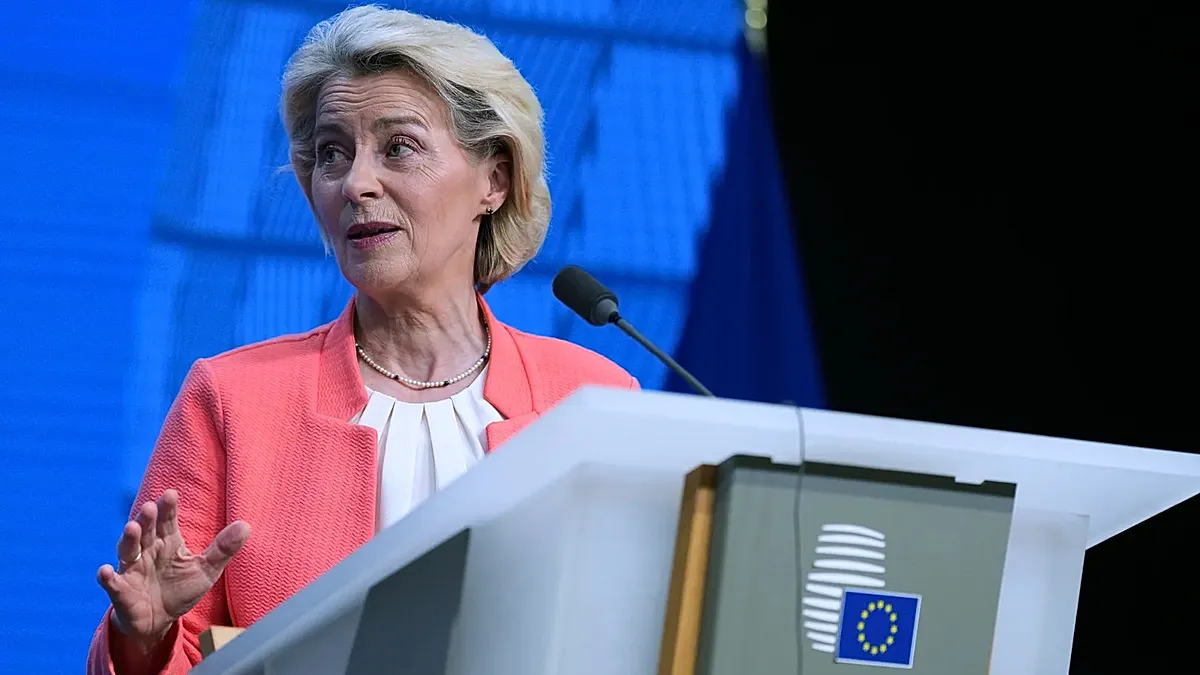
Von der Leyen’s Mission to the South Caucasus: A Strategic Push for Regional Unity
Von der Leyen visits Azerbaijan and Armenia – As European Commission President, Ursula von der Leyen is set to undertake a pivotal trip to the South Caucasus this week, aiming to reinforce the EU’s role in fostering peace and economic collaboration between Armenia and Azerbaijan. The visit, spanning both Yerevan and Baku, underscores the bloc’s commitment to strengthening ties in the region, which has historically been a crossroads of geopolitical tensions and opportunities. With the recent thawing of relations between the two nations, von der Leyen’s presence highlights the EU’s interest in leveraging this progress to enhance its strategic influence in the area.
The Four Pillars of EU Engagement
The European Commission has outlined four key objectives for von der Leyen’s journey, emphasizing its broader goals for the region. These include supporting the peace process following the landmark agreement signed last year, improving regional and transcontinental connectivity, deepening economic partnerships, and backing Armenia amid Russian economic pressures. The visit is part of a wider effort to solidify the EU’s political and economic foothold in the South Caucasus, a region that has long been shaped by the interplay of Western and Eastern interests.
“The visit focuses on four priorities: supporting the peace process after last year’s initialling of the historic peace agreement, improving connectivity across the region and with Europe and Central Asia, deepening our economic partnership with the South Caucasus, and supporting Armenia in the face of Russian economic coercion.”
A New Chapter in EU-Azerbaijan Relations
Von der Leyen’s first stop in Baku marks a significant development, as it is her first visit to the Azerbaijani capital since 2022. That year, the EU and Azerbaijan formalized a strategic energy partnership, designed to expand natural gas supply routes through the Southern Gas Corridor. This initiative was driven by the need for energy diversification after Russia’s invasion of Ukraine disrupted traditional supply chains. During her talks with President Ilham Aliyev, the focus is expected to remain on expanding Azerbaijan’s energy exports to Europe and advancing infrastructure projects critical for EU economic stability.
The Armenian Context: A Shift in Diplomatic Priorities
Following her meetings in Baku, von der Leyen will travel to Yerevan to engage with Armenian Prime Minister Nikol Pashinyan, who was re-elected in recent elections. This visit comes as Armenia navigates its complex relationship with Russia while pursuing closer ties with the West. The EU’s support for Armenia is particularly vital in this context, given the economic strain from Russia’s sanctions and the region’s strategic importance as a bridge between Europe and Asia.
Reconnecting the South Caucasus: The Middle Corridor Initiative
A central theme of the visit is the development of the Middle Corridor, a groundbreaking transport network that offers an alternative to traditional routes through Russia. Known also as the Trans-Caspian International Transport Route (TITR), this corridor spans from China and Southeast Asia, through Kazakhstan, Azerbaijan, and Georgia, to Turkey and Europe. Its significance lies in its potential to reduce reliance on the Northern Corridor, which is now approximately 3,000 kilometers longer due to the war in Ukraine and ongoing global supply chain disruptions.
The Middle Corridor is envisioned as a modern adaptation of the ancient Silk Road, integrating road, rail, and maritime pathways to create a resilient infrastructure link. Starting at the eastern Chinese port of Lianyungang, the route traverses China and Kazakhstan before branching westward through the Caspian Sea. It then connects to Georgia and Azerbaijan, eventually reaching the Black Sea ports that serve as gateways to the EU. This network is crucial for ensuring the security of trade routes and energy supplies, particularly in light of the shifting geopolitical landscape.
EU’s Expanded Role in Regional Connectivity
European Commissioner for Enlargement Marta Kos, who will accompany von der Leyen during both legs of the journey, has emphasized the EU’s growing involvement in the Middle Corridor project. Last week, Kos launched the EU’s Connectivity Agenda Platform, a key initiative aimed at coordinating efforts to secure alternative transit routes. She argued that the corridor represents a vital opportunity to bolster Europe’s energy and trade resilience, reducing dependency on routes that have become vulnerable to disruptions.
Global Implications and EU Partnerships
Currently, 16 European countries rely on Azerbaijani gas, with 10 of them being EU member states. Italy, in particular, stands out as the largest importer of Azerbaijani energy within the bloc, a fact highlighted by Italian Prime Minister Giorgia Meloni’s visit to Baku in May. This underscores the economic interdependence between the EU and Azerbaijan, even as the former seeks to diversify its energy sources. The Middle Corridor, with its dual role in energy and trade, is seen as a linchpin in this strategy.
A Strategic Dialogue Beyond Energy
The visit also continues the EU’s political dialogue with the region, following the European Council President Antonio Costa’s earlier engagement with Aliyev in March. Costa’s discussions in Baku focused on expanding cooperation beyond energy, with an emphasis on defense, security, and digital initiatives. These efforts aim to create a more comprehensive framework for EU engagement, ensuring that ties with the South Caucasus are not limited to economic matters but extend into strategic areas of mutual interest.
The Future of South Caucasus Ties
Von der Leyen’s trip is not only a diplomatic milestone but also a reflection of the EU’s evolving strategy in the region. By prioritizing connectivity and energy cooperation, the bloc seeks to position itself as a key player in the South Caucasus’ geopolitical landscape. The success of this mission could determine the future of EU-Azerbaijan and EU-Armenia relations, particularly as the region faces new challenges and opportunities in its quest for stability and growth.
With the peace agreement between Armenia and Azerbaijan signaling a new era of cooperation, the EU’s presence in the region is poised to play a defining role. The combination of energy partnerships, infrastructure projects, and diplomatic outreach aims to create a more integrated South Caucasus, one that is less vulnerable to external pressures and more aligned with European interests. This visit, therefore, represents a critical step in the EU’s long-term strategy to shape the region’s future through collaborative efforts and strategic investments.