Nvidia CEO Jensen Huang unveils ‘new era of PC’ for AI age: 5 Key takeaways from GTC
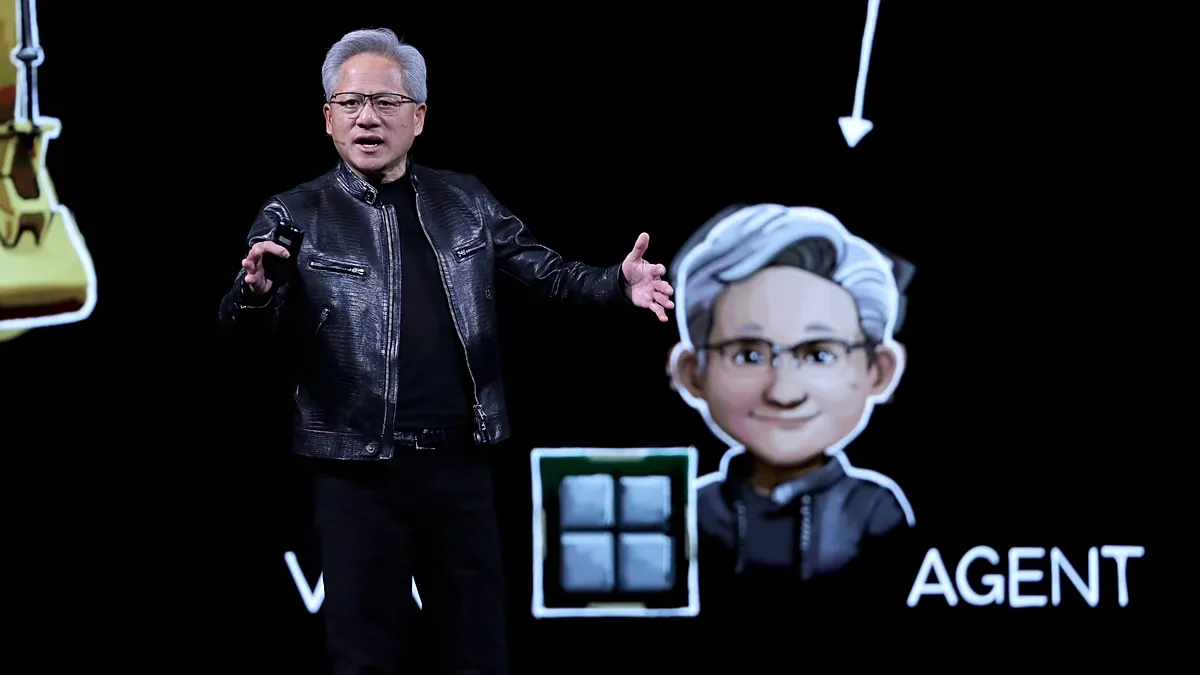
Nvidia CEO Jensen Huang unveils new era – At the annual GTC conference in Taiwan, Jensen Huang, the chief executive of Nvidia, took the spotlight to reveal the company’s latest breakthroughs in artificial intelligence. Known for his signature leather jacket, Huang framed this event as the “Super Bowl” of the AI world, emphasizing its significance as a turning point in technological advancement. The presentation highlighted a transformative shift in computing, with a focus on AI-driven innovations. Here are the five most notable insights from the event held in Taipei.
The Future of Computing: A Partnership with Microsoft
Huang introduced a groundbreaking collaboration with Microsoft, which he described as the most significant PC transformation in four decades. This partnership aims to redefine desktops, laptops, and workstations, integrating AI capabilities into everyday devices. “The first reinvented line of engineering in 40 years,” Huang stated, underscoring the magnitude of this shift. He envisioned a future where AI becomes an essential part of domestic life, much like modern appliances such as lawnmowers and dishwashers. “Imagine a day when your home hosts an AI supercomputer,” he said, “operating silently in the background and managing tasks with the efficiency of a trusted assistant.”
“I imagine someday an AI supercomputer in your house running [AI] agents. And you have to have it in your house and these in time become more like R2-D2 to you than a PC to you,” he said.
According to Huang, the next phase of computing will mirror the transition from traditional phones to smartphones. “This is the beginning of that journey,” he claimed, suggesting that the evolution of AI-powered devices will follow a similar trajectory. The new technology, however, requires a different approach to hardware design, with a focus on portable and powerful systems.
RTX Spark: A Unified Computing Solution
A central component of this revolution is the RTX Spark, a new “superchip” that combines AI agents, content creation tools, and gaming capabilities into a single device. Huang positioned it as a versatile platform that can adapt to various user needs, from professional workstations to consumer-grade laptops. While the exact pricing details remain undisclosed, the launch is scheduled for late autumn, marking a pivotal moment in the tech industry. The chip’s ability to handle complex tasks with speed and efficiency has sparked considerable interest among developers and end-users alike.
Adobe, a key player in creative software, has already begun adapting its flagship applications—Photoshop and Premiere Pro—to leverage the RTX Spark’s architecture. This move signals a broader industry shift toward AI integration, where traditional workflows are being enhanced by intelligent automation. “Today, agentic and useful AI has arrived,” Huang declared, highlighting the importance of AI agents in the current landscape. These agents, he explained, are designed to operate independently, performing actions based on user preferences and contextual data.
The Role of AI Agents: Autonomy and Human Oversight
Despite their promise, AI agents still require human input to function optimally. Huang acknowledged this limitation but remained optimistic about the technology’s potential. “They gather data based on your habits and preferences, but they aren’t fully autonomous yet,” he admitted. However, he emphasized that the future lies in refining these agents to become more intuitive and self-sufficient. “The more you use them, the better they understand your needs,” he argued, suggesting a symbiotic relationship between humans and AI.
“Compute is revenue. The more you buy, the more you make,” he said.
Huang also ventured into the economic implications of AI, calling it a “profit generator” for businesses. He envisioned a world where AI supercomputers are not just tools for professionals but also engines for innovation. “All of you are experiencing this with me; everyone wants to make money,” he remarked, drawing a parallel between AI’s growth and the demand for computing power. “Profitable AI is here, and compute demand is incredibly high. Let’s go help the world and build AI factories around the globe,” he urged, framing the technology as a global opportunity.
Nvidia Vera: Accelerating AI Processing
To support these advanced AI applications, Huang unveiled Nvidia Vera, a new processor class engineered for faster task execution. Vera is designed to handle AI workloads with 1.8 times the speed of conventional systems, positioning it as a critical enabler of real-time processing. “This is the last computer science breakthrough,” Huang proclaimed, highlighting Vera’s role in pushing the boundaries of what’s possible with AI-driven systems. The processor’s architecture is expected to prioritize energy efficiency and scalability, making it suitable for a range of applications.
One of the standout features of the Vera CPU is its compatibility with full liquid cooling systems, which Huang mentioned as a sustainability-focused aspect of the technology. This design eliminates the need for traditional cables, hoses, and fans, offering a streamlined and eco-friendly solution. “The only sustainability part mentioned was the Rubin GPU and Vera CPU architectures,” he noted, emphasizing the environmental considerations in the next generation of hardware.
Addressing Concerns: AI and the Workforce
Huang began the presentation by countering concerns about AI displacing human workers. He dismissed the idea that AI would replace software engineers, arguing instead that the real threat lies in those who can harness AI effectively. “It’s complete nonsense to think AI is taking jobs from engineers,” he said, asserting that the industry is expanding its workforce to meet the demands of AI integration. This perspective aligns with Nvidia’s broader vision of AI as a collaborative tool rather than a competitive force.
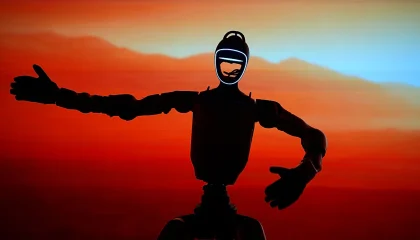
The keynote concluded with a visually stunning AI-generated video of robots navigating Taipei’s bustling night markets while performing a song about the event’s announcements. While the graphics were impressive, some viewers found the performance slightly awkward, adding a touch of humor to the otherwise serious discussion about the future of computing. The video served as a symbolic representation of the potential of AI, blending creativity and technology in a way that captured the audience’s imagination.
As the conference wrapped up, Huang left attendees with a vision of a transformed digital ecosystem. The partnership with Microsoft, the introduction of RTX Spark, and the development of Vera represent a bold step toward a new era of computing. With AI agents at the core of this transformation, the focus is on creating systems that are not only powerful but also intuitive and integrated into daily life. The coming months will be crucial in determining how quickly these innovations gain traction and reshape the way we interact with technology.