Thousands Evacuated as Croatian Coastal Flames Surge Amid Heatwave
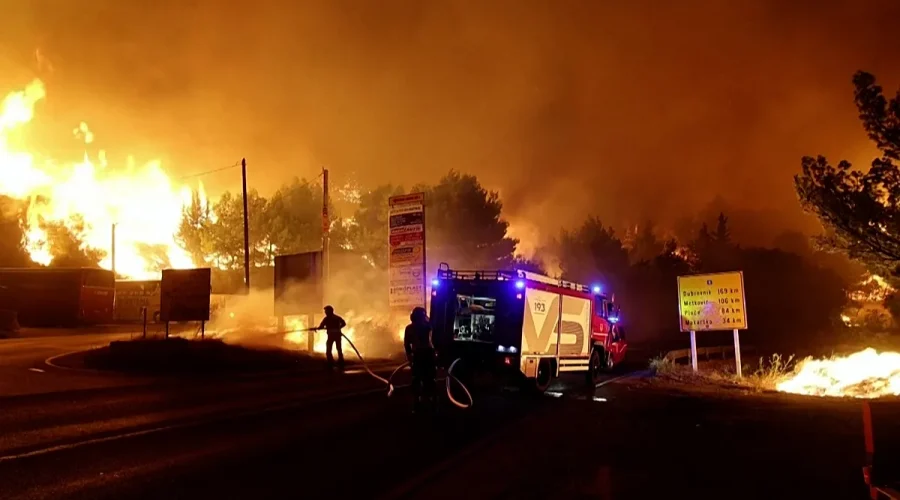
Usagevpn.com – Emergency services across Croatia mobilized rapidly on Thursday as a fierce wildfire forced the evacuation of approximately 1,000 residents and visitors from coastal communities. The blaze, fueled by powerful winds and dry conditions, tore through pine forests before advancing toward populated neighborhoods along the Adriatic shoreline. More than 150 firefighters worked tirelessly to contain the spreading flames, battling both the fire and challenging weather conditions that threatened to push the inferno further inland.
Winds Drive Rapid Fire Expansion
The speed at which the fire consumed vegetation and approached residential zones caught many locals by surprise. Ivan Pivcevic, deputy mayor of Omis, identified strong winds as the primary catalyst for the fire’s swift progression through the area. These gusty conditions not only accelerated the flames’ movement but also made aerial firefighting efforts more difficult during the critical early hours of the emergency.
The combination of dry pine forests and persistent wind created ideal conditions for rapid fire spread. Pine trees contain natural oils that ignite easily and burn intensely, allowing flames to leap from tree to tree with remarkable speed. As the fire moved through the forested areas, embers were carried by the wind, potentially starting spot fires ahead of the main blaze and complicating containment efforts.
Evacuation and Shelter Operations
Local authorities coordinated a large-scale evacuation, transporting most displaced residents to the nearby town of Omis. A sports hall within the town was converted into a temporary shelter, providing space for families who had to leave their homes with minimal belongings. The facility offered basic amenities and medical assistance for those affected by the emergency.
Among the evacuees were several individuals who sustained burns while attempting to protect their properties or during the evacuation process. Medical teams were on standby to treat these injuries, and local hospitals prepared to receive additional patients if necessary. The evacuation also included tourists who were visiting the coastal region, highlighting the international nature of the affected area.
Aerial Support and Night Operations
Fire chief Slavko Tucakovic provided updates on the ongoing situation, noting that crews faced a particularly challenging night ahead. The darkness and continued wind conditions would test the resilience of firefighting teams who had been working for extended periods. To ensure adequate resources, Tucakovic requested additional personnel from other regions of Croatia to support the operation.
Four Canadair aircraft were positioned on standby for morning operations, ready to drop water on the fire once daylight returned. These specialized aircraft cannot conduct water-bombing missions during nighttime hours due to visibility limitations, making the morning hours critical for aerial suppression efforts. The aircraft will work in coordination with ground crews to attack the fire from multiple angles.
Broader Climate Context
This wildfire outbreak occurs against the backdrop of an extended heatwave affecting Croatia and much of the Mediterranean region. Prolonged periods of high temperatures have dried out vegetation across the country, significantly increasing the risk of additional fires along the Adriatic coastline. Meteorologists have warned that the current weather pattern could persist for several more weeks, maintaining elevated fire danger levels.
The timing of the fire also coincides with peak tourist season in Croatia, potentially affecting travel plans and local businesses. Coastal towns that rely heavily on summer visitors may experience economic impacts if the fire continues to grow or if additional evacuations become necessary.
Meanwhile, emergency responders noted that another significant wildfire on the nearby island of Brac had been successfully contained earlier on Thursday. This earlier success provided some relief to firefighting resources, allowing crews to focus their attention on the coastal blaze without being stretched too thin across multiple incidents.
Slavko Tucakovic, Croatia’s fire chief, cautioned that crews faced a difficult night and called in reinforcements from other parts of the country to bolster containment efforts.
As dawn approaches, firefighters and aerial support teams will resume their efforts with renewed intensity. The outcome of the operation will depend on weather conditions, the availability of resources, and the ability of crews to establish effective firebreaks around the most threatened areas. Local authorities continue to monitor the situation closely and have established communication channels for residents and visitors to receive updates on evacuation zones and road closures.
Related Reading
Frequently Asked Questions
What is Wildfire forces evacuation of 1 000?
Wildfire forces evacuation of 1 000 is the main topic of this guide. The article explains the context, practical details, and next steps readers should understand.
Why does Wildfire forces evacuation of 1 000 matter?
Wildfire forces evacuation of 1 000 matters because readers are looking for a useful answer, not just a short summary. Good content should match search intent and help them decide what to do next.