European Wildfires Force Dramatic Sea Evacuations Amid Record Heatwave
Usagevpn.com – A towering wall of flames stretching three kilometres and reaching heights of thirty metres compelled hundreds of holidaymakers to abandon their vehicles and wade into the sea along Greece’s northern coastline. This dramatic maritime evacuation unfolded as simultaneous wildfires ravaged communities across Croatia, France, and the United Kingdom, all caught in the grip of an intensifying summer heatwave that has pushed temperatures to unprecedented levels.
Greece’s Halkidiki Peninsula Under Siege
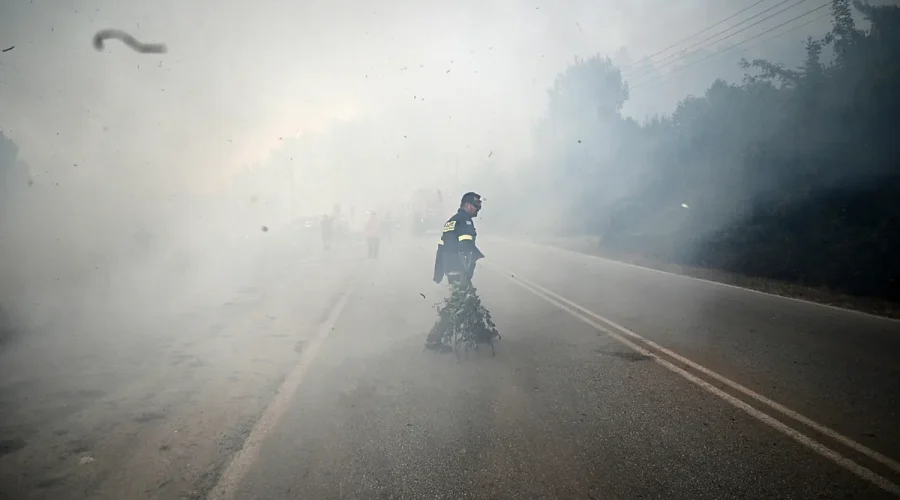
Emergency responders mobilized more than two hundred firefighters alongside water-bombing aircraft and helicopters to contain the rapidly advancing blaze on the Halkidiki peninsula, situated south of Thessaloniki. The inferno threatened the popular tourist destinations of Siviri and Fourka, which were experiencing peak summer occupancy during this period.
With road evacuation routes proving increasingly hazardous due to gridlocked vehicles and encroaching flames, officials orchestrated a coordinated maritime rescue operation. Approximately five hundred tourists were transferred onto small boats, coast guard vessels, and fire brigade craft. Roughly two hundred of these evacuees were transported to a ship positioned offshore, providing a safe haven while ground conditions improved.
“We are on the beach and looking for a way to get away,” one local homeowner, Sophia, told AFP, saying flames had already reached the town’s houses.
The crisis claimed two firefighters who required hospitalization, prompting authorities to restrict public access to the region’s pine forests. Meteorological forecasts predicted wind speeds reaching one hundred kilometres per hour, which could reignite dormant hotspots and accelerate fire spread across the peninsula.
While crews eventually brought the Halkidiki fire under control, they maintained heightened alertness for potential flare-ups. Greece continues operating under its highest nationwide wildfire alert status, still recovering from a devastating blaze near Athens earlier this month that claimed the lives of two helicopter crew members and consumed one hundred and ten square kilometres of forestland.
Croatia’s Coastal Communities Face Evacuation
Simultaneously, more than one hundred and fifty firefighters confronted a rapidly moving fire that swept from pine forests into the tourist town of Lokva Rogoznica in Croatia. The blaze destroyed numerous homes and vehicles, displacing at least one thousand residents who found shelter in a sports hall in nearby Omis. A critical coastal road closure generated extensive traffic queues as stranded motorists sought alternative routes.
Croatia’s fire chief, Slavko Tucakovic, cautioned residents about a challenging night ahead as additional reinforcements arrived. Four Canadair water-bombing aircraft remained grounded until dawn due to adverse weather conditions. Officials attributed the fire’s rapid expansion to strong winds and confirmed that several residents sustained burns during the emergency.
This incident followed a separate wildfire on the island of Brac that had been contained a day earlier, all occurring within a heatwave that established record coastal temperatures across the Adriatic region.
France Battles Multiple Fire Fronts
Météo France elevated four departments to its highest wildfire alert level on Friday, emphasizing that current weather patterns create conditions where fire ignition and propagation risks remain very high compared with typical summer norms.
Overnight operations successfully contained the Aude blaze near Carcassonne, protecting seventy-three homes from destruction. Meanwhile, the Pas-de-Calais fire near Mont-Frieux continued burning into Friday morning, requiring sustained firefighting efforts.
A significant legal development emerged in France as a fifteen-year-old was placed under formal investigation and held in juvenile detention regarding a forest fire near Bordeaux airport. That July 21 incident killed two firefighters trapped inside their truck. The deaths, combined with a volunteer firefighter’s death in southeast France, have intensified frustration within fire unions. Representatives met with Interior Minister Laurent Nunez this week but expressed disappointment with his commitments, threatening strike action in September over what they characterize as inadequate firefighting resources.
UK Wildfires Damage Properties
On the region’s hottest day of the year, a wildfire with multiple points of origin tore through residential areas near Stourbridge in the United Kingdom. The blaze damaged at least six properties and forced immediate evacuations. Emergency services hospitalized three firefighters and one child, while treating six additional individuals for smoke inhalation.
West Midlands’ Chief Fire Officer Simon Tuhill described the incident as one of the most significant events his service had ever managed, attributing the rapid fire spread to tinder-dry conditions exacerbated by prolonged drought. Nearly three-quarters of England currently experiences drought conditions, prompting Prime Minister Andy Burnham to urge retailers to restrict sales of disposable barbecues to reduce ignition risks.
Broader Implications for European Summer
The coordinated wildfires across multiple European nations highlight the growing challenge of managing extreme weather events during summer months. Climate scientists have documented increasing frequency and intensity of heatwaves across the continent, creating conditions where dry vegetation becomes highly susceptible to rapid fire propagation.
Firefighting resources face mounting pressure as incidents occur simultaneously across borders, requiring international cooperation and shared equipment deployment. The grounding of Canadair aircraft in Croatia and the sustained operations in Greece and France demonstrate how weather conditions can both enable and constrain firefighting capabilities.
As communities from the Balkans to the British Isles confront these challenges, authorities emphasize the importance of public vigilance, resource allocation, and adaptive strategies to manage what appears to be an escalating pattern of summer wildfires across Europe.
Related Reading
Frequently Asked Questions
What is Wall of fire forces sea evacuation?
Wall of fire forces sea evacuation is the main topic of this guide. The article explains the context, practical details, and next steps readers should understand.
Why does Wall of fire forces sea evacuation matter?
Wall of fire forces sea evacuation matters because readers are looking for a useful answer, not just a short summary. Good content should match search intent and help them decide what to do next.