Washington shifts military assistance toward partners in the Americas
Usagevpn.com – The Trump administration is moving $52 million in military assistance away from several countries in Europe and the Middle East, directing the money instead to governments in Latin America that Washington views as closely aligned with US priorities.
The State Department informed Congress on Tuesday that funds previously allocated to Iraq, Tunisia, Slovakia and North Macedonia would be reassigned to Colombia, Ecuador, Peru and Panama. Slovakia and North Macedonia are both NATO members, while Iraq and Tunisia have been recipients of US security support in a region shaped by longstanding instability and strategic competition.
The reshuffle illustrates the administration’s wider effort to concentrate more diplomatic, military and economic attention on the Western Hemisphere. While the countries losing funds are still expected to receive some US assistance, the department has not specified how much support will remain after the transfer.
Security focus on drug trafficking and Panama Canal access
US officials framed the redirected aid as part of a regional security strategy aimed at countering drug-trafficking networks and maintaining influence in a part of the world that has become increasingly central to the administration’s foreign-policy agenda.
“Narcoterrorism in our backyard”
The State Department said the funds would support efforts against such threats, while also helping the United States “continue to secure the Panama Canal.” The department said the broader objective was to stop rival powers from gaining a strategic position in the hemisphere.
“Prevent adversaries from establishing strategic footholds in our hemisphere.”
The Panama Canal is a particularly important element of that approach. The waterway serves as one of the world’s most consequential shipping routes, linking the Atlantic and Pacific oceans and enabling commercial and military transit. By highlighting canal security, Washington is signaling that its engagement with Panama is not limited to domestic law-enforcement cooperation but also involves broader strategic concerns.
Colombia, Ecuador and Peru sit along major routes used by drug-trafficking organizations, making security cooperation a recurring feature of US relations with each country. The redirected assistance is intended to reinforce governments that have shown willingness to work with Washington on anti-trafficking operations and regional security initiatives.
A stronger political and security presence in the hemisphere
President Donald Trump has placed growing emphasis on the Americas since returning to office in January 2025. His administration has carried out strikes against boats alleged to be transporting drugs from the region and launched an operation that captured former Venezuelan leader Nicolás Maduro.
Trump has also pursued greater access to Venezuela’s oil sector. In August, his administration reached a major oil agreement with Caracas, underscoring the overlap between energy interests, regional security and diplomatic engagement in its approach to Venezuela.
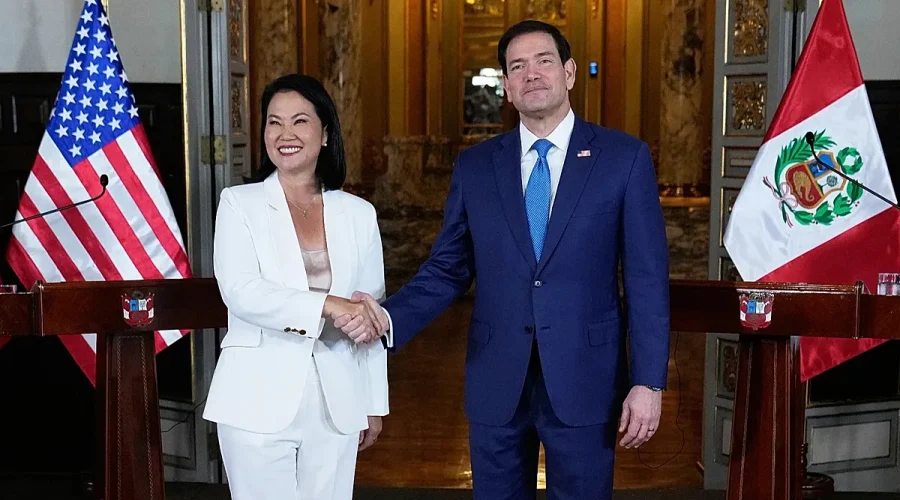
The administration’s attention is not focused solely on confrontation. It has sought to deepen ties with leaders seen as sharing Trump’s political and strategic outlook. Secretary of State Marco Rubio traveled to South America last week, meeting conservative presidents in Peru, Colombia and Ecuador. The trip centered on promises of continued cooperation and increased support.
For the governments receiving the reallocated funding, the decision could bring added resources for security forces and counter-narcotics efforts. It also carries political significance: the assistance identifies Colombia, Ecuador, Peru and Panama as preferred partners in an administration seeking stronger bilateral relationships throughout the region.
Colombia remains a major recipient of US support
Colombia has emerged as a central focus of the administration’s regional policy. In August, the State Department said it intended to announce a $1 billion security package for the right-wing government of newly elected Colombian President Abelardo de la Espriella.
The department’s spokesperson said that initiative was meant to advance goals shared by Washington and Bogotá.
“Our shared goals.”
Trump has repeatedly spoken favorably about de la Espriella, presenting the Colombian president as an important partner for his regional agenda.
“Smart, strong, and tough leader”
Trump also pledged that Colombia would have the “total support and strength of the United States behind him.”
The proposed security package and the newly redirected military funds point to a broader pattern: Washington is using assistance, security coordination and political outreach to strengthen relationships with governments it sees as dependable allies.
Different priorities for Europe and the Middle East
The decision to move money from European and Middle Eastern programs comes as Trump has argued for a reduced US role in Europe. He has frequently criticized NATO allies over defense spending and has raised the possibility of pulling American troops from the continent.
Slovakia and North Macedonia remain members of the NATO alliance, but the reassignment shows that membership alone does not shield a country from changes in US assistance priorities. The administration has emphasized that European governments should assume more responsibility for their own defense requirements.
In the Middle East, Iraq and Tunisia continue to face security and economic pressures that have long made external assistance important. Their remaining levels of US support have not yet been outlined, leaving uncertainty over the practical effect that the $52 million diversion will have on existing programs.
The funding change is modest compared with the scale of the US defense budget, yet its political message is substantial. It reflects an administration that is placing the Americas nearer the center of its security strategy, tying support to counter-narcotics operations, canal security, energy interests and relationships with sympathetic governments.
Related Reading
Frequently Asked Questions
What is US to divert 52 million in military?
US to divert 52 million in military is the main topic of this guide. The article explains the context, practical details, and next steps readers should understand.
Why does US to divert 52 million in military matter?
US to divert 52 million in military matters because readers are looking for a useful answer, not just a short summary. Good content should match search intent and help them decide what to do next.