US Forces Strike Iranian Rocket Launchers in Hormuz
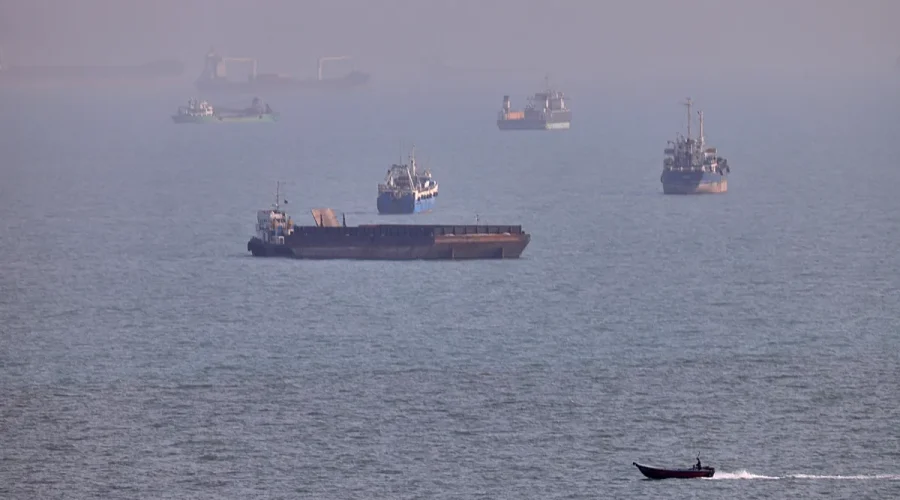
Usagevpn.com – US forces strike Iranian rocket positions inside the Strait of Hormuz, ending a fragile month of calm in the world’s most critical oil corridor. American aircraft hit rocket-launching sites that intelligence had flagged as preparing to fire sea-mine-laden projectiles at merchant shipping. It marks the first direct US military action within the waterway since late July, and it lands at a moment when Washington and Tehran are still negotiating the terms of a broader de-escalation deal.
An unnamed US official explained the operational logic: IRGC elements were caught in the act of assembling rocket launches aimed at the shipping lanes. The strikes were carried out before those preparations could be completed, neutralizing what was assessed as an imminent threat to commercial traffic transiting the corridor.
IRGC Acknowledges Hits on Larak Island and Vows Retaliation
Tehran’s military establishment did not contest the facts of the engagement. In a formal statement, the IRGC confirmed that its positions on Larak Island — a small landmass sitting within the strait’s western approach — had been struck. Personnel were killed or wounded, though the agency declined to release exact casualty figures.
The statement carried a tone sharper than simple confirmation. The IRGC declared the American action would be:
“met with a retaliatory response.”
That deliberately open-ended phrasing signals Tehran intends to answer the strikes on its own timetable and in a manner of its choosing. Analysts observe that the IRGC has historically deployed such language before missile barrages, drone sorties, or coordinated naval actions against US assets in the region.
Context: A Month of Calm, Now Broken
The Hormuz corridor had entered a tentative lull after a series of US and Israeli air campaigns against Iranian targets in late February. Those strikes prompted Tehran to impose a de facto closure on the waterway, halting tankers and bulk carriers that depend on the strait’s roughly 33-kilometre-wide channel. For weeks the closure became the central obstacle in diplomatic talks, each side demanding concessions before agreeing to reopen the passage.
Earlier this week, Admiral Brad Cooper, commander of US Central Command, announced that Iranian-laid sea mines had been “successfully cleared” from the strait’s designated international shipping lanes. That declaration was meant to reassure insurers, shipping lines, and energy-importing nations that normal commercial use had resumed. The latest rocket-launcher strikes complicate that reassurance considerably, suggesting mine-clearing alone does not eliminate the risk of renewed Iranian interference.
Why the Strait Matters to Every Economy
Roughly one quarter of all seaborne oil trade transits the Strait of Hormuz each day, making it the single most concentrated energy chokepoint on the planet. Qatar’s liquefied natural gas exports, Saudi Arabia’s crude shipments to Asia, and the flow of Iranian hydrocarbons to Asian buyers all depend on uninterrupted passage. A sustained disruption — through mines, rocket fire, or a full naval blockade — would send immediate shocks through global fuel prices, shipping insurance premiums, and the supply chains of energy-dependent economies from Japan to India to Europe.
The strait’s geography amplifies the stakes. At its narrowest point the channel is barely a few kilometres wide, with shallow sandbars and rocky outcrops limiting the manoeuvring room for large tankers. No practical alternative route exists for Gulf producers to reach open-ocean shipping lanes; overland pipeline options carry only a fraction of the volume that transits the waterway. This structural dependency is precisely what gives Tehran leverage in negotiations and makes any renewed hostilities inside the corridor a global event rather than a local one.
Negotiations Under Pressure
The latest exchange lands while Washington and Tehran are still working through the terms of a broader arrangement. The closure imposed in late February remains the principal sticking point: Tehran wants guarantees against future strikes before it will permanently reopen the strait, while the US insists that navigation rights under international law are non-negotiable. Each new military incident narrows the space for compromise and hardens positions on both sides.
For now, the IRGC’s promise of a “retaliatory response” leaves the region in a state of heightened uncertainty. Whether Tehran answers with a limited missile salvo, a coordinated naval exercise, or a diplomatic escalation remains to be seen — but the window for quiet diplomacy has narrowed sharply.
FAQ
Where exactly did the US forces strike Iranian rocket positions? IRGC-confirmed hits fell on Larak Island, a small island within the western approach to the Strait of Hormuz. The agency did not specify the number of sites struck.
How much oil actually passes through the Strait of Hormuz? Approximately one quarter of all seaborne oil trade transits the strait daily. The figure also encompasses Qatar’s LNG exports and other hydrocarbon flows, making the corridor a global energy artery rather than a purely regional concern.
What did Admiral Brad Cooper announce earlier this week? The US Central Command commander declared that Iranian-laid sea mines had been “successfully cleared” from the strait’s designated international shipping lanes, a statement intended to restore confidence among insurers and shipping operators.
Is there an alternative route for Gulf oil exports? No practical alternative exists. Overland pipelines carry only a fraction of the volume that transits the waterway, leaving Gulf producers structurally dependent on the strait for open-ocean shipping access.