A second conscription wave looms over Russia as battlefield attrition outpaces recruitment
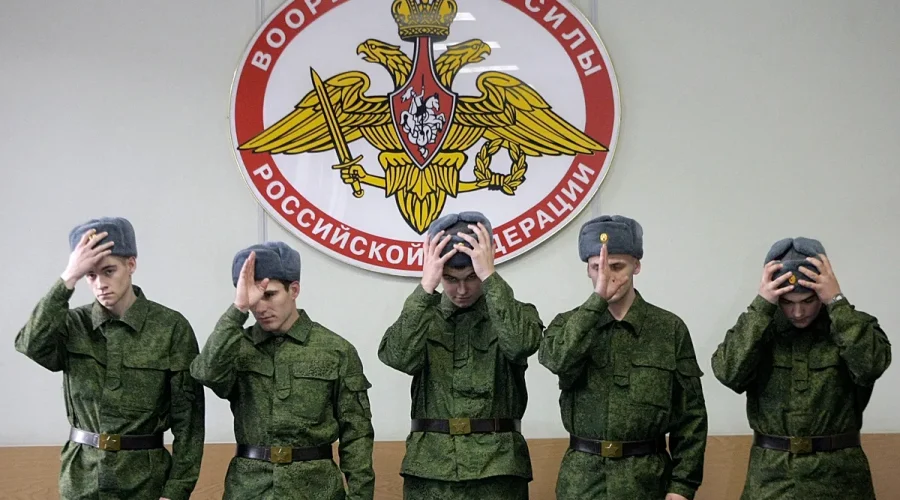
Usagevpn.com – Moscow is reportedly preparing to conscript another half-million soldiers across two years, a step Ukrainian intelligence agencies say has already been approved at the highest levels of the Kremlin. The planned call-up, they assert, is a direct response to a convergence of mounting battlefield casualties, stalled offensive momentum, and a steep drop in voluntary enlistment that has left the Russian armed forces unable to replace losses through contract recruitment alone. If carried out as described, it would mark the second formal mobilisation wave since the full-scale invasion of Ukraine began in February 2022.
The scale of the planned call-up
Ukraine’s Main Intelligence Directorate (HUR) and Foreign Intelligence Service (SZR) stated that Russia intends to summon 300,000 men during 2026 and a further 300,000 in 2027. Both agencies emphasised that the Russian leadership had already taken the decision, framing the announcement as a matter of timing rather than deliberation. The trigger, in Kyiv’s assessment, was a combination of heavy battlefield losses, a loss of military initiative, and a sharp fall in voluntary contract signings during the ongoing all-out war.
Losses that contract recruitment cannot offset
The arithmetic behind the decision is stark. Ukraine’s General Staff put total Russian casualties since the February 2022 invasion at more than 1.4 million killed and wounded. In the first half of 2026 alone, Ukrainian intelligence estimated that Russia lost roughly 240,000 troops, of whom approximately 140,000 were killed or severely wounded. Over that same six-month window, only 232,000 people signed contracts with the Russian armed forces — a figure that, even before accounting for attrition, falls short of replacing the dead and maimed.
The tempo of loss at the front has accelerated to a degree that makes individual survival a matter of minutes. CIA director John Ratcliffe told reporters in July that the average Russian recruit was killed or wounded within 20 to 30 minutes of arriving at the front line. That statistic, if broadly representative, explains why voluntary enlistment has become increasingly difficult to sustain: prospective recruits and their families see the battlefield not as a distant assignment but as an immediate terminal event.
The recruitment pool is drying up
Ukrainian intelligence assessed that the demographic groups which had formed the backbone of voluntary recruitment — debtors, prisoners, migrants, and other economically marginalised categories — had shrunk by 30 to 40 percent across several Russian regions compared with 2025. The shortfall is visible in regional statistics. In Kurgan region, monthly recruitment targets have been met at only 57 to 69 percent of goal since the start of the year. In Volgograd region, the pool of potential recruits contracted by 40 percent year on year. The lowest figures were recorded in Oryol and Vladimir regions, situated in western Russia and in close proximity to Moscow respectively, as well as in the republic of Dagestan.
Efforts to draw university students into the armed forces also failed to produce meaningful numbers. Internal Russian documents, cited by Ukrainian intelligence, acknowledged the problem openly, pointing to rising public dissatisfaction with the war — reaching as high as 69 percent in some regions — and the resulting collapse in voluntary enlistment as the justification for a new mobilisation.
Legal and administrative groundwork
Before any decree is signed, Moscow has been widening the net of who can be legally conscripted. People carrying unexpunged criminal convictions under 11 additional articles of the criminal code are now within the scope of a call-up, including those convicted of smuggling weapons, drugs, or radioactive substances, banditry, and organising illegal migration. Russian authorities are also reportedly weighing the recruitment of certain categories of convicted women, a step that would mark a further expansion of the conscription base.
An electronic summons system is already operational. Once a citizen’s name enters the registry, they are barred from leaving the country, taking out loans, buying or selling property, using a driving licence, or registering as a self-employed entrepreneur. The administrative reach of the system means that a mobilisation order can be enforced through everyday bureaucratic channels rather than requiring physical detention.
By late July, more than 2,500 new vacancies tied to mobilisation activities had been posted on Russian employment platforms, according to Ukrainian intelligence. The hiring surge suggests that the state apparatus is scaling up its mobilisation infrastructure well before any public announcement.
Zelenskyy’s read on timing and geography
Ukraine’s President Volodymyr Zelenskyy said he expects the decision to be made public after the Russian State Duma elections scheduled for 18 to 20 September. Speaking last week, he laid out what he sees as the Kremlin’s sequencing:
“Putin’s strategy is clear — ballistic strikes. Then come the ‘elections’ in Russia. We are certain that after the ‘elections’ they will have a mobilisation. We believe it will not take place in the central cities. But I don’t think they will be able to hide it particularly well.”
Zelenskyy described the anticipated approach as a “peripheral mobilisation,” targeted primarily at Russia’s regions rather than Moscow and other major cities. The logic, in his framing, is political: a visible conscription drive in the capital and other large urban centres could reignite the kind of public unrest that accompanied the original 2022 mobilisation, so the Kremlin would prefer to absorb the social cost in smaller towns and rural areas where state media dominance is stronger and protest infrastructure weaker.
The shadow of the 2022 mobilisation
Russia announced a “partial” mobilisation on 21 September 2022, summoning roughly 300,000 reservists in a single decree. No official instrument ending that mobilisation has ever been issued. In legal terms, therefore, the conscription framework has technically remained in force for four years. The practical effect is that the administrative machinery — draft boards, medical examinations, electronic registries — never fully stood down, meaning a second wave can be activated with considerably less lead time than the original. For Russian citizens in regions where the first mobilisation was already felt, the prospect of a renewed call-up carries the weight of recent memory: the queues at draft offices, the sudden departures, and the casualty figures that followed.
Whether the Kremlin ultimately proceeds with the full 600,000-man plan, or scales it back in response to domestic pressure, will depend on how quickly battlefield losses continue to outstrip the shrinking voluntary pipeline. Ukrainian intelligence’s claim that the decision is already made, rather than still under debate, suggests the window for political manoeuvre is closing. What remains, in Kyiv’s view, is the question of when and where the announcement will land — and whether the regions can absorb a second wave without triggering the kind of social disruption Moscow spent the first four years of the war trying to avoid.
Related Reading
Frequently Asked Questions
What is Russia plans to mobilise 600 000 troops?
Russia plans to mobilise 600 000 troops is the main topic of this guide. The article explains the context, practical details, and next steps readers should understand.
Why does Russia plans to mobilise 600 000 troops matter?
Russia plans to mobilise 600 000 troops matters because readers are looking for a useful answer, not just a short summary. Good content should match search intent and help them decide what to do next.