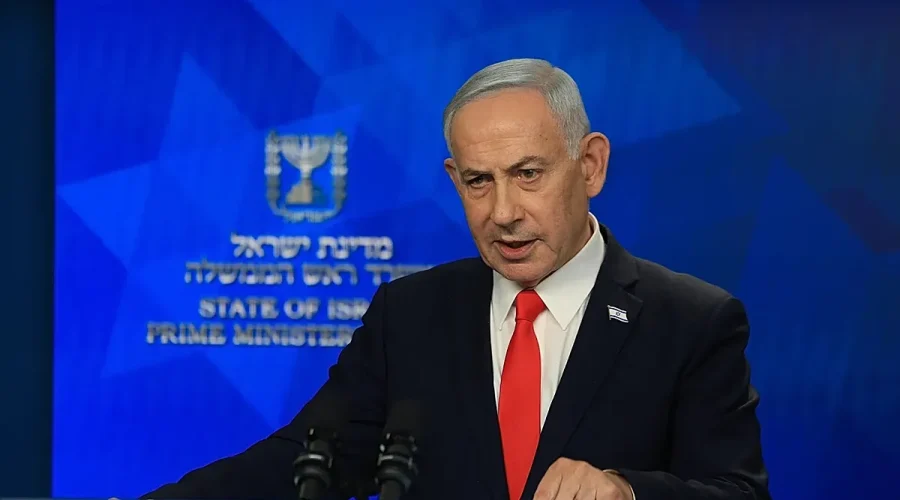
Diplomatic Tensions Rise as Netanyahu Compares Britain to Islamic Republic
A Controversial Comparison Sparks Official Response
Usagevpn.com – British officials have issued a formal rebuttal following statements made by Israeli Prime Minister Benjamin Netanyahu, who characterized the United Kingdom as “the Islamic republic of Britain.” The diplomatic friction emerged during a radio interview with Israel’s military broadcasting service, where the Israeli leader offered his candid assessment of Britain’s evolving political landscape.
According to government sources, a spokesperson for the British administration described Netanyahu’s characterization as “completely unacceptable.” The matter was subsequently elevated and formally raised with Israeli authorities, signaling that London views the comments as more than mere casual observation.
“Try and find that now, in what is called the Islamic republic of Britain,” Netanyahu remarked during the podcast discussion, referencing the historical journalistic legacy of Randolph Churchill.
The Israeli prime minister’s remarks came during a broader conversation about media coverage of Israel. He specifically praised Randolph Churchill, son of former British Prime Minister Winston Churchill, for his favorable reporting on Israel during the 1967 Six-Day War. This historical reference provided the foundation for Netanyahu’s comparison, suggesting that such positive British media coverage of Israel has become increasingly rare.
Nuclear Weapons and Regional Comparisons
During the same interview, Netanyahu offered additional commentary that drew connections between Britain and Middle Eastern nations. He joked that the United Kingdom might be considered “the first Islamic republic with nuclear weapons,” a statement that prompted further discussion with the podcast host.
The host, seemingly building on Netanyahu’s theme, asked whether all of Europe had adopted similar characteristics. Netanyahu concurred with this observation before elaborating on his nuclear weapons comparison. “Yes, but someone said, ‘the first Islamic republic with nuclear weapons will be the Islamic republic of Great Britain,'” he explained.
“So, we’ll make sure there isn’t a second one here in Iran,” Netanyahu continued, drawing a direct parallel between Britain and Iran in his remarks.
The comparison to Iran carries particular significance given the longstanding geopolitical tensions between the two nations. Meanwhile, the reference to nuclear weapons is not without historical precedent—the United Kingdom has possessed nuclear capabilities since 1952, making it one of the world’s earliest nuclear powers. Pakistan, another nation with predominantly Muslim population, achieved nuclear status in 1998, providing another point of reference for Netanyahu’s comparison.
Broader Political Context and Implications
Netanyahu’s comments resonate with assertions made by various politicians and activists across the British and international right. These voices have increasingly argued that Britain is experiencing growing Islamic influence in its political and social institutions. The Israeli prime minister’s remarks thus tapped into an ongoing domestic debate within the United Kingdom.
The timing of these diplomatic tensions is noteworthy, as the United Kingdom and Israel have experienced mounting strain in their bilateral relationship over recent months. This deterioration coincides with the arrival of Andy Burnham as Britain’s new prime minister at Downing Street, marking a significant shift in British leadership.
Before assuming the premiership, Burnham had already demonstrated a willingness to address controversial aspects of British foreign policy. He issued an apology regarding his Labour party’s initial handling of the Gaza conflict, acknowledging that the party needed to improve its approach. His statements reflected a balanced position that neither fully endorsed nor completely rejected Israeli actions.
“The unbearable suffering in Gaza is a scar on our collective conscience,” Burnham stated in early July, emphasizing the emotional and moral weight of the ongoing crisis.
Burnham’s approach has been characterized by simultaneous condemnation of multiple actors. He described the Hamas militant group’s October 7 attacks as “monstrous” while also labeling antisemitic incidents occurring within the United Kingdom as “appalling.” Yet he maintained that British criticism of Israeli actions in Gaza remained essential and justified.
“It’s completely unacceptable that innocent Palestinians, including children, continue to be killed,” Burnham asserted, calling for Westminster to increase pressure on the Israeli government.
The diplomatic incident involving Netanyahu’s comments may prove significant in shaping future UK-Israel relations. With Burnham’s government pursuing a more independent foreign policy stance, particularly regarding Middle Eastern affairs, such public disagreements could become more frequent. The British government’s decision to formally raise the matter with Israeli authorities suggests that London intends to maintain clear boundaries regarding how its nation is characterized on the international stage.
Furthermore, the broader European context that Netanyahu referenced warrants attention. Several European nations have experienced significant demographic changes and political shifts related to immigration and Islamic communities. Whether these changes constitute what Netanyahu termed an “Islamic republic” remains a matter of interpretation, but the comparison highlights evolving perceptions of Western democracies in the Middle East.
As both nations navigate these complex diplomatic waters, the incident serves as a reminder that even longstanding allies can experience moments of friction. The British government’s measured response—neither overly aggressive nor dismissive—reflects its desire to maintain the relationship while asserting its own dignity and perspective on international affairs.
Related Reading
Frequently Asked Questions
What is UK hits back after Netanyahu labels?
UK hits back after Netanyahu labels is the main topic of this guide. The article explains the context, practical details, and next steps readers should understand.
Why does UK hits back after Netanyahu labels matter?
UK hits back after Netanyahu labels matters because readers are looking for a useful answer, not just a short summary. Good content should match search intent and help them decide what to do next.