Tehran’s Security Strategy: Veteran Cleric Returns to Lead Basij Militia
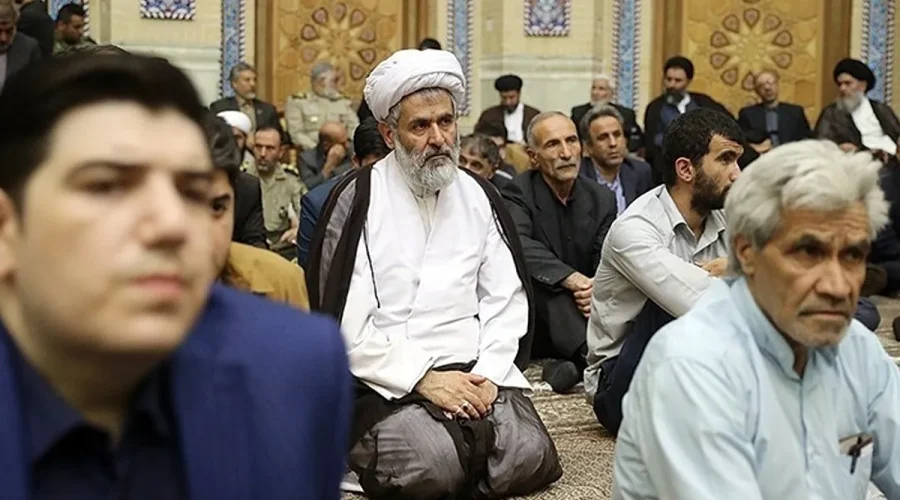
Usagevpn.com – In a significant move that underscores the Islamic Republic’s commitment to strengthening internal security, Hossein Taeb has been reinstated as the commander of the Basij militia. The appointment comes during the formative period of Ayatollah Mojtaba Khamenei’s leadership, signaling that Tehran’s new generation of rulers intends to consolidate power through experienced security figures who have demonstrated loyalty through decades of service.
A Career Forged in Revolution and Conflict
Taeb’s journey through Iran’s security apparatus spans more than four decades, beginning when he joined the Islamic Revolutionary Guard Corps as a teenager. His career trajectory has been marked by consistent advancement through the ranks, with each position building upon the last. After serving in the Ministry of Intelligence, he returned to the Guards and assumed command of the Basij in July 2008, positioning himself at the center of one of the most turbulent periods in modern Iranian history.
Less than a year later, Iran’s disputed presidential election ignited mass demonstrations that became known as the Green Movement. The Basij, under Taeb’s direction, played a pivotal role in suppressing these protests through coordinated efforts across neighborhoods, universities, and government institutions. His handling of the situation earned him both recognition and international scrutiny, with the United States imposing sanctions in 2010 and the European Union following with similar measures in 2011.
The Intelligence Architect
Perhaps Taeb’s most consequential role came in late 2009 when he was appointed as the inaugural head of the newly established IRGC Intelligence Organisation. Over the next thirteen years, he transformed this institution into one of Iran’s most formidable security bodies, frequently surpassing the civilian Ministry of Intelligence in both influence and operational reach.
Under his leadership, the intelligence organisation expanded its mandate to encompass political opponents, journalists, environmental activists, and dual nationals. The most celebrated achievement of this period was the capture and subsequent extradition of Ruhollah Zam, an Iranian dissident residing in France who operated the widely followed Amad News Telegram channel. Zam was brought to Iran in 2019 and executed the following year, a case that demonstrated the reach of Iranian intelligence beyond its borders.
Setbacks and Resilience
Taeb’s tenure as intelligence chief concluded in June 2022 when he was succeeded by Mohammad Kazemi and transitioned to an advisory capacity. While Iranian authorities never explicitly attributed his removal to specific failures, the timing coincided with several notable intelligence shortcomings. These included operations attributed to Israel that revealed vulnerabilities in Iran’s counter-intelligence capabilities, including alleged penetrations of sensitive facilities and the assassination of nuclear scientist Mohsen Fakhrizadeh in November 2020 outside Tehran.
Rather than being marginalized or expelled from the security establishment, Taeb was positioned in a senior advisory role, suggesting that his experience remained valued despite these challenges. This decision reflected a broader pattern within Iran’s security architecture, where loyalty and institutional knowledge often outweigh temporary setbacks.
The Significance of the Return
Taeb’s relationship with Mojtaba Khamenei extends well beyond their current political alignment. Both men served together during the Iran-Iraq War, associated with the Habib battalion of the IRGC’s 27th Mohammad Rasulollah Division. The networks established during this conflict became crucial pathways for advancement within Iran’s security structure, particularly for those who demonstrated unwavering commitment to the revolutionary cause.
The Basij militia, which Taeb now leads once again, maintains an extensive presence throughout Iranian society. Operating in neighborhoods, places of worship, universities, and government offices, the organization serves multiple functions: monitoring citizens and communities, mobilizing support for the regime, and suppressing dissent before it can grow. The appointment order specifically emphasized expanding what officials describe as the “popular intelligence network,” enhancing training programs, and integrating emerging technologies—language that indicates Tehran’s renewed focus on domestic surveillance capabilities.
Broader Implications
Placing a veteran intelligence official at the helm of the Basij represents a strategic shift from reactive deployment to proactive containment. Rather than waiting for protests to emerge before responding, the militia can now operate within a broader system designed to detect and neutralize potential challenges before they escalate. This approach aligns with the current leadership’s broader strategy of maintaining stability amid external pressures, including the ongoing conflict with the United States and mounting economic constraints from international sanctions.
Taeb’s career trajectory—moving between top positions within the security apparatus without permanent removal from the establishment’s core—demonstrates the enduring importance of the IRGC in Tehran’s decision-making processes. The paramilitary corps, which answers directly to the ayatollah, has consistently positioned itself as the ultimate arbiter of power in Iran’s complex political landscape.
Historical precedents support this interpretation. Former president Mahmoud Ahmadinejad publicly challenged Taeb in 2018, accusing him of fabricating cases against political opponents in what represented a rare public dispute between the presidency and the IRGC intelligence apparatus. Similarly, during Hassan Rouhani’s presidency, the IRGC intelligence service openly contested the civilian Ministry of Intelligence in several high-profile cases, illustrating the ongoing shift in security and political power toward institutions directly connected to the ayatollah.
As Iran navigates an increasingly complex domestic and international environment, Taeb’s return to the Basij suggests that the regime’s leadership believes experienced hands remain essential for maintaining control. The appointment reflects not merely a personnel decision, but a strategic calculation about where the Islamic Republic’s priorities lie in the coming years.
Related Reading
Frequently Asked Questions
What is Tehran brings back cleric behind 2009?
Tehran brings back cleric behind 2009 is the main topic of this guide. The article explains the context, practical details, and next steps readers should understand.
Why does Tehran brings back cleric behind 2009 matter?
Tehran brings back cleric behind 2009 matters because readers are looking for a useful answer, not just a short summary. Good content should match search intent and help them decide what to do next.