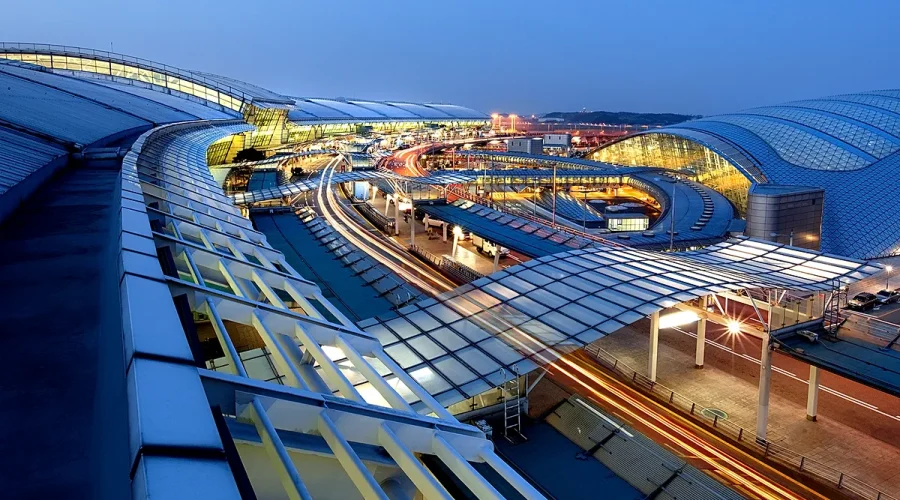
Incheon Airport Claims Top Global Spot for International Passenger Movement
Usagevpn.com – South Korea’s primary aviation hub has achieved a historic milestone, surpassing all other airports worldwide in handling international travelers during the opening half of 2026. The facility, positioned roughly 48 kilometers from Seoul, now stands as the premier gateway connecting the nation to global destinations. Preliminary figures indicate that Incheon processed 38.39 million overseas passengers between January and June of this year. These numbers await formal validation when the Airports Council International releases its comprehensive monthly World Airport Traffic Report later in September.
Competitive Rankings and Regional Competition
London Heathrow secured the runner-up position with 37.79 million international travelers passing through its terminals during the same timeframe. Singapore’s Changi Airport completed the podium with 34.53 million passengers, demonstrating strong performance in the competitive Asian market. The remarkable growth at Incheon connects directly to geopolitical developments affecting global air travel patterns. Ongoing tensions between the United States and Iran have created significant disruptions across Middle Eastern aviation corridors. These conflicts have prompted airlines and passengers to reroute flights away from traditional hubs such as Dubai, channeling increased volumes through East Asian networks instead.
Transfer Traffic Shows Strong Growth
Beyond direct arrivals and departures, connecting passengers represent a substantial portion of Incheon’s operations. The facility recorded an 18.1 percent increase in transfer travelers during the first six months of 2026, reaching 4.24 million compared to the corresponding period in 2025. European-bound connecting passengers experienced particularly dramatic growth, climbing 63.2 percent year-over-year to reach 210,000 travelers. This surge reflects shifting travel patterns as passengers seek alternative routing options amid Middle Eastern instability.
Historical Context and Infrastructure Expansion
Since opening its doors in 2001, Incheon has evolved into a major international aviation center. The airport currently accommodates 101 airlines operating flights to 183 cities worldwide, with 158 of those destinations located outside South Korea. A significant infrastructure modernization project finished in 2024 substantially boosted the airport’s capabilities. The expansion raised annual passenger capacity to 106 million travelers, positioning Incheon to handle continued growth in international demand. This achievement marks the first occasion that Incheon has claimed the number one position globally for international traffic volume. Historical performance shows steady upward momentum: the airport ranked tenth worldwide in 2002, climbed to fifth place by 2018, and reached third position in both 2024 and 2025. Dubai International Airport, which held second place in full-year statistics for both 2024 and 2025, is projected to drop outside the top five rankings this year as passenger flows continue shifting toward Asian alternatives.
European Aviation Landscape Shifts
Broader European aviation dynamics have also experienced notable changes recently. Figures released earlier this week by the Airports Council International confirmed that Istanbul Airport has surpassed London Heathrow as Europe’s busiest facility by total passenger volume. During July alone, Heathrow’s terminals processed 7.9 million passengers while Istanbul handled 8.15 million, marking a significant shift in European aviation hierarchy. The convergence of these trends—Incheon’s global leadership, Middle Eastern disruptions, and European realignment—illustrates how geopolitical events continue reshaping international air travel patterns. Passengers and airlines alike are adapting to new routing realities, with East Asian hubs like Incheon benefiting from their geographic positioning and expanded infrastructure. For travelers planning international journeys, these developments suggest that routes through South Korea may offer increasingly competitive alternatives to traditional Middle Eastern connections. The airport’s enhanced capacity and growing network of destinations position it as a central node in global aviation for years to come.
Related Reading
Frequently Asked Questions
What is South Korea s Incheon airport becomes?
South Korea s Incheon airport becomes is the main topic of this guide. The article explains the context, practical details, and next steps readers should understand.
Why does South Korea s Incheon airport becomes matter?
South Korea s Incheon airport becomes matters because readers are looking for a useful answer, not just a short summary. Good content should match search intent and help them decide what to do next.