Spain Enters Peak Fire Season with Blazes Active and 50,000 Hectares Burned
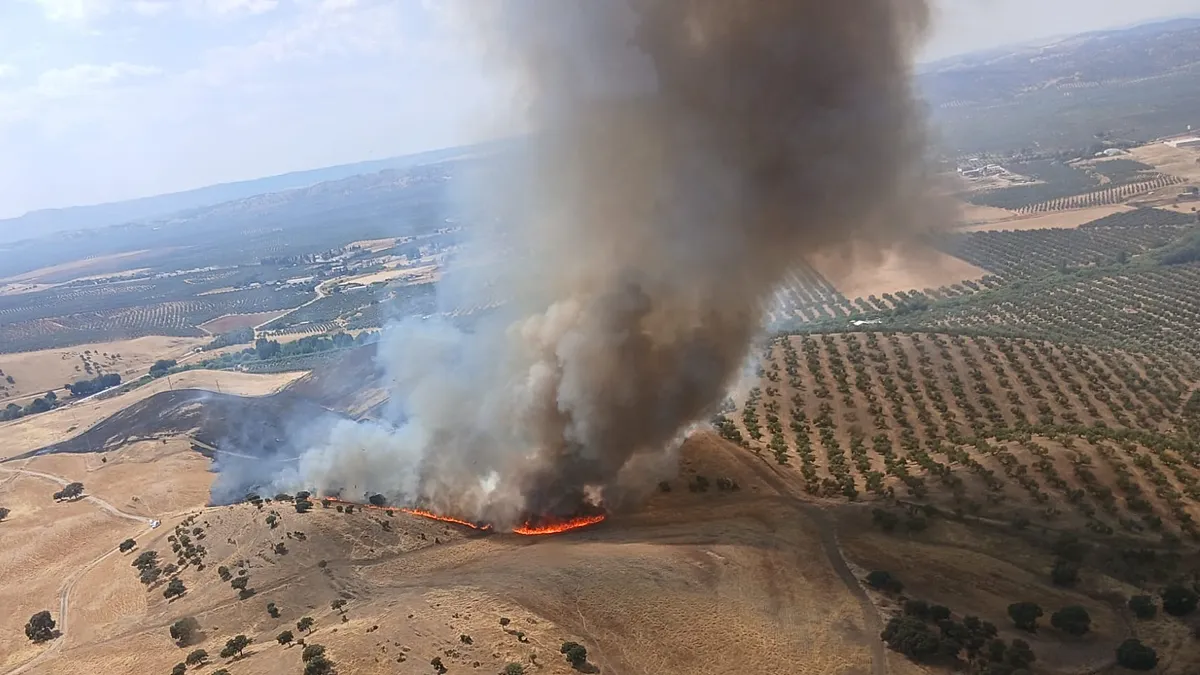
Spain enters peak fire season – Spain is now in the peak wildfire season, as multiple fire fronts are either burning or being monitored closely. The country has already seen significant damage, with over 50,000 hectares scorched in 2026 alone. This figure marks a sharp increase compared to previous years, highlighting the escalating threat posed by blazes across various regions. As of this week, the situation has intensified, with the most severe fires reported in Aragon, where a major blaze in Leciñena has claimed more than 2,200 hectares. This disaster has raised concerns among officials, as it continues to burn under challenging conditions.
Another fire in La Fueva, Huesca, has prompted the evacuation of several communities, including Morillo de Monclús and Formigales, due to the risk of rapid spread. The incident in Leciñena, which has been the focus of emergency response efforts, is now joined by a second major fire in the Tamarite de Litera-Alcampell area, which has consumed approximately 4,000 hectares. These fires have triggered evacuations in three towns, underscoring the widespread impact of the current crisis. Meanwhile, a third blaze near the Despeñaperros Natural Park in Jaén remains active, adding to the pressure on firefighting resources.
The Infoca plan, Spain’s national wildfire response system, has upgraded its emergency level to operational situation 1, indicating a high readiness for action. Aerial firefighting operations have resumed after a night of intensive efforts, with teams working to contain the flames. The latest fire has forced the evacuation of nearly 200 residents, including children from a nearby farm school in Miranda del Rey. These measures are part of a broader strategy to protect both people and property as the fire season reaches its critical phase.
Canary Islands Update: Alert Lifted but Pre-Alert Remains
While the mainland struggles with active blazes, the Canary Islands have made some progress in mitigating the risk. The regional government has officially lifted the forest fire alert for Gran Canaria, Tenerife, La Palma, La Gomera, and El Hierro, effective this Thursday at 8:00. However, a pre-alert for forest fire risk is still in place, signaling that the threat is not yet fully under control. This decision reflects the island’s improved conditions, though experts caution that the risk remains elevated due to ongoing dry spells and high temperatures.
The current situation aligns with the European Forest Fire Information System (EFFIS) forecasts, which indicate that Spain has entered the period of highest forest-fire danger. Data from EFFIS reveals that the country has already lost nearly 50,000 hectares this year, surpassing the 39,700 hectares recorded by the Ministry for Ecological Transition up to June 21. This discrepancy arises from the differing methodologies used by each source. The ministry relies on official reports from autonomous regions, whereas EFFIS employs continuous satellite imagery analysis to estimate fire activity in real time.
June: Most Destructive Month of the Year
June has proven to be the most destructive month of the year, with around 15,900 hectares burned. Cantabria leads the tally, accounting for approximately 15,500 hectares of damage, while Álava has seen an unusual surge in fires, burning 100 hectares—a number far above the average for this time of year. According to an analysis by
“RTVE”
, the regional broadcaster, this trend suggests a shift in fire patterns, with some areas experiencing earlier and more intense blazes than typical.
So far in 2026, Spain has recorded 14 major forest fires, defined as those exceeding 500 hectares in size. These fires have originated in several provinces, including Huelva, where San Bartolomé de la Torre and Villanueva de los Castillejos have been affected. Other notable incidents include Alcampell in Huesca, Obejo in Córdoba, and Congosto in León. The frequency and scale of these blazes have prompted a reevaluation of Spain’s fire management strategies, with officials calling for increased vigilance and resource allocation.
European Context: Rising Fire Activity Across the Region
The fire crisis in Spain is part of a broader trend affecting the European Union. Satellite data shows that over 130,400 hectares have already burned across the continent this year, a 16% increase compared to the average for this season. While these figures are still provisional, they underscore the severity of the situation. The European context is particularly concerning, as the region grapples with record-breaking temperatures and prolonged drought conditions that have created ideal conditions for wildfires to spread rapidly.
Experts warn that the combination of climate change and natural weather patterns is likely to extend the fire season well into the autumn months. The current blazes have not only disrupted local communities but also strained firefighting crews and resources. With the official reports from autonomous regions and satellite estimates continuing to refine the total burned area, the outlook for Spain’s fire season remains grim. The government is under pressure to implement long-term solutions, such as improved land management and early warning systems, to reduce the risk of future disasters.
The data from EFFIS and the Ministry for Ecological Transition highlights the importance of accurate tracking methods. While the ministry provides structured reports based on official data, EFFIS offers a more dynamic view through satellite monitoring. This contrast in data sources allows for a more comprehensive understanding of the situation, but it also creates challenges in coordinating responses. The recent fires have demonstrated how quickly conditions can escalate, emphasizing the need for proactive measures and enhanced preparedness.
As the fire season progresses, the focus will shift to preventing further outbreaks and mitigating their impact. The Infoca plan’s activation of operational situation 1 signals a heightened state of alert, with aerial resources and ground teams working in tandem to combat the flames. The preventive evacuations have also raised awareness about the vulnerability of communities to sudden fire threats. In the Canary Islands, the lifting of the alert is a positive step, but it serves as a reminder that the risk of wildfires remains a constant concern.
Looking ahead, the cumulative effect of these fires could have lasting environmental and economic consequences. The loss of 50,000 hectares in 2026 alone represents a significant portion of Spain’s natural resources, with implications for biodiversity, soil erosion, and carbon emissions. Additionally, the disruption to local communities and agricultural areas highlights the human cost of the crisis. With the European Union facing similar challenges, Spain’s experience provides valuable insights into the broader implications of climate-driven wildfires across the continent.