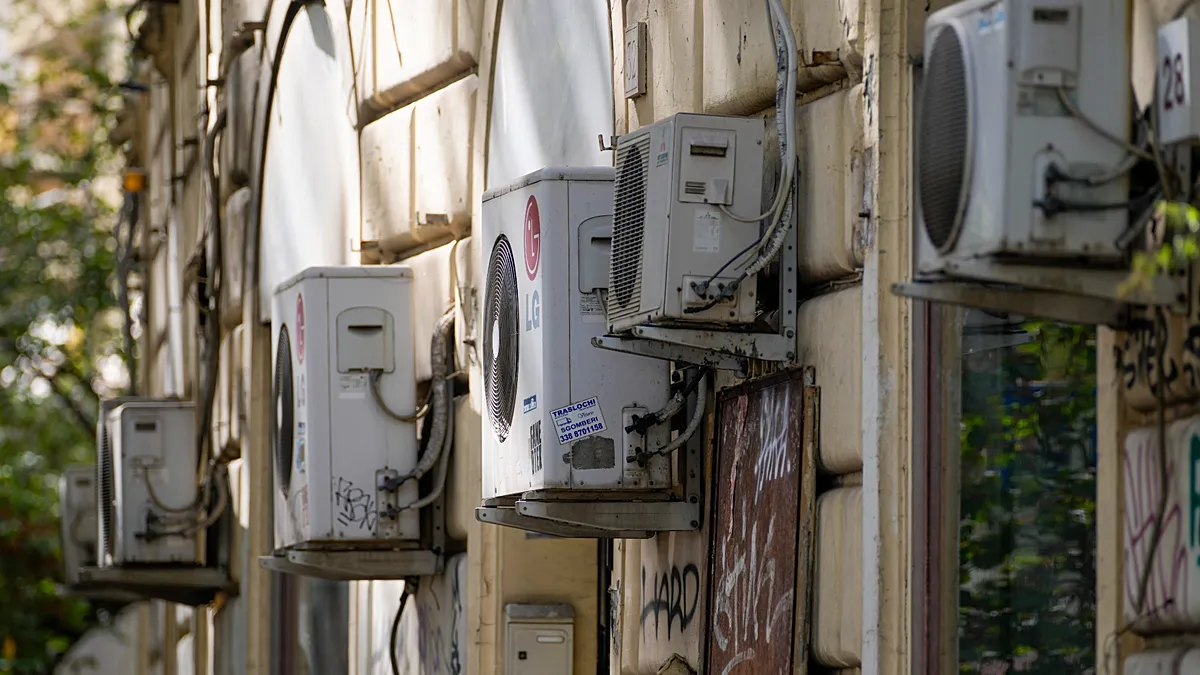
Brussels supports air conditioning—but not as the main answer
Brussels supports air conditioning but not – The European Commission has expressed cautious endorsement of air conditioning as a necessary tool in combating the intensifying heatwaves that are becoming more common across Europe. However, officials emphasize that this technology should not be the sole solution to rising temperatures. While passive cooling methods like insulation and shading can provide relief in many situations, they may prove inadequate in extreme weather conditions. This nuanced position reflects the Commission’s broader strategy to address climate challenges through a combination of adaptive measures rather than relying on a single technological fix.
Energy Costs and Urban Heat Islands
As demand for cooling increases, officials warn that excessive use of air conditioning could lead to a surge in electricity consumption. This, in turn, would require more power generation, potentially driving up energy bills for households, especially in light of current high electricity prices. One unnamed EU official highlighted that while air conditioning is indispensable in certain scenarios, its widespread adoption could result in financial strain. “We need to ensure that air conditioning is used efficiently,” the official stated. “Without proper regulation, the cost of installation and energy use could become unsustainable for many communities.”
“Air conditioning is definitely one of the tools and a very necessary tool. In some cases, insulation or other passive strategies are not sufficient,” the EU official said. “At the same time, if you rely only on air conditioning, you may have to pay a lot for installation because you need a big generator to produce equally, but also you can end up with high energy bills.”
Moreover, the proliferation of air conditioners could exacerbate the urban “heat island” effect. This phenomenon occurs when cities retain more heat than surrounding rural areas due to the concentration of heat-generating infrastructure and materials. The official explained that the waste heat from AC units could contribute to this issue, underscoring the need for green spaces, strategic building design, and shading solutions to mitigate its impact. “Nature-based approaches are critical in creating sustainable cooling environments,” they added.
The Path to Resilient Cities
The EU’s upcoming climate adaptation strategy, set to be unveiled in the fourth quarter of 2026, aims to guide member states toward prevention and resilience rather than reactive measures. This document is expected to highlight the importance of integrating passive cooling techniques into urban planning and building codes. By prioritizing cooler infrastructure, the Commission hopes to reduce the overall dependency on mechanical cooling systems. “Our goal is to build cities that are better prepared for the future,” the official said, emphasizing the need for long-term planning over short-term fixes.
The strategy also calls for a shift in focus from mass deployment of air conditioning units to more sustainable cooling methods. Instead of promoting widespread installation, Brussels advocates for improving building insulation, designing structures to maximize natural ventilation, and incorporating elements like green roofs and reflective surfaces. These measures, the officials argue, can significantly lower the need for energy-intensive cooling while enhancing overall climate resilience.
Portable Units vs. Fixed Systems
While portable air conditioners remain popular due to their ease of installation, EU energy experts caution that they are less efficient than fixed systems. Modern, stationary units are described as “highly efficient,” often functioning as reversible heat pumps that can serve dual purposes—cooling during hot periods and heating in colder months. This versatility could aid in decarbonizing the energy sector, as the Commission notes that efficiency standards have improved over the years. “Regulatory frameworks have steadily enhanced the performance of these systems since 2002,” an official stated, with further updates planned to address emerging challenges.
Nevertheless, the decision to install air conditioning typically rests with local authorities. “Member states and municipalities need the flexibility to choose the best approach for their cities,” the official explained. “Whether it’s adding solar shading to buildings or installing AC units, the key is to balance immediate needs with long-term sustainability goals.” This localized approach allows for tailored solutions, ensuring that cities can adapt to their unique environmental and infrastructural conditions.
Expert Perspectives on Cooling Solutions
Veteran lawmaker Pascal Canfin, representing France in the Renew Europe group, criticized the tendency to reduce the climate adaptation discussion to a simple binary of “for or against” air conditioning. “This debate is overly simplistic,” Canfin argued. “While air conditioning is vital in protecting vulnerable groups like children and the elderly, it cannot address all the challenges posed by rising temperatures.” He pointed out that infrastructure weaknesses and declining agricultural productivity remain unresolved issues, even with the expansion of cooling technologies.
“I believe schools and hospitals should be air-conditioned so that children, elderly people, or people who are ill aren’t left alone to face heat that has become dangerous. But air conditioning isn’t the answer to everything,” Canfin told Euronews. “It is ineffective to systematically reject every technological adaptation solution as it is to rely on a single miracle fix.”
Terry Reintke, co-president of the Greens/EFA in the European Parliament, echoed this sentiment, stressing the need to prioritize life-saving infrastructure. “Our focus should be on protecting the most vulnerable populations, especially those without access to cooling,” she said. Reintke proposed initiatives like planting trees, restoring wetlands, and creating water-based cooling zones as essential components of a sustainable urban strategy. “Nature-based solutions are not just aesthetic—they are vital for reducing heat stress and improving quality of life,” she added.
Reintke also linked the current heatwave to the urgent need for transitioning away from fossil fuels. “This extreme weather serves as a wake-up call to accelerate the shift toward renewable energy,” she stated. “Only by decarbonizing our power sources can we ensure that cities remain habitable without exacerbating the climate crisis.” Her remarks highlight the interconnected nature of energy policy and climate adaptation, urging a holistic approach that integrates both technological and ecological strategies.
As the EU works to refine its climate adaptation framework, the debate over air conditioning’s role continues to evolve. While it is undeniably a critical tool in certain contexts, the Commission’s emphasis on a balanced, integrated strategy underscores the complexity of addressing climate change. By combining passive cooling techniques with efficient, modern air conditioning systems, the bloc aims to create a resilient and sustainable approach to rising temperatures, ensuring that Europe remains both comfortable and environmentally responsible in the face of a changing climate.