Four First-Time Champions Emerge from Lima’s Tatami as Grand Prix Day Two Delivers Historic Results
Usagevpn.com – The second day of competition at the 2026 Judo Grand Prix in Lima produced a remarkable cluster of career-defining moments, with four athletes claiming their first World Judo Tour gold medals across separate weight divisions. Held in Peru’s capital, the event has become a proving ground for judokas seeking to establish themselves on the international circuit, and Saturday’s finals delivered exactly that kind of watershed moment.
The Grand Prix sits within the International Judo Federation’s annual World Judo Tour calendar, a series of tournaments that feed into qualification pathways for major championships and Olympic cycles. For many competitors, a single gold at this level represents not merely a trophy but a career inflection point — evidence that they belong among the sport’s elite tier. Lima’s Day Two confirmed that thesis four times over.
Moldovan Breakthrough at -73kg
The most emotionally charged final of the day belonged to Vlad MITRU, who stepped into his first-ever World Tour final against Jack YONEZUKA in the men’s -73kg bracket. The Moldovan judoka had spent years grinding through lower-tier events and continental qualifiers, but Saturday marked the moment that work translated into top-flight recognition. MITRU secured victory with a precisely executed ippon — a full-point finish that ended the contest decisively and handed him the largest result of his career to date.
The medal ceremony was conducted by Oscar CASSINERIO, who serves as Director of the International Judo Federation’s International Relations Commission. For MITRU, the significance extends beyond personal achievement: it positions a relatively small judo nation on the global map and opens doors for future sponsorship, training partnerships, and competitive invitations.
Watanabe Converts Late Pressure at -63kg
In the women’s -63kg final, Japan’s Seiko WATANABE met Laura VAZQUEZ FERNANDEZ in a contest that remained tightly contested through most of its duration. Neither competitor could find a clean scoring opportunity until the closing minute, when WATANABE produced a yuko — a half-point technique — to tip the balance and claim her maiden World Judo Tour gold.
The late nature of the score underscored how evenly matched the two athletes were throughout regulation time. Katiuska SANTAELLA, a member of the IJF Gender Equality & Development Commission, presented the medals on the podium. For WATANABE, the result elevates her standing within Japan’s deep women’s judo pipeline and adds a significant line to her competitive résumé heading into subsequent Tour events.
Pohl’s Determination Pays Off at -70kg
Germany’s Dena POHL entered the women’s -70kg final with Nauana SILVA knowing that only one outcome mattered. The German judoka delivered a waza-ari — another half-point technique, though of greater technical amplitude than a yuko — to secure her first World Judo Tour gold medal. The victory was described as a landmark moment for POHL’s career, capping a tournament run in which she demonstrated both tactical discipline and physical commitment.
Armen BAGDASAROV, the IJF Head Referee Director, officiated the medal presentation. For German judo, adding another Tour gold to its already substantial tally reinforces the nation’s position as one of the sport’s perennial powerhouses and provides momentum for athletes preparing for later-season championships.
Home Hero Lima Claims Gold at -81kg
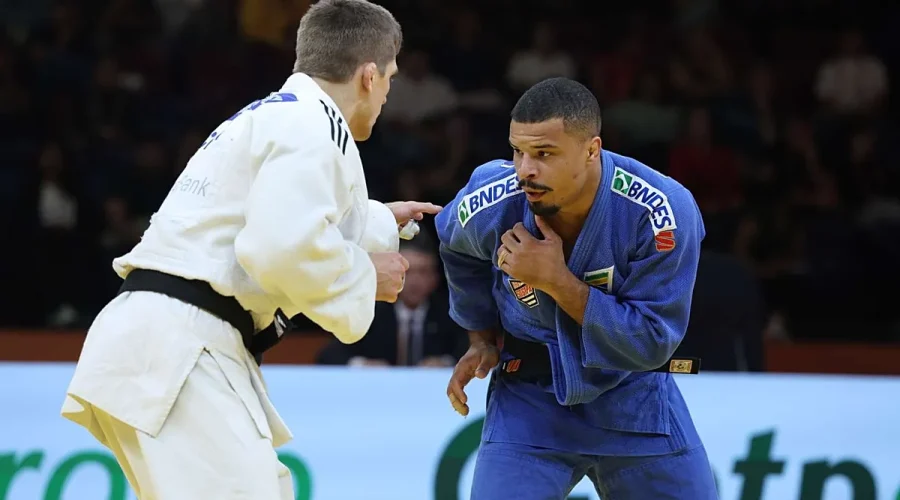
No result on Day Two carried more local resonance than the men’s -81kg final, in which Peruvian judoka David LIMA defeated Francois GAUTHIER DRAPEAU to lift the Grand Prix gold before a home crowd. LIMA struck early with a yuko and then managed the remainder of the contest with composure, protecting his lead through the final exchanges.
The medal ceremony was led by Leyla CHIHUAN, Director of the Peruvian Olympic Committee, lending the occasion additional national significance. A home-venue gold at this level is rare for athletes from smaller judo markets; it validates years of domestic development investment and offers a visible role model for young competitors across Peru.
What Comes Next
The tournament schedule continues with heavyweight categories scheduled for the following day, keeping Lima’s tatami active through the final session of competition. For the athletes who stepped off the podium on Day Two, the immediate focus shifts to recovery and preparation, while the broader narrative they have written — four first-time champions in a single afternoon — will echo through judo circles well beyond Peru.
The Grand Prix calendar rewards consistency, but it is the individual breakthrough that reshapes an athlete’s trajectory overnight. Lima proved, across four weight classes, that such moments remain possible at every level of the Tour.
Related Reading
Frequently Asked Questions
What is Lima Grand Prix 2026?
Lima Grand Prix 2026 is the main topic of this guide. The article explains the context, practical details, and next steps readers should understand.
Why does Lima Grand Prix 2026 matter?
Lima Grand Prix 2026 matters because readers are looking for a useful answer, not just a short summary. Good content should match search intent and help them decide what to do next.