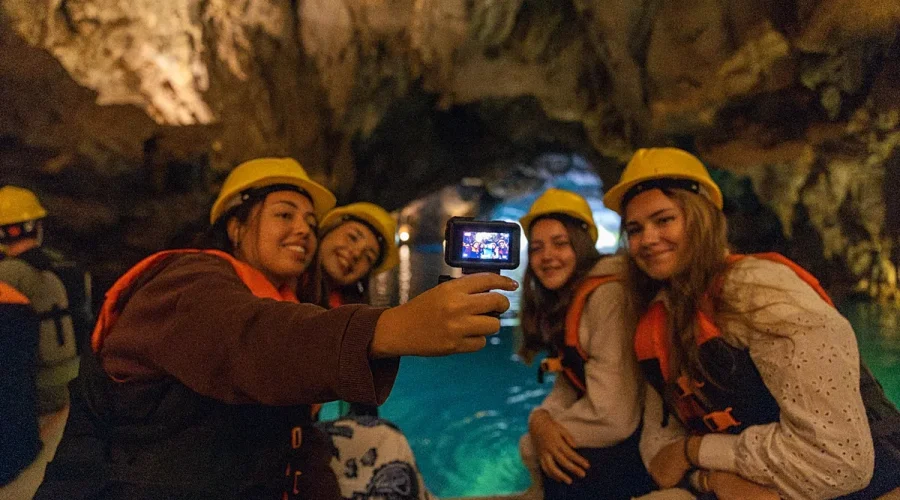
Short-Form Video Is Rewiring How a Generation Plans Its Holidays
Usagevpn.com – The way people decide where to spend their next vacation has undergone a quiet but decisive shift. For decades, the travel-planning pipeline ran through word of mouth, a cousin’s sunburned photo album, or a weekend afternoon spent flipping through glossy brochures at the airport kiosk. Today, that pipeline has been rerouted through a six-inch smartphone screen, and the dominant currency of inspiration is no longer a friend’s anecdote but a fifteen-second clip of a cliffside sunset set to trending audio.
A recent survey conducted by TUI Musement across Spain, Italy, and the United Kingdom mapped how social platforms now shape every stage of the holiday lifecycle — from initial discovery through booking, on-the-ground experience, and post-trip sharing. The findings reveal that visual, short-form content has moved from a peripheral novelty to a primary decision-making input for millions of travellers.
TikTok Overtakes the Family Group Chat
Among respondents born between 1997 and 2012 — the cohort commonly labelled Generation Z — nearly half, specifically 48%, identified TikTok as a source of travel inspiration. That figure places the short-video app ahead of the traditional recommendation channel: friends and family came in second at 43%. The gap is narrow, but the direction of travel is unmistakable. A platform built around algorithmically served, sub-minute clips has displaced the people who once held the most trusted travel-advice role in a young person’s life.
The broader implication is that destination marketing and activity operators can no longer assume their audience will encounter their offerings through conventional channels. If a Gen Z traveller’s discovery moment happens inside a scroll of user-generated clips, the entire promotional architecture — from paid advertising to earned media — must be rebuilt around formats that survive that scroll.
Viral Clips Are Booking Trips
Influence does not stop at passive inspiration. More than four in ten travellers across the surveyed markets — 43% overall — said that encountering a viral post or video directly prompted them to book a trip or sign up for an activity. The effect was marginally stronger among millennials, who reported a 52% incidence, compared with 50% among Gen Z respondents. In practical terms, a single well-timed clip of a coastal town or a zip-line course can convert a passive scroller into a paying customer within hours.
This dynamic compresses the traditional sales funnel. What once required weeks of research, comparison shopping, and deliberation can now be triggered by a moment of aesthetic or adrenaline appeal delivered in under sixty seconds. Operators who fail to produce shareable, visually arresting content risk becoming invisible to the very demographic that drives growth in leisure travel.
Influencers as Destination Gatekeepers
Content creators occupy a distinct and powerful position in the decision chain. Forty-three percent of survey respondents acknowledged that the creators they follow factor into where they travel and what activities they choose. More strikingly, 27% admitted they had altered their chosen destination entirely because of a recommendation from an influencer. That is not a marginal nudge; it is a wholesale redirection of travel behaviour, executed by a stranger whose primary product is attention.
For destination marketing organisations and activity providers, this creates both an opportunity and a dependency. Partnering with creators can unlock reach that paid media cannot match, but it also cedes a degree of narrative control to individuals whose incentives — engagement metrics, brand deals, personal aesthetics — may not align with a destination’s long-term positioning.
“A single image or video can now inspire travel, and we have steadily increased our focus on how we can best reach and engage our audience through platforms such as Instagram and TikTok,” said Mirco Fiumene, Managing Director Experiences & CMO at TUI Musement.
The Pressure Continues After Landing
The social-media imperative does not dissolve the moment a traveller steps off the plane. Over a third of respondents — 37% — reported feeling compelled to make their trips appear more thrilling on their own profiles than they actually were. Within the Gen Z segment, that pressure climbs to 45%, meaning nearly one in two young travellers experiences a measurable gap between lived experience and curated presentation.
Behavioural consequences follow. Nearly four in ten travellers (39%) said they visited a well-known tourist hotspot primarily to capture a photograph or record a short video. A further 37% conceded that, at least some of the time, they would choose an Instagram-famous location over a lesser-known local attraction. The destination’s authentic character is increasingly subordinate to its photogenic value.
This creates a feedback loop: destinations that look spectacular on camera attract more visitors, which generates more content, which attracts still more visitors — while quieter, culturally rich sites that do not lend themselves to a fifteen-second highlight reel risk fading from the algorithmic map entirely. Municipalities and tourism boards face the challenge of balancing visual spectacle with depth of experience, lest their offerings become interchangeable backdrops for a feed.
What Comes Next
The data from TUI Musement’s tri-national study sketches a travel ecosystem in which the algorithm, not the itinerary, holds the steering wheel. For operators, marketers, and destination authorities, the question is no longer whether short-form video will shape holiday behaviour — the survey confirms it already does — but how to participate in that shaping without surrendering authenticity, sustainability, or the traveller’s genuine desire to experience a place beyond its thumbnail.
Related Reading
Frequently Asked Questions
What is I saw it on TikTok?
I saw it on TikTok is the main topic of this guide. The article explains the context, practical details, and next steps readers should understand.
Why does I saw it on TikTok matter?
I saw it on TikTok matters because readers are looking for a useful answer, not just a short summary. Good content should match search intent and help them decide what to do next.