UK Foreign Policy to Remain Unchanged Amid Leadership Transition, Says Deputy PM Lammy
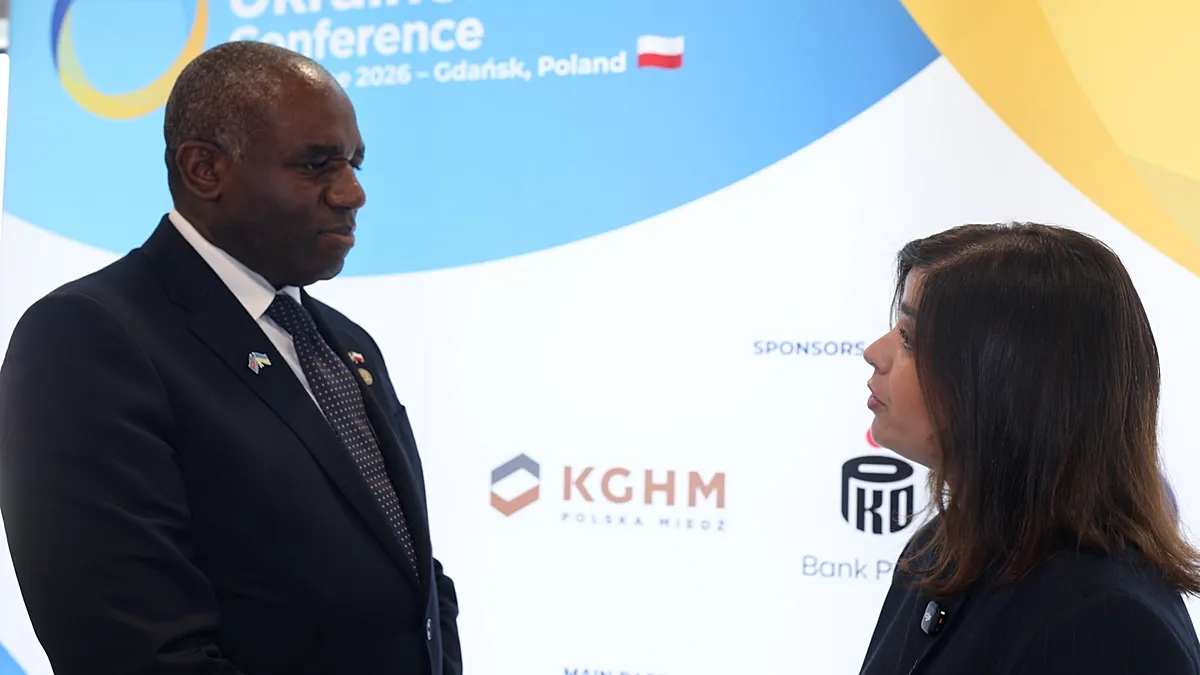
UK foreign policy to remain unchanged – Deputy Prime Minister David Lammy has emphasized that the United Kingdom will maintain its steadfast foreign policy stance even as the Labour Party transitions to a new leadership. Speaking to Europe Today during the Ukraine Recovery Conference in Gdańsk, Poland, Lammy reassured that the country’s commitment to Ukraine and its global diplomatic priorities will not waver. “There’s absolutely no question of a change in our foreign policy,” he stated, highlighting the UK’s consistent support for Ukraine despite the political upheaval in London.
Lammy’s comments come after outgoing Prime Minister Keir Starmer outlined a plan for his resignation, setting the stage for a leadership change within the Labour Party. The shift has been driven by growing pressure to replace Starmer, as the party loses ground to Nigel Farage’s Reform UK, which currently leads in opinion polls. Andy Burnham, the former Greater Manchester mayor, is widely expected to take over as the next leader, with the possibility of assuming office as early as 17 July. Starmer is reportedly facilitating a smooth handover by allowing Burnham to access government briefings, ensuring continuity in policy decisions.
UK’s Commitment to Ukraine Reinforced
During the conference, the UK pledged an additional £290 million (€340 million) to bolster Ukraine’s recovery efforts and secure its energy independence. Lammy, who served as the UK’s foreign minister until last September, reiterated that the nation has consistently backed Ukraine through various governments. “We have remained committed to Ukraine through successive administrations, and that will continue,” he added, underscoring the bipartisan nature of the UK’s support for the war-torn country.
Lammy also stressed the importance of the UK’s role in re-engaging with the global community and resetting relations with Europe. “Reconnecting with the global community, a European reset, all of that continues,” he said, reflecting the strategic priorities outlined in Starmer’s leadership. The Labour Party’s focus on maintaining strong European ties, even after Brexit, remains central to its foreign policy framework. This approach aims to dismantle barriers to cooperation that emerged during the Brexit referendum, fostering deeper economic and trade relationships with the EU.
EU-UK Summit Delayed Amid Political Shift
The upcoming EU-UK summit, originally scheduled for 22 July, has been postponed due to the ongoing leadership transition. This change in timing highlights the challenges of aligning diplomatic agendas with internal political shifts. The summit was anticipated to finalize agreements on agri-food imports, emissions trading, and youth mobility, but the delay may affect progress on these critical issues.
Despite the setback, Lammy expressed confidence that momentum on Ukraine will carry into the NATO summit in Ankara, set for 7-8 July. The G7 summit in France last week marked a rare moment of transatlantic unity, with all seven leaders endorsing a joint statement on Ukraine. The statement, signed by U.S. President Donald Trump, has reignited hopes that Washington will strengthen its backing for Kyiv and intensify pressure on Russia. “I think we’ll see in NATO in the coming weeks that the United States is seeing Europeans step up in terms of our commitments to defence and to spend across Europe,” Lammy noted, pointing to the potential for renewed collaboration.
However, Trump’s recent frustrations with European allies over their reluctance to assist in Iran have raised concerns about a potential U.S. retreat from Ukraine. Lammy addressed these fears, urging recognition of the role European bases, including those in the UK, play in supporting efforts to secure the Strait of Hormuz. He highlighted the work of Starmer and French President Emmanuel Macron in forming the Coalition of the Willing, a group of allies poised to address regional security challenges once a permanent peace pact is established.
Sanctions and Economic Pressure on Russia
Lammy also reiterated the UK’s resolve to continue targeting the Russian economy through sanctions. “This is the moment to keep Ukraine in the fight,” he said, emphasizing the need to pressure Moscow financially. The deputy PM pointed to the ongoing efforts to cut off “dirty Russian money” financing the war, calling it a vital strategy to sustain Ukraine’s resilience. “We have been absolutely clear about the importance of sanctioning the Russian economy,” he added, aligning with the UK’s broader goal of isolating Russia economically.
The transition in leadership has not shaken the UK’s long-term vision for its foreign policy, according to Lammy. “The principles we’ve established under Starmer will endure,” he said, noting that Burnham, as the likely successor, will uphold these commitments. The Labour Party’s focus on economic ties with the EU and its defense alliances remains a cornerstone of its strategy, even as it navigates internal political dynamics. Lammy’s confidence in Burnham’s ability to maintain this course reflects the stability of the UK’s diplomatic objectives, despite the uncertainty surrounding the leadership change.
The Coalition of the Willing, which includes nations committed to stabilizing the Strait of Hormuz, has been a key initiative in addressing regional security. Lammy credited Starmer and Macron for their collaborative efforts in assembling this coalition, which seeks to ensure freedom of navigation and de-mining operations in the region. This work, he argued, demonstrates the UK’s capacity to act as a bridge between European and global interests, even amid shifting political tides.
Looking Ahead: A New Era of Stability
As the Labour Party moves toward a new leadership, Lammy’s statements suggest a focus on maintaining institutional continuity. “There is a clear understanding that the UK’s foreign policy will remain consistent,” he said, acknowledging the importance of preserving momentum in critical areas like Ukraine and Europe. The upcoming NATO summit in Ankara and the potential resumption of EU negotiations offer opportunities to reinforce these priorities, even as the UK’s domestic political landscape evolves.
Lammy’s remarks also highlight the interplay between domestic leadership changes and international commitments. While the transition from Starmer to Burnham may bring new perspectives, the deputy PM insists that the UK’s strategic direction will remain intact. “The principles we’ve championed will be carried forward,” he said, signaling a blend of tradition and adaptability in Labour’s approach to global diplomacy. This continuity is crucial for maintaining trust with allies and ensuring that the UK’s role in international affairs remains robust, despite the challenges posed by a political realignment.
With the UK’s financial support for Ukraine and its economic strategy toward the EU set in motion, the focus now shifts to how the new leadership will execute these plans. Lammy’s confidence in the process underscores the resilience of the UK’s foreign policy framework, even as it undergoes internal restructuring. The upcoming NATO and EU summits will serve as key milestones in testing this stability, offering a glimpse into the future of UK diplomacy on the world stage.
“For all of those reasons, I expect to see a successful NATO conference,” Lammy said, emphasizing the collective resolve of allies to support Ukraine and address shared security concerns.
As the political transition in London progresses, the UK’s commitment to its foreign policy remains a priority, with Lammy’s assurances providing clarity amid the uncertainty. The nation’s strategic focus on Ukraine, Europe, and global economic partnerships will likely remain unshaken, ensuring that the UK continues to play a pivotal role in shaping international relations.