Spain Government in Disarray Over Ceuta Crisis
Usagevpn.com – The Sánchez administration plunged deeper into political turbulence on Wednesday when a leaked internal police document contradicted the government’s official account of how roughly 80,000 migrants flooded into the Spanish enclave of Ceuta. Officials had initially described the event as an accidental border breach, but the leaked material alleged that Moroccan authorities actively facilitated the sea movement, maintained a passive posture during the buildup, and effectively confirmed the mass crossing was neither spontaneous nor accidental. For a cabinet already grappling with the deaths of more than 150 people at sea, the revelation compounded an already severe crisis, leaving the Spain government in disarray as conflicting accounts from its own security apparatus collided in public view.
The Leak and Its Political Fallout
Interior Minister Fernando Grande-Marlaska, under intensifying scrutiny over what many in Madrid regard as the gravest national-security failure in decades, directed police to clarify the claims. The instruction itself acknowledged the contradiction: the leaked document directly challenged the storyline Madrid had repeated since the border collapsed. A senior police official subsequently stated that no report directly blaming Morocco existed, yet the clarification failed to extinguish the political firestorm. Thousands of migrants remain stranded in Ceuta, local residents grow increasingly agitated, and the Sánchez government appears to be losing control of the narrative.
The episode also raises uncomfortable questions about internal discipline within the Interior Ministry, one of the most politically charged departments in the Spanish state. Analysts observe that the pattern of leaks suggests a faction within the police apparatus may be seeking either to embarrass the cabinet or to force the surfacing of information the government has kept contained. In Spanish political culture, accusations of “lawfare” — the instrumentalisation of courts or police bodies for partisan advantage — are routine, and both the ruling coalition and the opposition have deployed the charge against one another in recent years.
Opposition Seizes the Moment
Alberto Núñez Feijóo, leader of the main opposition party, did not waste the opening. Speaking to reporters on Wednesday, he declared:
“The government knew it — and covered it up.”
Feijóo’s framing positions the crisis not merely as a foreign-policy embarrassment but as a question of ministerial accountability, with the implicit threat of a parliamentary vote of no confidence hanging over the prime minister’s head. With a general election scheduled for 2027, Sánchez faces what is widely regarded as the most serious challenge of his premiership. Any finding that intelligence warnings were received and ignored would constitute, in Spanish constitutional practice, grounds for allegations of grave negligence at the highest level of government.
Diplomatic Tightrope: Morocco, Brussels, and the Question of Trust
Despite the domestic fury, Madrid has stopped short of formally blaming Rabat. Spain described the Ceuta events as a violation of its territorial integrity and appealed for solidarity from European neighbours, yet it has pointed instead to false social-media claims tied to a court ruling and to human-trafficking networks as the principal drivers of the mass influx. The European Commission, even while the border was collapsing, continued to characterise Morocco as a “trusted partner” in managing irregular migration. A Commission spokesperson declined to comment on the leaked police document, labelling it a purely national matter.
Earlier in the week, Sánchez had also suggested that Russia and Israel played a role in amplifying disinformation around the incident — a remark that carried particular weight given the recent diplomatic friction between Madrid and Jerusalem over the war in Gaza. Yet the question of how Moroccan border patrols, who operate along the same coastline, failed to detect or disrupt the accumulation of migrants over what was presumably a period of days, remains unanswered in official channels.
Juan Fernando López Aguilar, a former socialist justice minister now serving as a member of the European Parliament, offered a pointed assessment this week:
“It is only obvious, it couldn’t have happened without some overlooking by the Moroccan authorities. That’s common sense. But the government has to act based on facts and evidence.”
On the Ground: Ceuta at Breaking Point
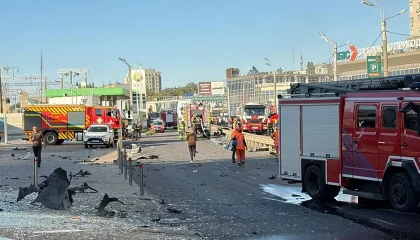
Beyond the parliamentary theatrics, the operational picture inside Ceuta is grim. Approximately 5,000 migrants — roughly half of them understood to be minors — are still in the city, though local authorities place the figure somewhat lower. Housing, sanitation, and medical services are stretched beyond capacity, and residents report growing tensions as the enclave’s small infrastructure absorbs a population many times its normal size. The Spain government in disarray as conflicting reports continue to swirl has yet to announce a concrete timeline for repatriation or onward transfer, leaving thousands in limbo while the political battle in Madrid intensifies.
Frequently Asked Questions
What happened at the Ceuta border? On the day of the incident, roughly 80,000 migrants crossed into the Spanish enclave of Ceuta from Morocco. Spanish officials initially described the event as an accidental breach of the border fence, but a subsequently leaked police document suggested Moroccan authorities had facilitated the movement by sea and adopted a passive stance during the buildup.
How many people died? More than 150 migrants died at sea during the incident, according to figures cited by Spanish authorities.
What is the Spanish government’s current position on Morocco’s role? Madrid has stopped short of formally blaming Rabat, pointing instead to social-media misinformation and trafficking networks as drivers of the influx. However, the leaked document and public commentary have made it difficult for the government to maintain that position without appearing to contradict its own intelligence apparatus.
When is the next Spanish general election? A general election is scheduled for 2027. The Ceuta crisis is widely viewed as the most serious challenge to the Sánchez premiership to date, and opposition leaders have signalled they will press for ministerial accountability in parliament.