Norway weighs how to contain a wartime mercury threat beneath the North Sea
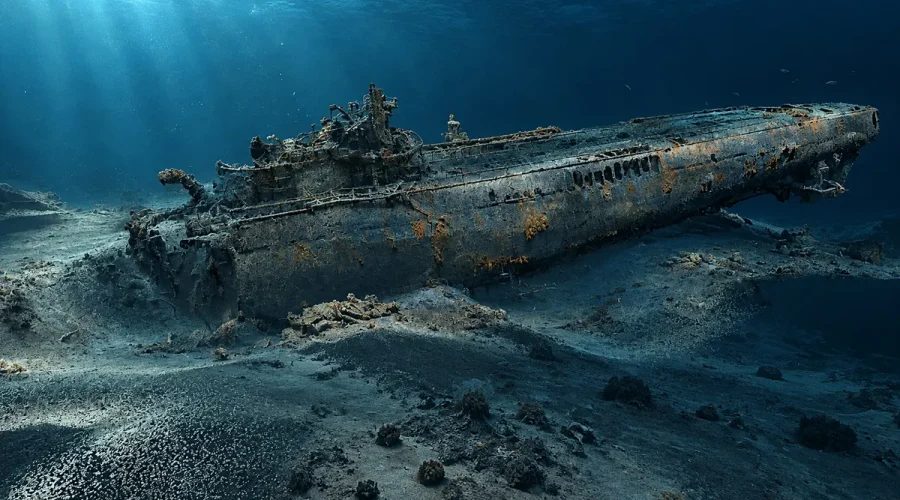
Usagevpn.com – A German submarine destroyed during the final months of the Second World War has become the focus of a modern environmental dilemma off Norway’s coast. U-864 lies about 150 metres below the surface west of the island of Fedje, split in two on the seabed and surrounded by contaminated sediment.
The wreck has remained underwater for more than 80 years, but its cargo has kept the danger alive. Historical material indicates that the submarine was intended to carry a large shipment of mercury to Japan, a material with serious long-term consequences when released into marine ecosystems.
The exact size of the cargo cannot be confirmed because complete loading records no longer exist. A Japanese order listed 1,867 containers, which would have represented roughly 65 to 67 tonnes of mercury if the shipment was fully loaded. What is beyond doubt is that mercury remains within and around the wreck.
A mission that ended beneath the waves
U-864 left during a period when Germany’s defeat was drawing near. Its assignment was nonetheless strategically important: the vessel was to travel through Norwegian waters and continue to Japan with military equipment, technical materials and specialists linked to Japan’s arms industry.
It never completed that journey. British submarine HMS Venturer intercepted German radio traffic, located U-864 and launched a torpedo attack on 9 February 1945. The torpedo struck the German vessel, sending it to the seabed off Fedje. All 73 people aboard were killed.
The encounter holds a distinctive place in naval history. It is regarded as the only known incident in which a submerged submarine successfully sank another submarine while it was also underwater.
For decades after the attack, the wreck attracted little attention. Interest returned much later as evidence emerged that the submarine’s unusual cargo might include mercury. Norway’s naval vessel KNM Tyr located U-864 in 2003, revealing that the wreck was no longer a single intact structure. Its two main sections rest separately on the seafloor at roughly the same depth.
Why mercury remains dangerous for generations
Mercury is not a contaminant that simply fades away with time. Unlike many organic pollutants, it does not break down through normal biological processes. Its persistence depends on chemical form and environmental conditions, but contaminated sediment can retain it for decades and sometimes centuries.
The wider concern is what can happen after mercury enters the marine environment. Micro-organisms may transform it into methylmercury, an especially toxic form that can build up through the food chain. Fish are particularly important in this process because contamination can accumulate in their tissues as it moves between organisms.
This means the challenge is not limited to the submarine itself. Any intervention must consider the surrounding seabed, where disturbed sediment could spread pollutants into the water. Leaving the wreck untouched also carries risks, since damaged containers may continue to release mercury over time.
New surveys reveal the condition of the wreck
Norway’s Coastal Administration, Kystverket, carried out a detailed examination of U-864 in May 2025. The work used remotely operated underwater vehicles linked to a ship by cable, along with 4K cameras, photogrammetry and acoustic measuring equipment.
The resulting images and data helped create a three-dimensional representation of the submarine and the adjacent seabed. They show a wreck partly buried in sediment, far below the reach of ordinary diving operations. Many of the containers believed to have been carried by U-864 may have been damaged during the sinking or in the decades that followed.
Retrieval seems, at first glance, like a direct response: remove the mercury and eliminate the hazard. Yet the work is highly complex. Lifting containers or disturbing the wreck could mobilise polluted sediment, releasing contaminants that have remained relatively contained on the seafloor.
That risk became clear during investigation and salvage work in 2026. Authorities recovered 22 containers from the site, and early assessments found that about 80% were damaged and leaking. Roughly half a tonne of mercury was brought ashore, but mercury was also released into the surrounding water during activity in the work area.
Recovery or permanent cover?
Norway must now choose between two difficult approaches. One option is a broad recovery operation aimed at removing as much hazardous material as possible. The other is to place a permanent cover over the wreck and contaminated seabed, isolating the area from the marine environment.
Neither route offers a simple conclusion. A large-scale recovery could remove mercury but also produce further releases during excavation and lifting. A protective cap could limit exposure without directly handling every damaged container, yet it would require long-term monitoring to ensure that the barrier remains effective.
After the 2026 operations, Kystverket again supported covering the wreck. The authority’s assessment is that an extensive recovery effort could ultimately release more pollution than it removes.
For communities around Fedje, the debate is tied to both local waters and a legacy of war that has outlasted the people who fought it. U-864 is a reminder that wartime wrecks can retain consequences long after conflict ends, especially where hazardous cargo remains concealed beneath the sea.
The eventual decision will need to balance immediate disturbance against long-term protection. Whatever Norway chooses, the site will remain a responsibility for decades: a submerged historical wreck whose environmental risks cannot be allowed to disappear from view.
Related Reading
Frequently Asked Questions
What is A ticking mercury bomb Ancient Nazi?
A ticking mercury bomb Ancient Nazi is the main topic of this guide. The article explains the context, practical details, and next steps readers should understand.
Why does A ticking mercury bomb Ancient Nazi matter?
A ticking mercury bomb Ancient Nazi matters because readers are looking for a useful answer, not just a short summary. Good content should match search intent and help them decide what to do next.