Russia Accuses Europe of Being a Peace Threat, Vows to Engage in Dialogue
Russia brands Europe a threat to peace – In a recent statement, Russia’s foreign minister accused Europe of becoming a major threat to international peace and security, attributing this to its continued military support for Ukraine. The remarks came as part of a broader effort by Moscow to shift the narrative of the ongoing conflict, emphasizing that Europe, rather than Russia, is responsible for prolonging the war. This assertion was made during a meeting with foreign envoys in Moscow, where the Russian leader outlined his government’s concerns about European actions and their perceived alignment with Western powers.
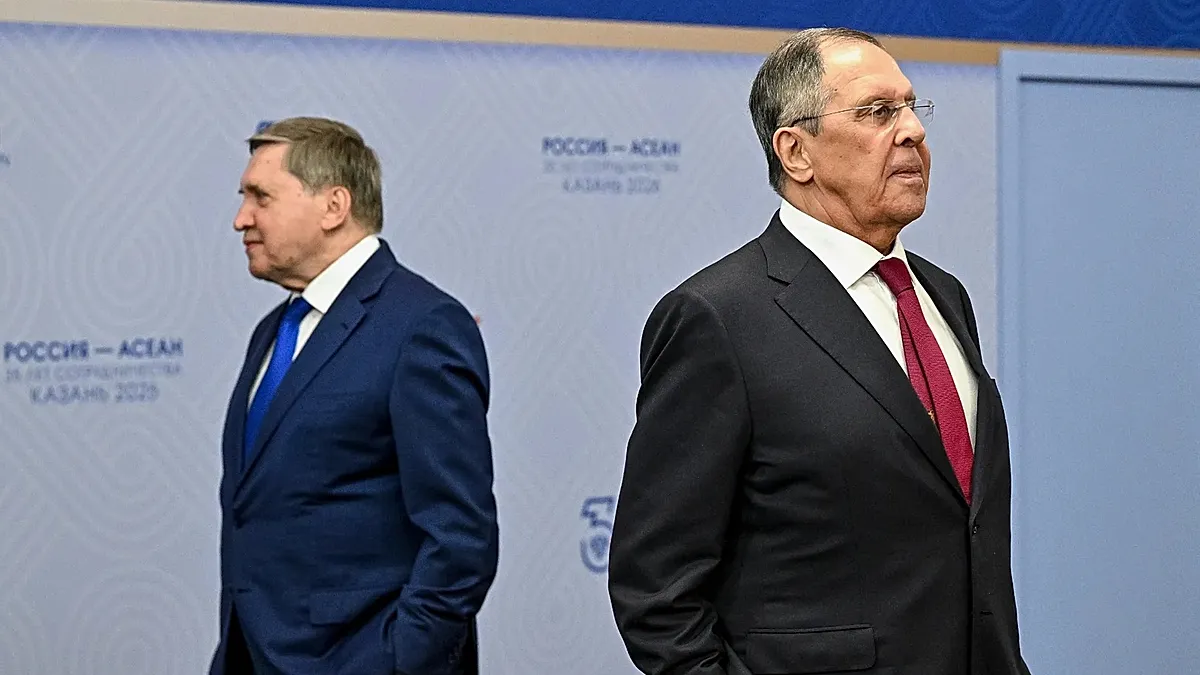
“As for the United States, judging by their actions, they appear to be abandoning any claim to the role of an objective mediator and are instead pursuing a course of escalating sanctions pressure on Russia,” said Sergei Lavrov. This comment highlights the tension between Russia and the U.S., which has been a central issue in the diplomatic landscape of the war in Ukraine. Lavrov’s remarks suggest that the U.S. is not merely supporting Ukraine but actively undermining Russia’s position by imposing stricter sanctions and pushing for more aggressive measures.
The Russian government has consistently maintained that its actions in Ukraine are justified, and that Europe’s role in the conflict is increasingly problematic. This sentiment was echoed by Yuri Ushakov, a senior aide to President Vladimir Putin, who claimed that Russia is open to dialogue with the European Union. Ushakov’s statement comes as part of the Kremlin’s strategy to reframe the conflict, portraying it as Europe’s doing rather than a direct result of Russian military operations.
Meanwhile, the U.S.-led diplomatic efforts to resolve the war have stalled, with President Donald Trump’s focus shifting to the Middle East. This has left European nations in a precarious position, as they grapple with balancing their support for Ukraine against the need to engage with Russia in peace talks. European Council President António Costa recently faced pressure after opening a diplomatic channel with the Kremlin, a move that his team described as an attempt to evaluate the potential for peace negotiations.
Although Costa’s office did not officially confirm the identity of the Russian official involved, it is understood that Yuri Ushakov was the key figure in the communication. On Tuesday, Ushakov did not comment on possible contact with Costa’s team but quickly criticized Brussels for trying to “undermine the agreements in Anchorage.” The Anchorage summit, held in August last year, marked a pivotal moment in the conflict, where Trump and Putin reached an agreement on certain terms, though the details remain contested.
The so-called “Anchorage formula” has been a point of contention, with Moscow claiming that the U.S. agreed to a set of understandings aimed at freezing the front line and reducing Western military support to Kyiv. However, U.S. officials have never formally acknowledged this agreement, leaving it as a subject of debate. This ambiguity has allowed both sides to reinterpret the terms of the summit, with Russia using it as a justification for its ongoing military operations and Europe as a tool to pressure Russia into concessions.
Despite these diplomatic maneuvers, the path to a resolution remains uncertain. One of Russia’s main demands for peace talks is the withdrawal of Ukrainian forces from the eastern Donbas region, an area that has been a focal point of the conflict since 2014. Russia has been actively seeking to control this territory, which it views as strategically vital. However, Kyiv has refused to surrender any part of Donbas, maintaining that its forces still hold significant ground in the region.
The European Union’s support for Ukraine has been unwavering, with many member states investing heavily in military aid and economic assistance. This commitment has been met with criticism from Russia, which argues that such support is not only inflaming the conflict but also undermining its own position in negotiations. Lavrov’s remarks on Tuesday underscored this point, suggesting that European actions are a direct threat to the stability of the region.
Yet, the Russian government has not entirely ruled out dialogue with Europe. Ushakov’s comments indicate that the Kremlin is open to discussions, provided that Europe accepts its terms. This includes recognizing Russia’s territorial claims in Donbas and ceasing the flow of military equipment to Kyiv. The European Union, however, has been hesitant to make such concessions, fearing that it could weaken its support for Ukraine and embolden Russia further.
As the war continues, the role of Europe in the conflict is under scrutiny. While some European leaders advocate for a more flexible approach, others remain steadfast in their support for Kyiv. The recent statements from Moscow suggest that the pressure on Europe is intensifying, with the Russian government seeking to position itself as the peacekeeper rather than the aggressor. However, the effectiveness of this strategy remains to be seen, especially as the U.S. continues to play a critical role in shaping the diplomatic landscape.
Analysts note that the stalemate between Russia and Europe reflects a deeper ideological divide. Russia sees Europe as a Western-dominated entity, driven by its own interests and agendas, while Europe views Russia as an expansionist force threatening its security. This mutual suspicion has created a cycle of accusations, with each side blaming the other for the continued escalation of the conflict. The question now is whether these tensions can be resolved through dialogue or if they will persist, leading to further instability in the region.
The European Council’s decision to open a diplomatic channel with the Kremlin has been seen as a pragmatic step toward de-escalation. Costa’s team believes that while peace negotiations are still a long shot, maintaining communication with Russia is essential. This approach has drawn mixed reactions, with some members of the EU welcoming the initiative and others questioning its effectiveness. The Russian government, however, has seized on this development, framing it as a sign of willingness to engage in talks.
In the context of the ongoing war, the Anchorage formula has become a symbol of the conflicting priorities between the U.S. and Russia. While Moscow insists that the agreement was a breakthrough, the U.S. has yet to fully commit to its terms. This has left the European Union in a difficult position, as it must navigate the expectations of both sides. The lack of a clear consensus on the formula has contributed to the prolonged conflict, with no immediate resolution in sight.
As the situation develops, the role of Europe in the conflict is likely to remain central. The Russian government’s latest statements highlight its determination to reframe the narrative, but the reality on the ground continues to challenge these claims. With the war in Ukraine entering its third year, the pressure on all parties to find a solution is mounting. The question is whether the diplomatic efforts will gain momentum or if the cycle of accusations and counter-accusations will continue to dominate the discourse.