Strengthening NATO’s Eastern Flank: Lithuania’s Strategic Defense Measures
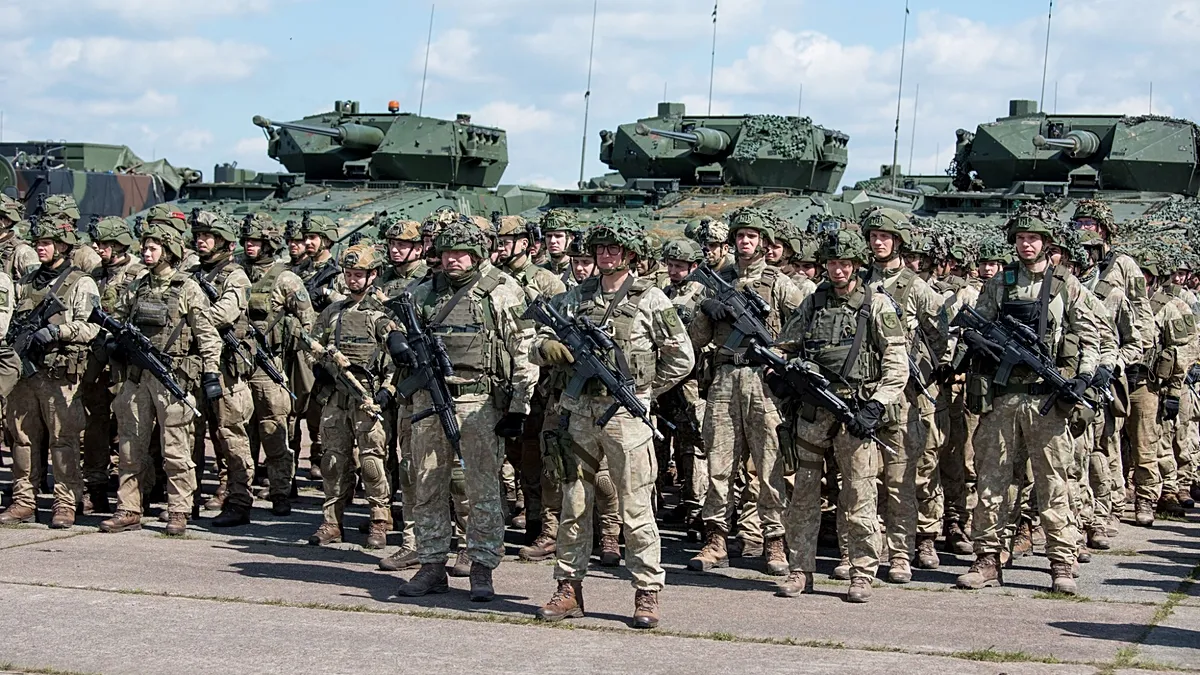
On NATO s eastern flank – The air is filled with the rumble of engines and the whir of propellers as German Leopard tanks unleash their firepower, while drones sweep overhead and Tiger helicopters thunder across the training ground. This high-intensity exercise, held just a short distance from Vilnius, simulates Lithuania’s readiness to repel a Russian incursion. Over six weeks, nearly 2,900 NATO troops—many from the German Bundeswehr—trained alongside Lithuanian forces to safeguard the Alliance’s easternmost borders. The drills underscore a growing focus on reinforcing the region’s defenses in response to evolving threats.
The Russian Threat and NATO’s Response
Since the full-scale invasion of Ukraine by Russia in 2022, concerns over a potential attack on NATO territory have intensified. Analysts and military leaders have repeatedly highlighted the need to bolster the Alliance’s eastern flank, citing Moscow’s capacity to rebuild its military strength. This renewed vigilance has led to increased collaboration between NATO members, with Lithuania emerging as a key player in the region’s security strategy. The exercise, named “Freedom Shield I,” is part of this broader effort to ensure readiness against emerging challenges.
“There is no set timeframe for a Russian attack on Lithuania, the Baltic states, or NATO,” said Rear Admiral Giedrius Premeneckas, Lithuania’s Chief of the Defence Staff. “The threat remains constant, and we must prepare for it at all times.”
According to Premeneckas, the German-led training at the exercise site reflects a commitment to collective defense. The drills focus on interoperability, firepower, and rapid response, all critical elements in deterring aggression. The Rear Admiral emphasized that Russia targets vulnerabilities within the alliance, and a robust military posture is essential to prevent such weaknesses from being exploited. “Security hinges on taking the threat seriously and continuously building our capabilities,” he added.
Germany’s Permanent Military Presence in Lithuania
Germany’s decision to permanently station an armoured brigade in Lithuania marks a significant shift in its defense strategy. Defence Minister Boris Pistorius announced this move in June 2023, stating that the deployment of a “robust brigade” would provide a permanent bulwark against potential Russian advances. The brigade, expected to include around 5,000 personnel, will be based in Rūdninkai, a town approximately 40 kilometres from Vilnius. This location is strategically vital, as it lies close to the Polish border and the Suwałki Gap—a narrow corridor that stretches 65 kilometres between Belarus and Kaliningrad.
The Suwałki Gap has long been regarded as a critical vulnerability in NATO’s eastern defenses. Its proximity to the Belarusian training area “Hozhsky” further amplifies its importance, as it allows for coordinated maneuvers between Russian and Belarusian forces. By positioning troops near this region, Lithuania aims to enhance its ability to respond quickly to any incursion, while also reinforcing the broader NATO defense network. Pistorius confirmed during his recent visit to Pabradė that the deployment is on track, with the brigade anticipated to reach full operational capability by the end of 2027.
“Germany is committed to ensuring Lithuania’s security through this permanent presence,” Pistorius stated. “It sends a clear message that our alliance is prepared to defend its members, no matter the distance or the challenge.”
The deployment includes two battalions: the German tank battalion 203 from Augustdorf in North Rhine-Westphalia and the Panzergrenadier Battalion 122 from Oberviechtach, Bavaria. These units will form the backbone of the new brigade, providing Lithuania with a mix of armored vehicles, infantry support, and air assets. The choice of Rūdninkai as the main base is deliberate, given its access to key infrastructure and its role in connecting the Baltic states with the rest of the Alliance.
A Nation’s Resolve and Public Sentiment
Lithuania’s Defence Minister, Robertas Kaunas, has repeatedly underscored the significance of German troops stationed in the country. He described their presence as a symbol of solidarity and a reinforcement of the Baltic states’ security. Premeneckas echoed this sentiment, noting that the deployment has fostered a strong sense of unity among NATO members. “The people of Lithuania feel deeply grateful to Germany for sending such a large unit to protect their homeland,” he said. “This presence reassures them that they are part of a powerful alliance, not forgotten in these uncertain times.”
German soldiers participating in the exercise reported warm interactions with Lithuanian locals. While individual experiences may vary, the overall tone has been positive, with many expressing confidence in the partnership. “The people here are friendly and welcoming,” one soldier shared. “It’s clear they see us as allies, not just troops.” This goodwill is crucial in maintaining morale and fostering long-term cooperation between the two nations.
“Russia always looks for the weakest link in the alliance,” Premeneckas explained. “By strengthening our defenses, we reduce that risk and send a strong deterrent signal.”
Historically, Lithuania has faced multiple invasions, including those by Nazi Germany and the Soviet Union during the 20th century. These experiences have ingrained a deep awareness of the importance of military preparedness. Today, the country’s efforts to modernize its armed forces are part of a broader strategy to ensure it remains a resilient member of NATO. The German brigade’s presence is not just a tactical move but also a political one, reinforcing the alliance’s unity and commitment to the region.
Interoperability and the Path Forward
A key focus of the “Freedom Shield I” exercise was improving interoperability between NATO forces. By training alongside the Lithuanian Armed Forces and the multinational battlegroup, German troops have contributed to the development of joint operational strategies. This collaboration is vital for ensuring that different national forces can work seamlessly in a crisis, a necessity given the unpredictable nature of modern warfare. Premeneckas highlighted that such exercises are essential for building trust and synchronizing capabilities across the Alliance.
Despite the progress made, challenges remain. The scale of the Russian military’s reconstitution continues to be a concern, with analysts warning of potential advances in both technology and manpower. Lithuania’s military spending has seen a substantial increase, and the focus on firepower and readiness is expected to continue. “Our goal is to ensure that Lithuania can act as a deterrent,” Premeneckas said. “A strong defense is the best guarantee of peace.”
The permanent deployment of German troops to Lithuania represents a significant step in the Alliance’s strategy to secure its eastern borders. As tensions in Europe persist, the country’s proactive approach serves as a model for other NATO members. By combining historical resilience with contemporary military investments, Lithuania is positioning itself as a critical pillar in the defense of the entire NATO region. The Suwałki Gap, once a symbol of vulnerability, now stands as a testament to the alliance’s ability to adapt and respond to new security realities.
With the German brigade set to arrive in 2027, the immediate focus remains on integrating the forces and refining their readiness. The training exercises, however, have already yielded valuable insights. “The presence of German troops here is a powerful reminder of our shared security goals,” Kaunas remarked. “It strengthens not just Lithuania’s defenses, but the entire eastern flank of the Alliance.” As the geopolitical landscape continues to shift, Lithuania’s determination to fortify its position is a clear signal of its resolve to protect its sovereignty and support NATO’s collective mission.