Venezuela Twin Earthquakes: Death Toll Surpasses 1,700
Venezuela twin earthquakes – Two powerful earthquakes, measuring 7.2 and 7.5 on the Richter scale, hit Venezuela’s coastal region on June 24, 2026, causing widespread devastation. As of Sunday, the official death toll has climbed to more than 1,700, with additional reports indicating the crisis is far from over. The tremors, which struck in quick succession, left thousands injured and displaced, prompting immediate government action to stabilize the situation.
Impact of the Quakes
The earthquakes, centered between San Felipe and Yumare in the northern part of the country, rattled the region for nearly three minutes. The first quake occurred at 18:04 local time, followed by a second, stronger tremor just 39 seconds later. While the initial shock was severe, the second one, with its epicenter further southeast, compounded the damage. Aftershocks continue to shake the disaster zone, including a 4.6-magnitude tremor recorded in La Guaira, the state bearing the brunt of the destruction.
Authorities have reported over 5,000 people injured in the aftermath, with 15,866 forced to leave their homes and 22,619 seeking medical care in temporary health centers. However, the most alarming statistic comes from the United Nations, which estimates that up to 68,000 individuals may still be missing, their locations uncertain due to the extensive damage to infrastructure and buildings.
Government Actions and Challenges
In response to the crisis, the Venezuelan government swiftly declared a disaster zone in La Guaira, the hardest-hit state, and imposed military control over the area to expedite relief efforts. Despite these measures, the pace of recovery has faced scrutiny. Government officials have been accused of delays, but they have emphasized their commitment to rescuing survivors and rebuilding communities. The President of the National Assembly, Jorge Rodríguez, highlighted progress in restoring electricity to 90% of La Guaira’s most damaged regions.
“We are working tirelessly to ensure the safety of affected residents and restore essential services,” said Rodríguez in a recent speech. “Our focus remains on evaluating structures that still pose risks and setting up temporary shelters for those displaced.”
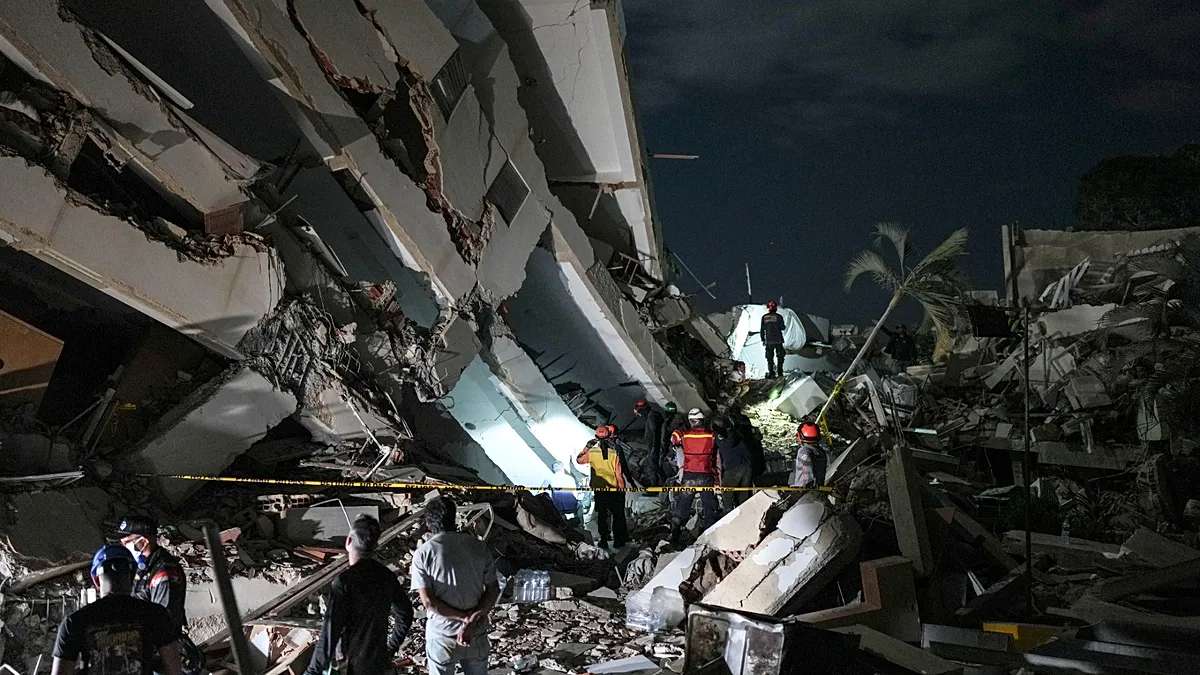
Meanwhile, the situation on the ground has been dire. In Catia La Mar, rescue teams from El Salvador, Mexico, and Venezuela joined forces to free a 21-year-old man who had been trapped in a collapsed building since the day of the quake. This operation symbolized the urgent race against time to save lives, as the hope of finding survivors diminishes with each passing hour. More machinery is being deployed to the region, and international rescue teams are on their way, though the challenges of navigating debris and unstable terrain remain significant.
International Support and Recovery Efforts
Amid the crisis, the United States has taken steps to aid the search and rescue operations, sending aircraft, ships, and helicopters to the area. The Development Bank of Latin America and the Caribbean (CAF) has also pledged financial assistance, announcing a multi-donor fund of up to 200 million dollars to support the country’s reconstruction. These efforts underscore the global recognition of the scale of the disaster, which has disrupted daily life for thousands of Venezuelans.
Yet, the response has not been without criticism. Opposition figures have accused the government of underestimating the crisis and failing to act swiftly. María Corina Machado, a prominent opposition leader and recipient of the 2025 Nobel Peace Prize, has expressed her intent to return to Venezuela soon to connect with the affected population. Her presence is seen as a symbol of the growing pressure on the administration to improve its crisis management.
Rescue Operations and Ongoing Struggles
Five days after the twin quakes, search and rescue teams are still working through the rubble in La Guaira, where the most severe damage has occurred. The government has established 15 temporary displacement camps to house those who have lost their homes, but conditions remain challenging. Displaced residents, many of whom have limited resources, are being provided with basic supplies such as canned tuna and crackers by police and military personnel. This gesture, however, has not quelled concerns about the efficiency of the relief efforts.
Local leaders have reported that the earthquakes have caused extensive damage to schools, hospitals, and residential areas, particularly in densely populated zones. The destruction has also disrupted transportation networks, complicating the movement of supplies and personnel. As the recovery process unfolds, the focus is shifting from immediate rescue to long-term rebuilding, with experts warning that the economic and social repercussions could persist for months.
Historical Context and Future Concerns
Venezuela’s coastal region is no stranger to seismic activity, but the magnitude of this disaster has raised questions about preparedness. The twin earthquakes have exposed vulnerabilities in the country’s infrastructure and emergency response systems. While the government has taken steps to address the immediate aftermath, critics argue that a more coordinated approach is needed to prevent further loss of life and ensure sustainable recovery.
With the death toll surpassing 1,700, the disaster has become one of the worst in recent history. The UN’s estimate of up to 68,000 missing people highlights the severity of the situation, particularly in La Guaira, where entire neighborhoods have been reduced to rubble. The ongoing efforts to locate survivors and assess damage are critical, but the scale of the task remains overwhelming. As the days pass, the urgency of the situation continues to grow, with communities struggling to rebuild their lives amid the ruins.
The twin earthquakes have not only tested Venezuela’s resilience but also its ability to manage large-scale crises. The government’s declaration of a disaster zone and military control signals a shift in strategy, aiming to streamline operations and accelerate recovery. However, the challenges of coordinating relief efforts, restoring services, and addressing the needs of displaced families underscore the complexity of the response. As international support increases, the hope is that these combined efforts will mitigate the long-term impact of the disaster on Venezuela’s population and economy.
With the search and rescue operations continuing, the focus now turns to the next phase of recovery. The initial shock of the earthquakes has given way to a more methodical approach, as authorities work to evaluate the damage and plan for reconstruction. The resilience of the Venezuelan people, however, remains a key factor in the success of these efforts. As the country grapples with the aftermath, the twin quakes serve as a stark reminder of the power of nature and the need for robust disaster preparedness. The road to recovery will be long, but the collective determination of the government, aid workers, and affected communities offers a glimmer of hope in the face of devastation.